 Bug FAQ
Clouded Border
Lomaspilis marginata · Order: Lepidoptera · Family: Geometridae
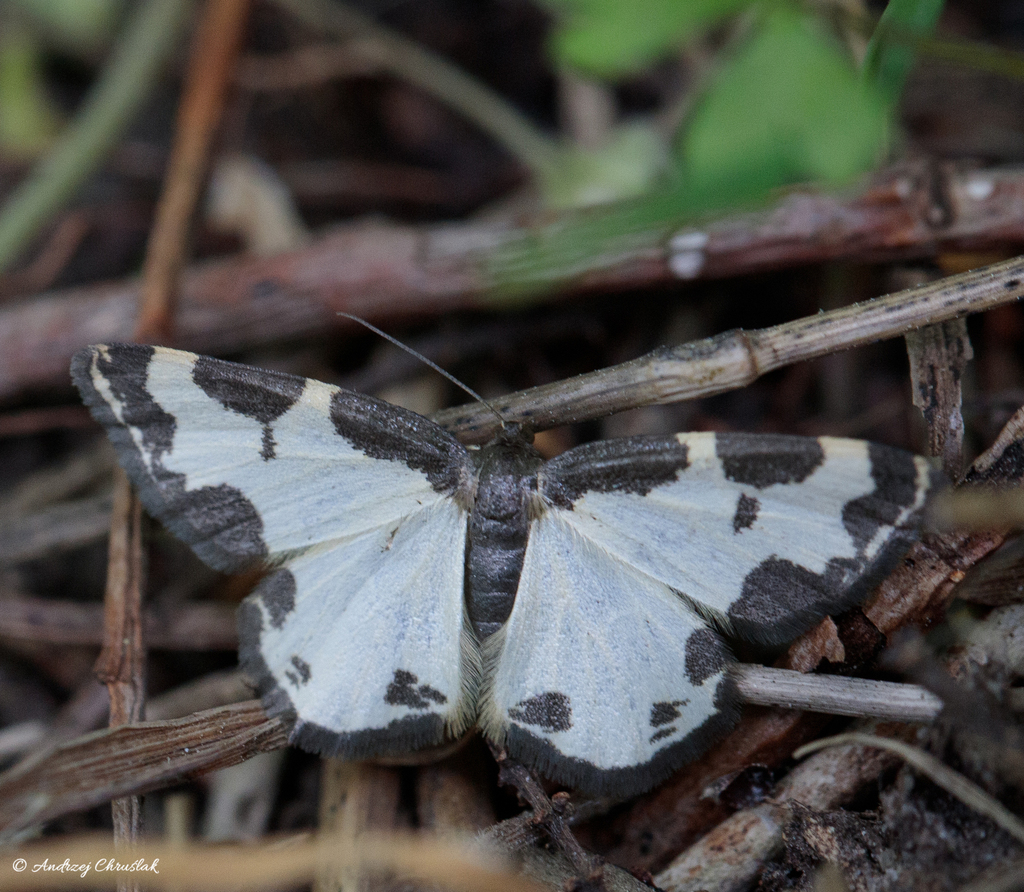
The clouded border has a wingspan of about 24 to 28 mm and white wings with black blotches along the edges, the amount of black varying between sexes. Its caterpillars are pale green with darker lines and feed mainly on aspen and sallow, though they can also use birch, hazel and poplar. Adults fly at night in June and July and the species overwinters as a pupa, sometimes for up to four years.
Source: Wikipedia
How to recognize it
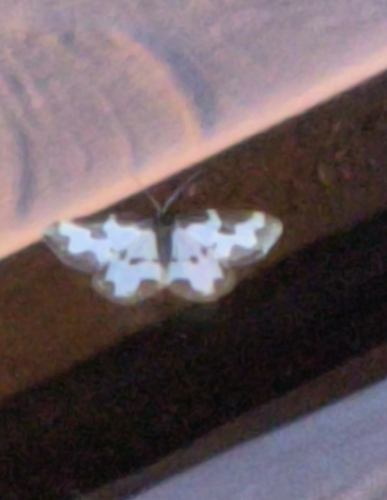
White wings are marked with black blotches around the margins; males often have more extensive black than females.
Source: Wikipedia
Size
Wingspan ranges from 24 to 28 mm.
Source: Wikipedia
When you see it
Adults are nocturnal flyers in June and July.
Source: Wikipedia
Where it comes from
Its distribution matches the same broad Eurasian range as its habitat.
Source: Wikipedia
Lookalikes
The species is extremely variable, with forms like ab. nigrounicolorata Haverkampf that are black throughout.
Source: Wikipedia
More photos
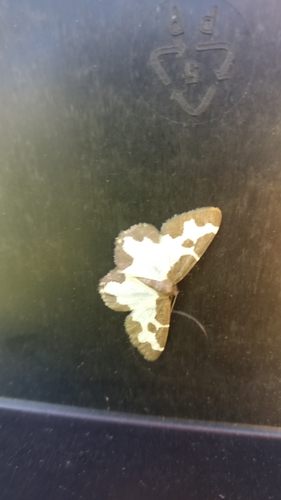
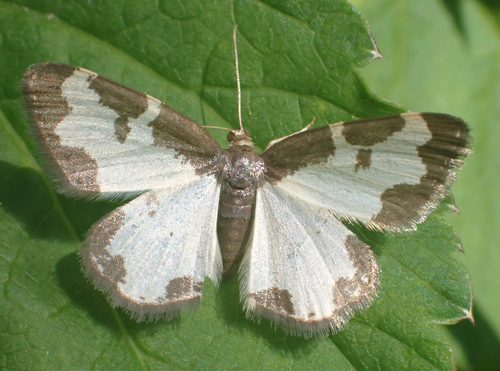
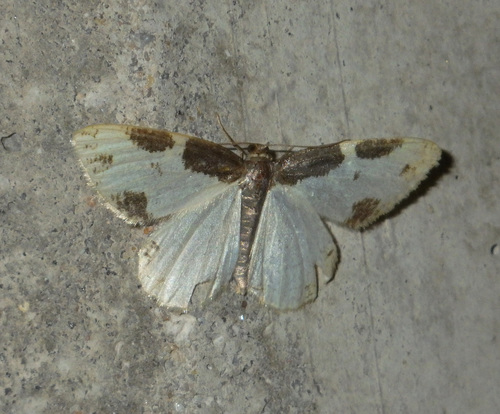
Questions people ask
How can I recognize this moth?
Look for white wings with black blotches around the margins; males often have more black than females.
Source: Wikipedia
Same family (Geometridae)
 Willow BeautyPeribatodes rhomboidaria
 Pale BeautyCampaea perlataDamages trees, gardens or crops
 Large Lace-border MothScopula limboundataDamages trees, gardens or crops
 Riband WaveIdaea aversata
 Yellow Shell MothCamptogramma bilineata
 Large Maple Spanworm MothProchoerodes lineolaDamages trees, gardens or crops
Sources
- Wikipedia: https://en.wikipedia.org/wiki/Clouded_border
Look it up elsewhere: GBIF · iNaturalist · BugGuide · Wikipedia
Text written 2026-10-22 from the sources above and checked sentence by sentence against them. Data fetched 2026-10-22.