 Bug FAQ
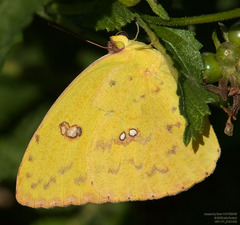
Cleopatra Butterfly
Gonepteryx cleopatra · Order: Lepidoptera · Family: Pieridae
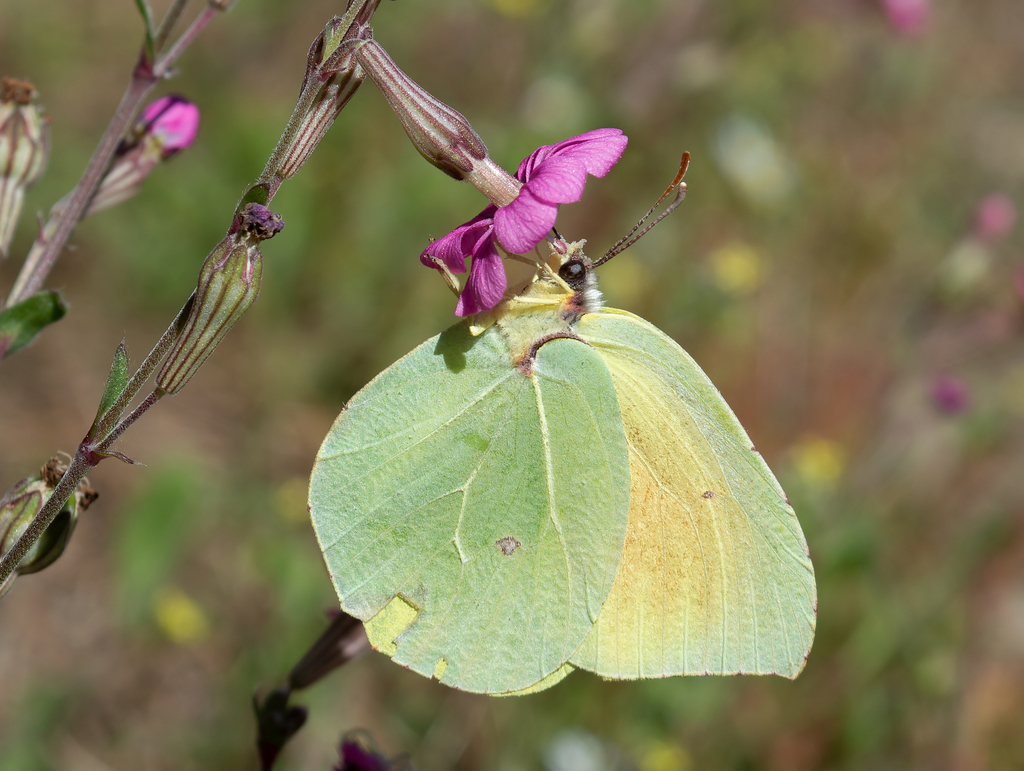
It lives in open woodland and scrub, hibernates in evergreen trees and shrubs, and flies from May to August, except in Spain where it may be seen almost year-round.
Source: Wikipedia
Size
Wingspan ranges from about 50 to 70 mm (2.0 to 2.8 in).
Source: Wikipedia
Where it lives
Found in open woodland and scrub; adults hibernate in evergreen trees and shrubs.
Source: Wikipedia
What it eats
Caterpillars feed on the buckthorn species Rhamnus alaternus.
Source: Wikipedia
Life cycle
When ready to pupate, green caterpillars attach to the underside of a leaf with a silk belt. The green chrysalis gradually turns yellow and red, showing the adult wing colors before the butterfly emerges.
Source: Wikipedia
When you see it
Adults are on the wing from May to August, but in Spain they may have two broods and be seen nearly year-round.
Source: Wikipedia
Where it comes from
Native to the Mediterranean region, including southern Europe, North Africa, and western Asia.
Source: Wikipedia
More photos

Same family (Pieridae)


Sources
- Wikipedia: https://en.wikipedia.org/wiki/Gonepteryx_cleopatra
Look it up elsewhere: GBIF · iNaturalist · BugGuide · Wikipedia
Text written 2026-10-22 from the sources above and checked sentence by sentence against them. Data fetched 2026-10-22.