 Bug FAQ
Citron Bug
Leptoglossus gonagra · Order: Hemiptera · Family: Coreidae
Also called: Passionvine Bug
Source: Wikipedia
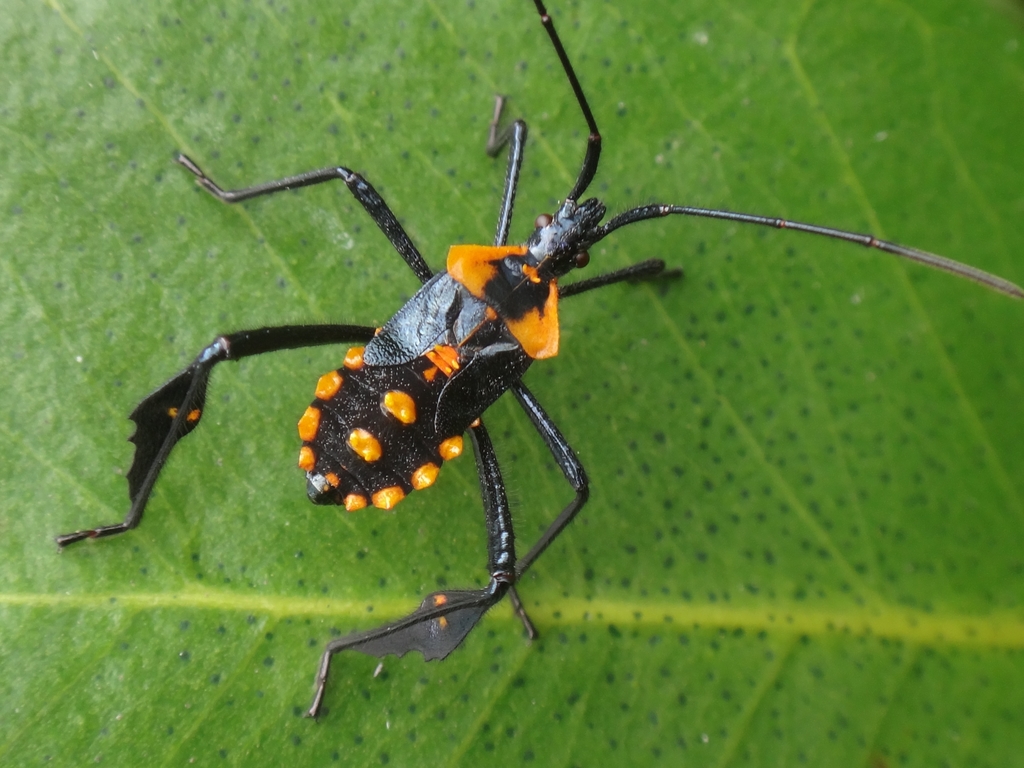
The citron bug is an elongated leaf-footed bug about 18 mm long and 6 mm wide. It feeds by sucking sap from many legumes, fruits, citrus, pomegranate and cucurbits, harming those plants. Females lay chains of about 16 eggs on host plant twigs, and the insects develop from nymph to adult in about seven weeks, completing a life cycle in nine to ten weeks.
Source: Wikipedia
How to recognize it
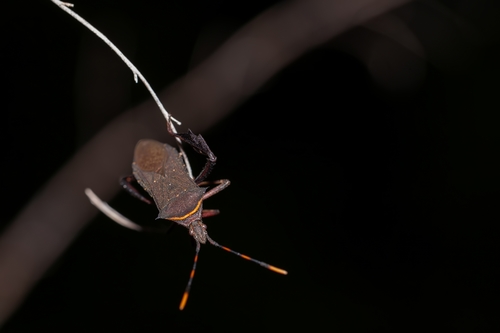
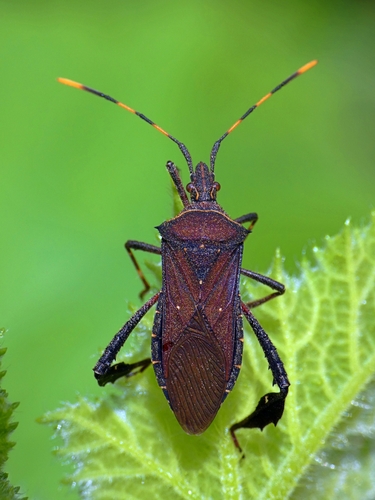
Long antennae are banded black and orange, and a pale orange band is on the front of the prothorax plate. The body is dark brown or dull purplish-black with small orange spots underneath the thorax and abdomen, and orange spots on the enlarged, flattened rear tibiae.
Source: Wikipedia
What it eats
Both adults and nymphs suck plant sap, injecting toxic saliva.
Source: Wikipedia
Life cycle
Females attach chains of about 16 eggs to twigs or stems of host plants.
Source: Wikipedia
Where it is found in the US
Recorded in 4 of 51 states and DC. Most records: Florida, Texas, Virginia, New Jersey.
Darker = more records. Counts are museum and citizen-science records, not population size.
Source: GBIF
Months it is reported in the US
Source: GBIF
More photos

Questions people ask
How does the citron bug reproduce?
Females lay chains of about 16 eggs on host plant twigs, and the insects develop from nymph to adult in about seven weeks, completing a life cycle in nine to ten weeks.
Source: Wikipedia
Where can I find citron bugs?
They are found across Africa, the Caribbean, Central and South America, North America, Southern Asia, the Pacific and Oceania.
Source: Wikipedia
How can I identify a citron bug?
Look for a 1.8 cm long, dark brown or purplish-black leaf-footed bug with orange-banded antennae, a pale orange band on the prothorax, and orange spots on the underside and on the enlarged rear tibiae.
Source: Wikipedia
Same family (Coreidae)
 Western Conifer Seed BugLeptoglossus occidentalisDamages trees, gardens or crops
 Squash BugAnasa tristisDamages trees, gardens or crops
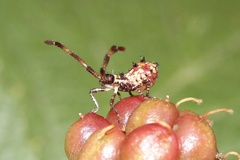 Dock BugCoreus marginatus
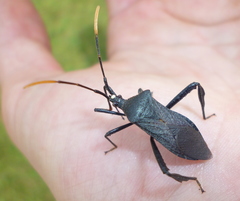 Acanthocephala terminalisAcanthocephala terminalisHarmless
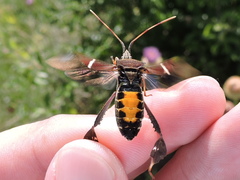 Eastern Leaf-footed BugLeptoglossus phyllopusDamages trees, gardens or crops
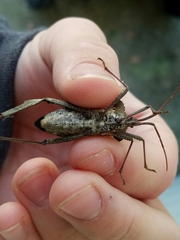 Giant leaf-footed bugAcanthocephala declivis
Sources
- Wikipedia: https://en.wikipedia.org/wiki/Leptoglossus_gonagra
Look it up elsewhere: GBIF · iNaturalist · BugGuide · ITIS · Wikipedia
Text written 2026-10-23 from the sources above and checked sentence by sentence against them. Data fetched 2026-10-22.