 Bug FAQ
Chloronia mexicana
Chloronia mexicana · Order: Megaloptera · Family: Corydalidae

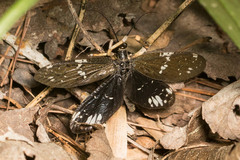
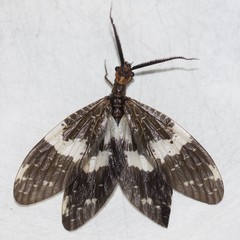
Males have forewings 28 to 37 mm long and females 30 to 45 mm long. They are large, yellow insects with dark markings, darkened tips on the antennae and only a few basal wing spots; many dark crossveins are also visible. They live in warm, semi-warm areas with moderate to high rainfall across several Mexican hydro-ecoregions and are found in Mexico, Costa Rica, Honduras, and Guatemala.
Source: Wikipedia
How to recognize it
The genus is large and yellow with dark markings; this species has darkened antenna tips, few basal wing spots, and many dark crossveins.
Source: Wikipedia
Size
Forewing length is 28 to 37 mm in males and 30 to 45 mm in females.
Source: Wikipedia
Where it lives
It occurs in eight Mexican hydro-ecoregions such as Quintana Roo-Motagua and Rio Balsas.
Source: Wikipedia
Lookalikes
Among Chloronia species it is quite distinctive.
Source: Wikipedia
Questions people ask
How can I identify Chloronia mexicana?
Look for a large yellow insect with dark markings, antennae darkened at the tips, only a few basal wing spots, and many dark crossveins; these traits set it apart from other Chloronia species.
Source: Wikipedia
Same family (Corydalidae)




Sources
- Wikipedia: https://en.wikipedia.org/wiki/Chloronia_mexicana
Look it up elsewhere: GBIF · iNaturalist · BugGuide · ITIS · Wikipedia
Text written 2026-10-23 from the sources above and checked sentence by sentence against them. Data fetched 2026-10-23.