 Bug FAQ
Chironomus riparius
Chironomus riparius · Order: Diptera · Family: Chironomidae
Source: Wikipedia
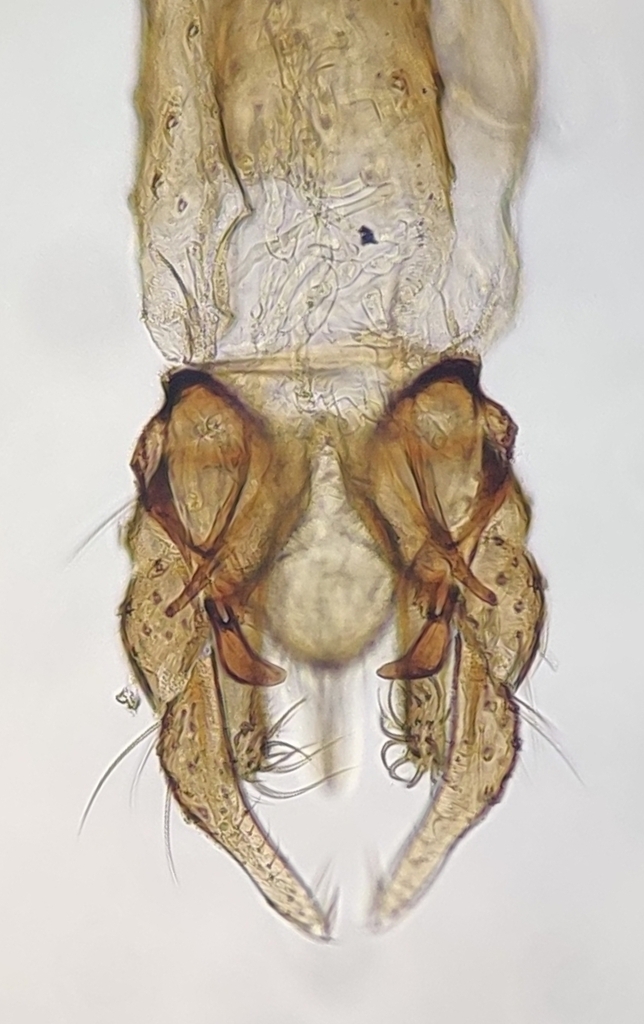
Harlequin flies are tiny dipterans that look like mosquitoes and their red larvae are called blood worms. They breed in water, build protective chimneys as larvae, emerge in huge swarms, and adults live only a few days, during which they can transmit disease.
Source: Wikipedia
How to recognize it
The larvae are bright red and are commonly called blood worms. Large emergences of the flies have been reported as pest problems.
Source: Wikipedia
Size
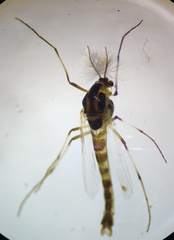
Adults are small flies that resemble mosquitoes.
Source: Wikipedia
Is it a pest in the house?
During development they shed exoskeleton fragments that can accumulate near lakes and rivers. The accumulated particulate can cause conjunctivitis, rhinitis and asthma when inhaled.
Source: Wikipedia
Where it lives
They are found on the east coast of North America, in southern Alaska, and across northern Europe from Scotland to Germany. Eggs are laid in or near water.
Source: Wikipedia
What it eats
Larvae are eaten by many insects and fish. Both adult and larval stages have been implicated as disease vectors.
Source: Wikipedia
Life cycle
Larvae construct chimney-like tubes to protect themselves from low oxygen. Adult flies live only two to three days.
Source: Wikipedia
When you see it
They emerge in large numbers, which can create pest problems.
Source: Wikipedia
Lookalikes
They look similar to mosquitoes.
Source: Wikipedia
Where it is found in the US
Recorded in 8 of 51 states and DC. Most records: Vermont, Kansas, New Hampshire, Illinois, Alaska, Alabama, Michigan, Colorado.
Darker = more records. Counts are museum and citizen-science records, not population size.
Source: GBIF
Months it is reported in the US
Source: GBIF
Questions people ask
What do the larvae look like?
The larvae are bright red and are known as blood worms.
Source: Wikipedia
Why do they appear in huge swarms?
They tend to emerge in large numbers, which has been reported as a pest problem.
Source: Wikipedia
Can they spread disease?
Yes, both the adult flies and their larvae have been implicated as disease vectors.
Source: Wikipedia
Same family (Chironomidae)


Sources
- Wikipedia: https://en.wikipedia.org/wiki/Chironomus_riparius
Look it up elsewhere: GBIF · iNaturalist · BugGuide · ITIS · Wikipedia
Text written 2026-10-28 from the sources above and checked sentence by sentence against them. Data fetched 2026-10-28.