 Bug FAQ
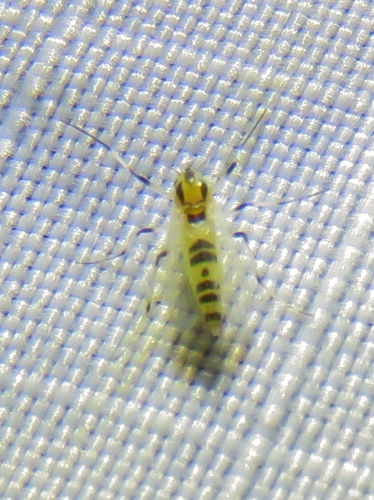
Cricotopus sylvestris
Cricotopus sylvestris · Order: Diptera · Family: Chironomidae
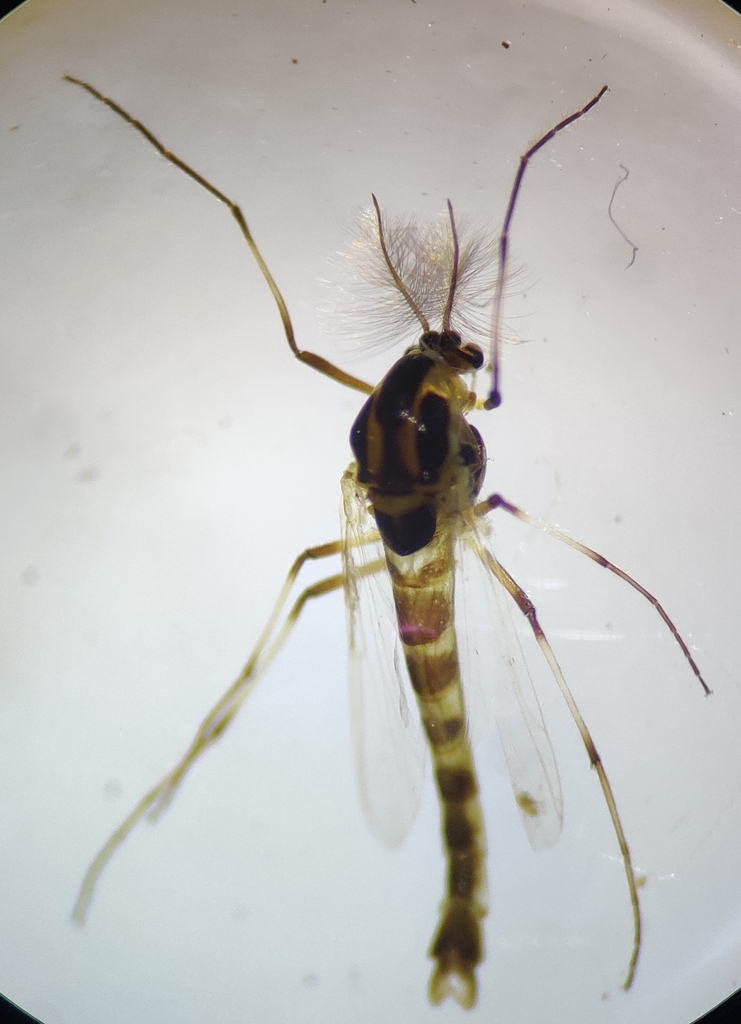
In the United Kingdom the midge is considered native but occurs only sporadically. Its development speed depends on temperature; larvae mature in about 10 days at 22-29 °C and in about 28 days at 15 °C.
Source: Wikipedia
What it eats
Midge larvae are prey for other invertebrates such as damselfly nymphs and fish. In North America it acts as a natural enemy of the beetle Berosus ingeminatus and the damselfly Ischnura verticalis.
Source: Wikipedia
Life cycle
Complete development from larva to adult is temperature dependent. In laboratory tests larvae finished development in 10 days at 22-29 °C and in 28 days at 15 °C.
Source: Wikipedia
Where it comes from
In the U.K. this species is native but has a sporadic distribution.
Source: Wikipedia
Where it is found in the US
Recorded in 22 of 51 states and DC. Most records: California, Montana, Vermont, New York, Texas, Maryland, Arizona, Alaska.
Darker = more records. Counts are museum and citizen-science records, not population size.
Source: GBIF
Months it is reported in the US
Source: GBIF
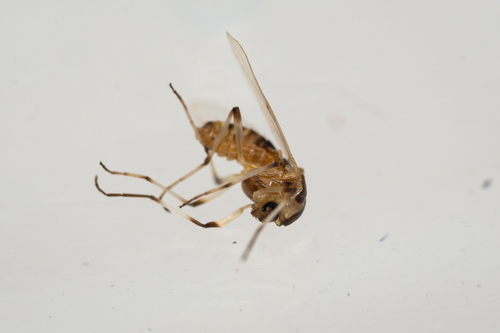
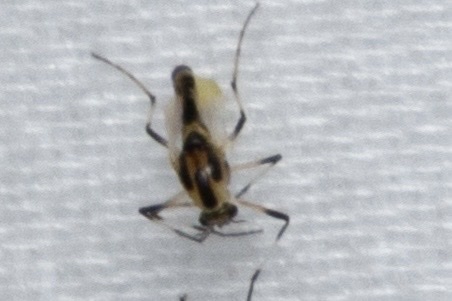
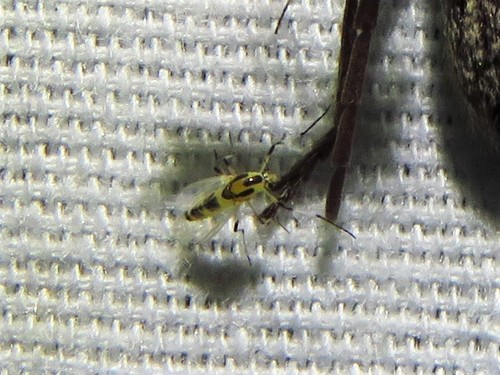
More photos
Questions people ask
What does Cricotopus sylvestris eat?
Its larvae are eaten by other invertebrates such as damselfly nymphs and fish.
Source: Wikipedia
How fast does it develop?
Development time depends on temperature; at 22-29 °C it matures in about 10 days, while at 15 °C it takes about 28 days.
Source: Wikipedia
Sources
- Wikipedia: https://en.wikipedia.org/wiki/Cricotopus_sylvestris
Look it up elsewhere: GBIF · iNaturalist · BugGuide · ITIS · Wikipedia
Text written 2026-10-24 from the sources above and checked sentence by sentence against them. Data fetched 2026-10-24.