 Bug FAQ
Chilocampyla dyariella
Chilocampyla dyariella · Order: Lepidoptera · Family: Gracillariidae
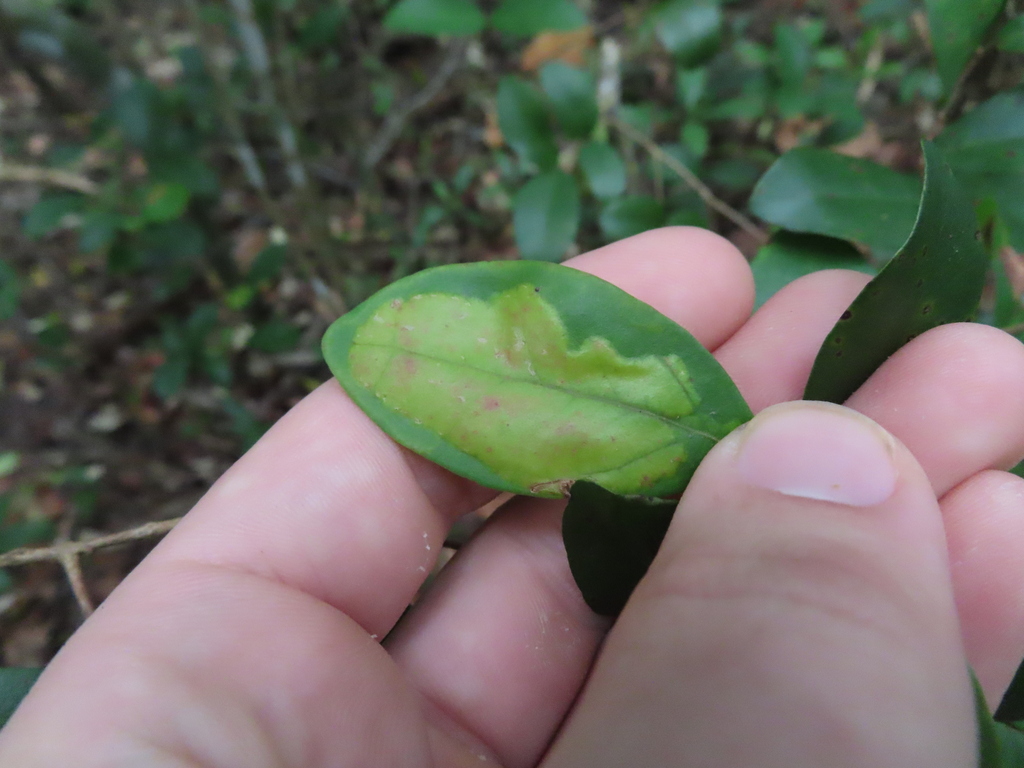
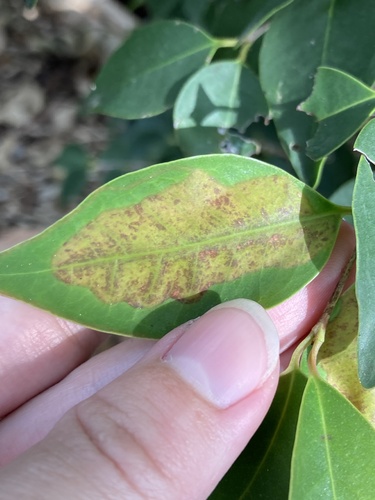
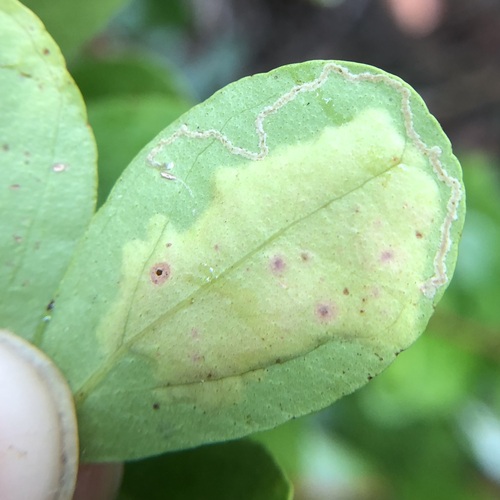
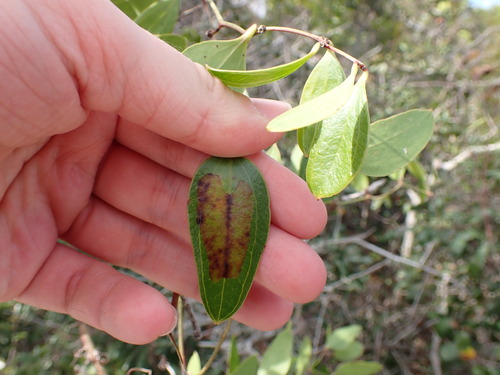
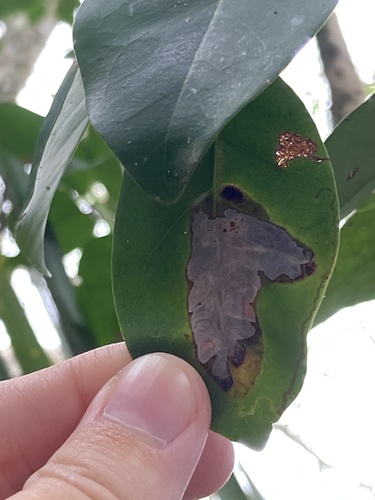
The adult moth has a wingspan of about 7 to 8.5 mm. Larvae mine the leaves of several Eugenia species and later leave the mine, turn vivid wine-red, and spin a dense, oval, yellow-grey cocoon on the leaf surface.
Source: Wikipedia
How to recognize it
The larva is cylindrical, clear, and transparent with sparse white hairs and fourteen legs.
Source: Wikipedia
Size
The adult’s wingspan ranges from 7 to 8.5 mm.
Source: Wikipedia
Where it lives
It is known from Florida in the United States.
Source: Wikipedia
What it eats
Larvae feed on leaves of Eugenia species such as E. axillaris, E. foetida, E. garberi, E. procera and E. rhombea.
Source: Wikipedia
Life cycle
The pupa starts white and later adopts the coloration of the adult moth.
Source: Wikipedia
Where it comes from
Its native range includes Florida, United States.
Source: Wikipedia
Where it is found in the US
Recorded in 1 of 51 states and DC. Most records: Florida.
Darker = more records. Counts are museum and citizen-science records, not population size.
Source: GBIF
Months it is reported in the US
Source: GBIF
More photos
Questions people ask
What plants do the larvae eat?
The larvae feed on several Eugenia species, including E. axillaris, E. foetida, E. garberi, E. procera and E. rhombea.
Source: Wikipedia
Where is Chilocampyla dyariella found?
It has been recorded in Florida, United States.
Source: Wikipedia
What does the larva look like?
The larva is clear, cylindrical, with sparse white hairs, fourteen legs, and a light-brown head with darker sutures and two black eyespots.
Source: Wikipedia
Same family (Gracillariidae)
 Horse-chestnut LeafminerCameraria ohridellaDamages trees, gardens or crops
 Aspen Serpentine Leafminer MothPhyllocnistis populiellaDamages trees, gardens or crops
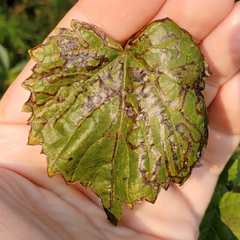 Phyllocnistis vitegenella complexPhyllocnistis vitegenellaDamages trees, gardens or crops
 Locust Digitate Leafminer MothParectopa robiniellaDamages trees, gardens or crops
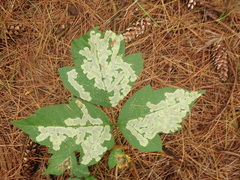 Poison Ivy Leaf-miner MothCameraria guttifinitella
 Phyllocnistis insignisDamages trees, gardens or crops
Sources
- Wikipedia: https://en.wikipedia.org/wiki/Chilocampyla_dyariella
Look it up elsewhere: GBIF · iNaturalist · BugGuide · Wikipedia
Text written 2026-10-28 from the sources above and checked sentence by sentence against them. Data fetched 2026-10-28.