 Bug FAQ
Chicatana Leafcutter Ant
Atta mexicana · Order: Hymenoptera · Family: Formicidae
Also called: Chicatana Ant, Chicatana Leaf-cutter Ant, Mexican leafcutter ant
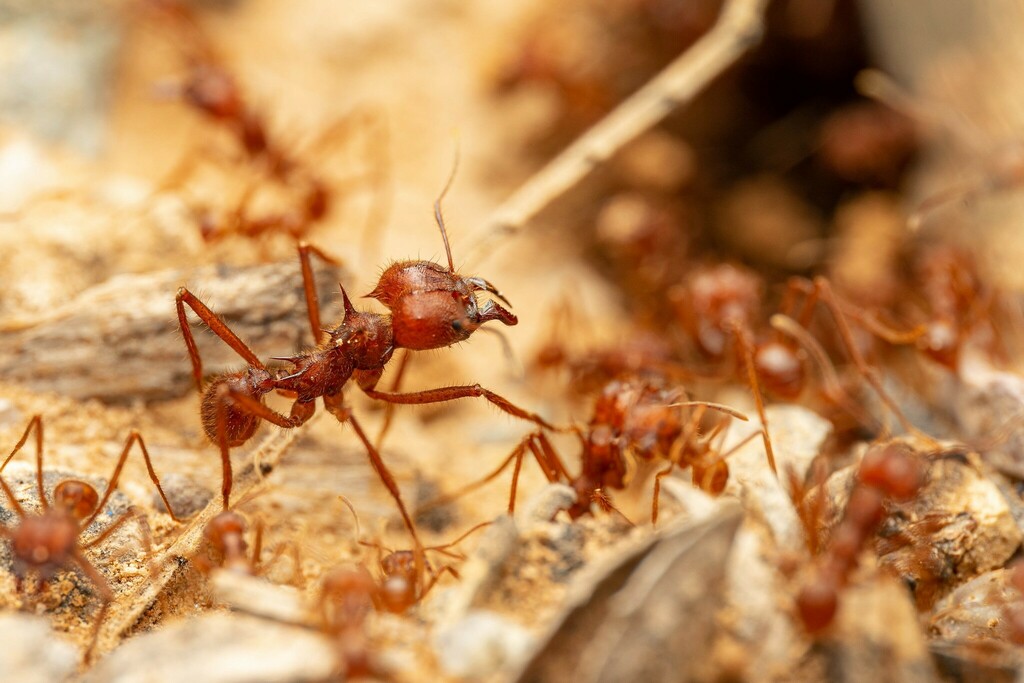
The queen reaches about 30 mm and workers are smaller, with soldiers up to 18 mm. They cut leaves to grow a fungus (Leucoagaricus gongylophorus) that they feed on, and oleic acid triggers their corpse-removal behavior. They are native to Mexico, extend into Arizona, and thrive in cities like Puerto Vallarta and Nuevo Vallarta.
Source: Wikipedia
How to recognize it
Leaves are cut and used to cultivate a specific fungus, and oleic acid signals workers to remove dead ants.
Source: Wikipedia
Size
Queens are about 30 mm long and dark brown; workers are dark brown with short spines, and soldiers can grow up to 18 mm.
Source: Wikipedia
Is it a pest in the house?
High nest densities in urban areas can make them a household pest.
Source: Wikipedia
Where it lives
They adapt well to urban environments and are especially common in places like Puerto Vallarta and Nuevo Vallarta.
Source: Wikipedia
What it eats
Their diet consists of a cultivated basidiomycete fungus grown on leaf material they harvest.
Source: Wikipedia
Life cycle
During the start of the rainy season, they emerge for nuptial flights and become very active, cleaning nests and founding new colonies.
Source: Wikipedia
Where it comes from
Found throughout Mexico and reaching into Arizona, they belong to the advanced attine fungus-growing ants.
Source: Wikipedia
Where it is found in the US
Recorded in 3 of 51 states and DC. Most records: Arizona, Texas, California.
Darker = more records. Counts are museum and citizen-science records, not population size.
Source: GBIF
Status: native in North America; native in United States. Source: iNaturalist
Months it is reported in the US
Source: GBIF
More photos


Questions people ask
What do they eat?
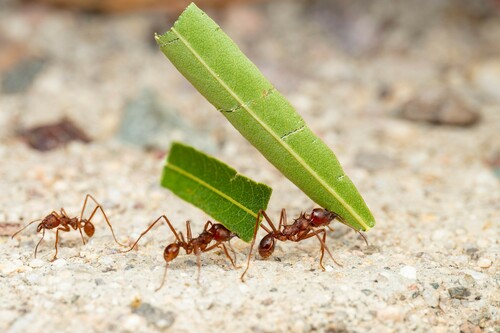
They cut leaves to grow a fungus (Leucoagaricus gongylophorus) which they feed on.
Source: Wikipedia
Same family (Formicidae)
 Eastern Black Carpenter AntCamponotus pennsylvanicusCan damage your home
 Red Imported Fire AntSolenopsis invictaCan sting
 American Winter AntPrenolepis imparis
 Argentine AntLinepithema humileNuisance, not dangerous
 Immigrant Pavement AntTetramorium immigransCan sting
 Odorous House AntTapinoma sessileCan damage your home
Sources
- Wikipedia: https://en.wikipedia.org/wiki/Atta_mexicana
Look it up elsewhere: GBIF · iNaturalist · BugGuide · ITIS · Wikipedia
Text written 2026-10-22 from the sources above and checked sentence by sentence against them. Data fetched 2026-10-22.