 Bug FAQ
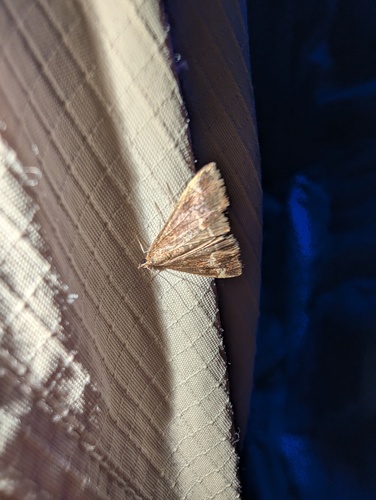
Chestnut Pyrausta
Pyrausta nicalis · Order: Lepidoptera · Family: Crambidae
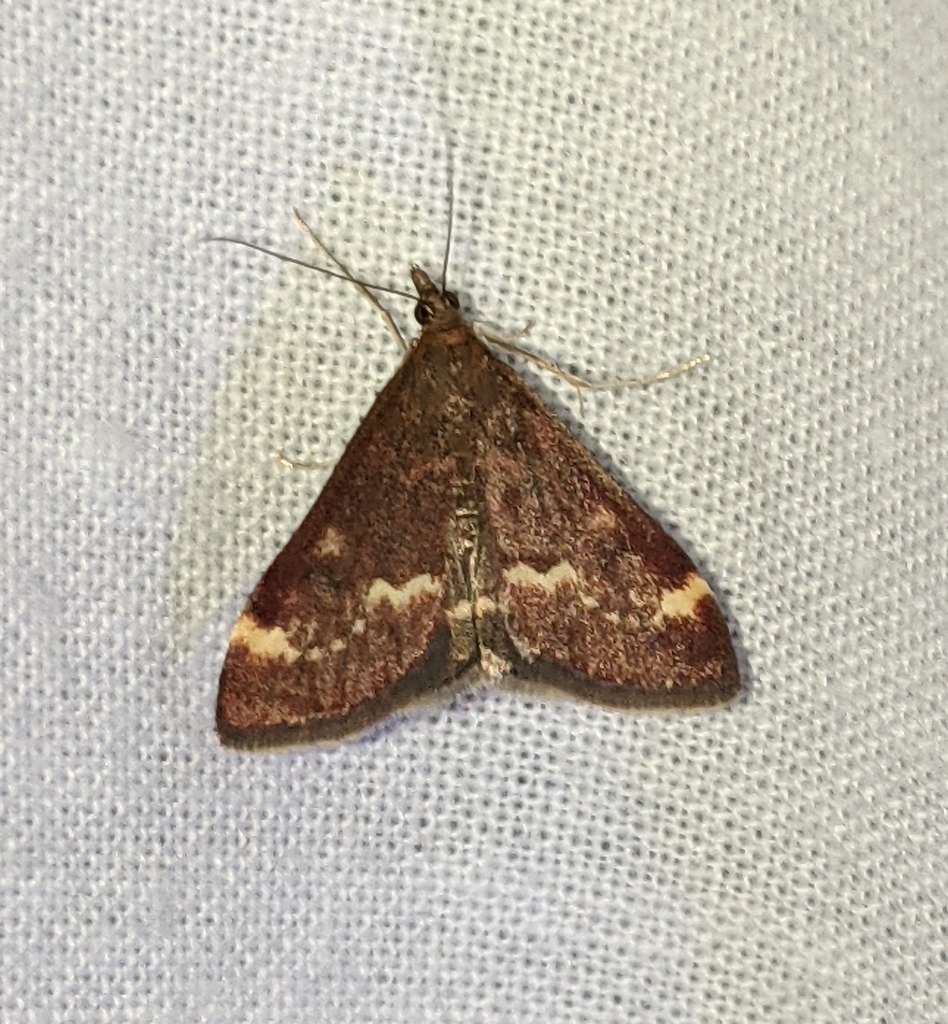
The chestnut pyrausta has a wingspan of about two centimeters. It lives across much of North America, from Quebec westward to British Columbia and south to states like Colorado, Utah, Nevada and California. Adults are on the wing from late May through mid-August.
Source: Wikipedia
Size
Wingspan ranges from 20 to 23 mm.
Source: Wikipedia
Where it lives
Found in North America, recorded from Quebec west to British Columbia and south to Colorado, Utah, Nevada and California.
Source: Wikipedia
What it eats
Larvae may feed on mint plants (Mentha species).
Source: Wikipedia
Life cycle
Adults fly from late May until mid-August.
Source: Wikipedia
When you see it
The flight period spans late May through mid-August.
Source: Wikipedia
Where it comes from
Its North American range includes eastern Canada to the western provinces and several western U.S. states.
Source: Wikipedia
Where it is found in the US
Recorded in 13 of 51 states and DC. Most records: Utah, Montana, Idaho, California, Oregon, Wyoming, Colorado, Michigan.
Darker = more records. Counts are museum and citizen-science records, not population size.
Source: GBIF
Status: native in North America; native in Canada; native in United States. Source: iNaturalist
Months it is reported in the US
Source: GBIF
More photos
Questions people ask
When can I see adult chestnut pyrausta?
Adults are active from late May to mid-August.
Source: Wikipedia
Where is this moth found?
It occurs across Canada and the western United States, from Quebec to British Columbia and south to Colorado, Utah, Nevada and California.
Source: Wikipedia
Same family (Crambidae)
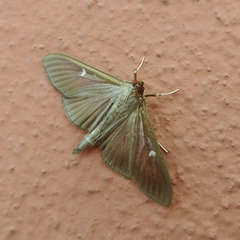 Box Tree MothCydalima perspectalisDamages trees, gardens or crops
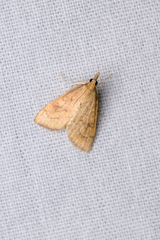 Celery Leaftier MothUdea rubigalis
 Elegant Grass-veneerMicrocrambus elegans
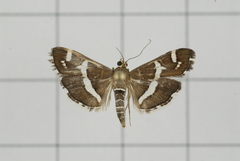 Hawaiian Beet Webworm MothSpoladea recurvalisDamages trees, gardens or crops
 Garden Grass-veneerChrysoteuchia culmellaDamages trees, gardens or crops
 Bluegrass Webworm MothParapediasia teterrellusDamages trees, gardens or crops
Sources
- Wikipedia: https://en.wikipedia.org/wiki/Pyrausta_nicalis
Look it up elsewhere: GBIF · iNaturalist · BugGuide · Wikipedia
Text written 2026-10-26 from the sources above and checked sentence by sentence against them. Data fetched 2026-10-26.