 Bug FAQ
Chestnut Carpenter Ant
Camponotus castaneus · Order: Hymenoptera · Family: Formicidae
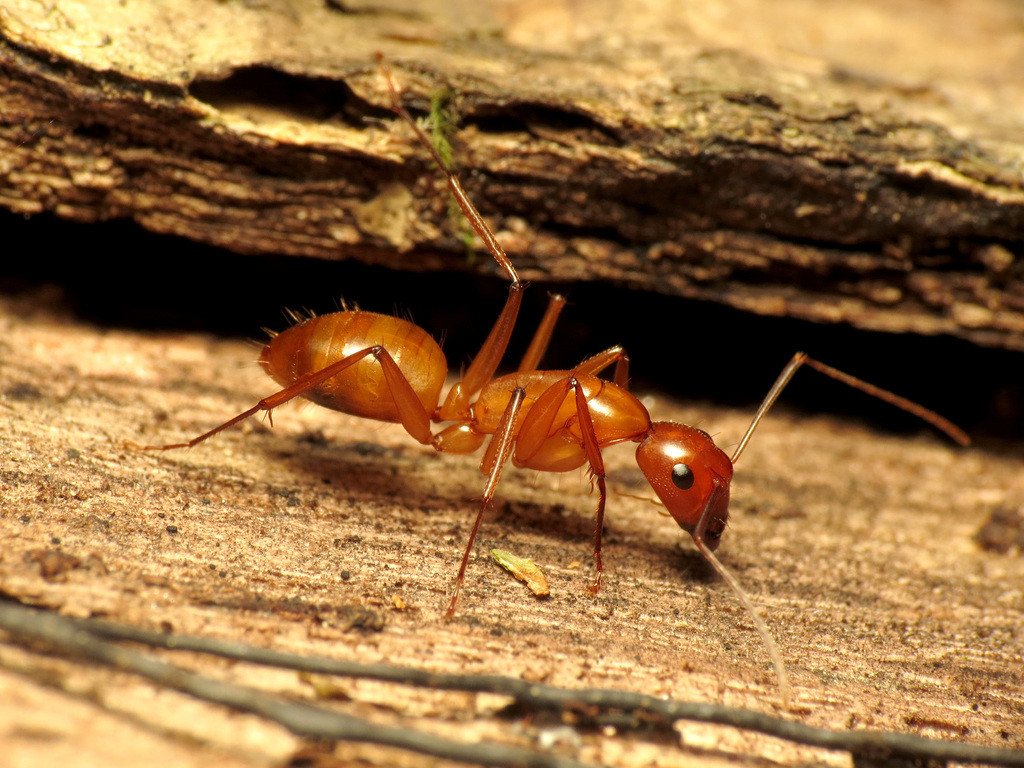
Chestnut carpenter ants are orangish-red insects found in eastern North America, especially in rotting wood. Workers are 8 to 10 mm, queens 18 to 20 mm, and larger majors can reach up to 17 mm; they eat insects and honeydew and develop in about 35 to 60 days.
Source: Wikipedia
How to recognize it
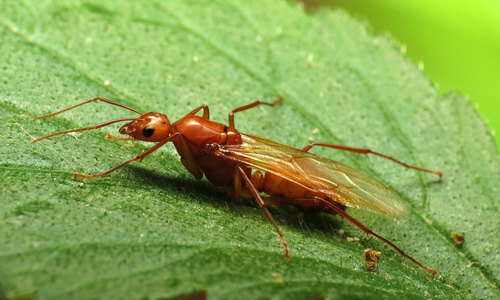
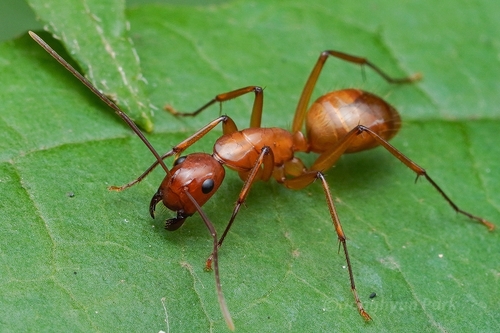
They are mostly orangish-red, with workers darker and queens ranging from light to dark red.
Source: Wikipedia
Size
Workers measure about 8 to 10 mm, queens 18 to 20 mm, majors 10 to 14 mm, and super-majors 13 to 17 mm.
Source: Wikipedia
Is it a pest in the house?
They are commonly found in rotting wood but do not eat the wood itself.
Source: Wikipedia
Does it bite or sting?
Carpenter ants lack a stinger and do not sting.
Source: Wikipedia
How to get rid of it
A founding queen will burrow into the ground or hide in a small space, and stress can cause a colony to fail.
Source: Wikipedia
Where it lives
They live in eastern North America from Florida to Maine and are most often found in rotting wood.
Source: Wikipedia
What it eats
They have a generalist diet, feeding on other insects and sugary substances like honeydew.
Source: Wikipedia
Life cycle
Like all ants they pass through egg, larva, pupa and adult stages, completing development in 35 to 60 days.
Source: Wikipedia
When you see it
Nuptial flights occur in June and July, with fewer queens in August, and they enter diapause early in the fall.
Source: Wikipedia
Where it comes from
Their native range is the eastern United States, stretching from Florida up to Maine.
Source: Wikipedia
Lookalikes
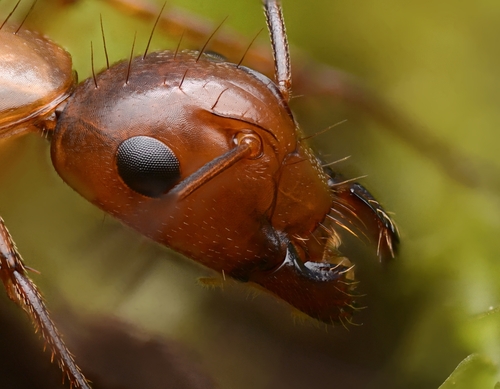
They have a square-shaped head, a smooth thorax and abdomen with a single node, and include majors and super-majors.
Source: Wikipedia
Where it is found in the US
Recorded in 29 of 51 states and DC. Most records: Virginia, North Carolina, Maryland, Mississippi, Florida, Georgia, Tennessee, Alabama.
Darker = more records. Counts are museum and citizen-science records, not population size.
Source: GBIF
Status: endemic in United States; native in North America; native in Canada. Source: iNaturalist
Months it is reported in the US
Source: GBIF
More photos
Questions people ask
Can they damage my house?
They may hollow out rotting wood but do not eat wood, so they cause little structural damage.
Source: Wikipedia
Same family (Formicidae)
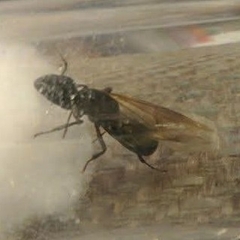 Eastern Black Carpenter AntCamponotus pennsylvanicusCan damage your home
 Red Imported Fire AntSolenopsis invictaCan sting
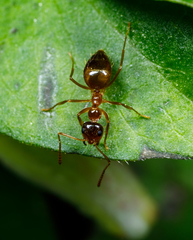 American Winter AntPrenolepis imparis
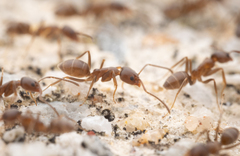 Argentine AntLinepithema humileNuisance, not dangerous
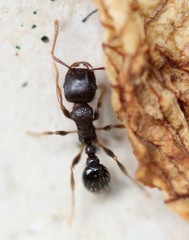 Immigrant Pavement AntTetramorium immigransCan sting
 Odorous House AntTapinoma sessileCan damage your home
Sources
- Wikipedia: https://en.wikipedia.org/wiki/Camponotus_castaneus
Look it up elsewhere: GBIF · iNaturalist · BugGuide · ITIS · Wikipedia
Text written 2026-10-22 from the sources above and checked sentence by sentence against them. Data fetched 2026-10-22.