 Bug FAQ
Chequered Grass-veneer
Catoptria falsella · Order: Lepidoptera · Family: Crambidae
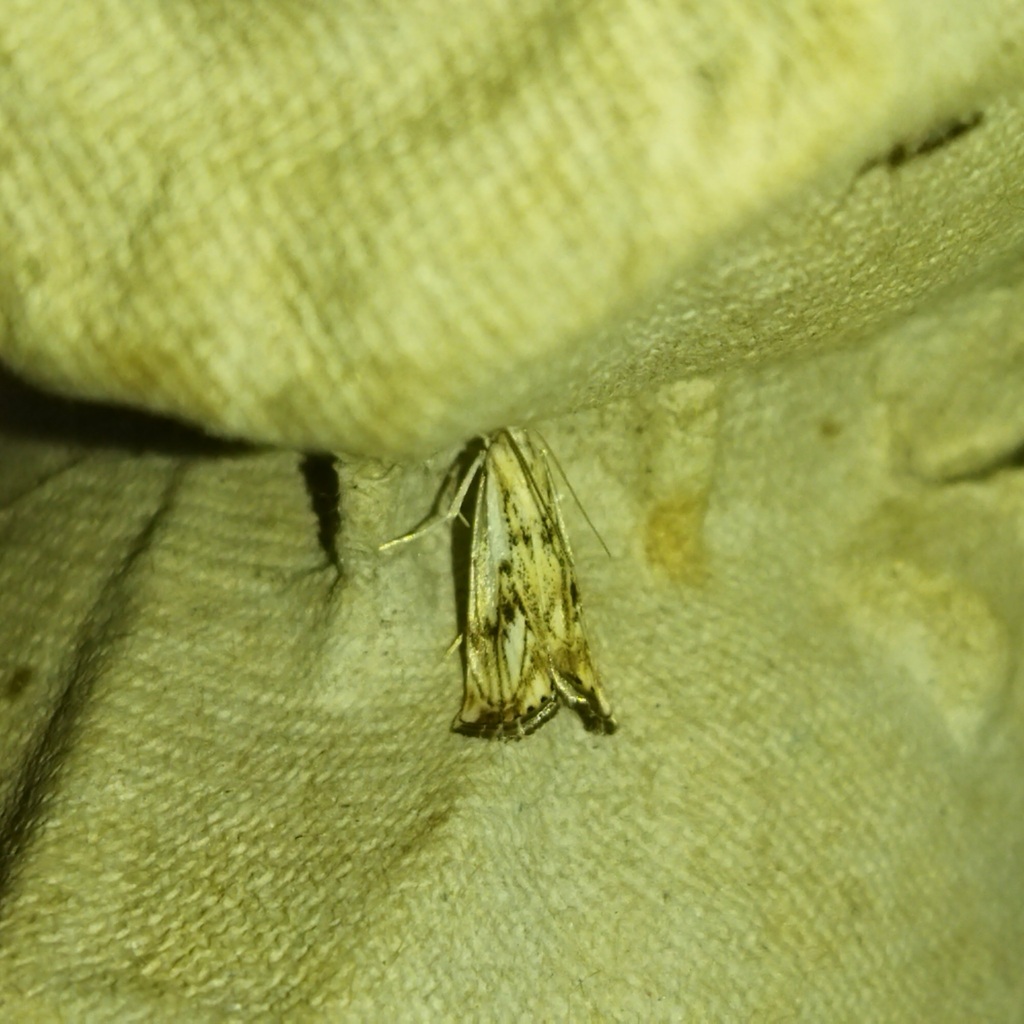
The chequered grass-veneer is a small moth with a wingspan of about 18 to 24 mm and forewings 8 to 9 mm long. Its forewings are white, brown and yellowish-brown with a narrow white line running from the base past the middle, and it flies from June to September in Europe.
Source: Wikipedia
Size
Wingspan ranges from 18 to 24 mm. Forewing length is about 8 to 9 mm.
Source: Wikipedia
Where it lives
It is found throughout Europe and is active at night.
Source: Wikipedia
Life cycle
Adults are on the wing from June to September, depending on location.
Source: Wikipedia
When you see it
Flight period spans June through September, varying with geography.
Source: Wikipedia
Where it comes from
Its native range is Europe.
Source: Wikipedia
Lookalikes
Catoptria falsella, the chequered grass-veneer, belongs to the moth family Crambidae.
Source: Wikipedia
More photos
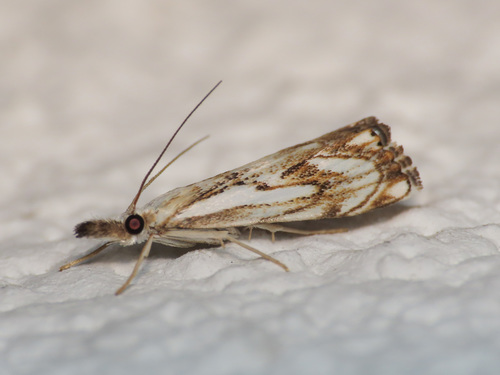
Questions people ask
When can I expect to see these moths?
Adults fly from June to September, with exact timing depending on where you are in Europe.
Source: Wikipedia
What do the caterpillars eat?
The larvae feed on mosses, especially the species Tortula muralis.
Source: Wikipedia
Where are chequered grass-veneer moths found?
They are found across Europe and are active at night.
Source: Wikipedia
Same family (Crambidae)
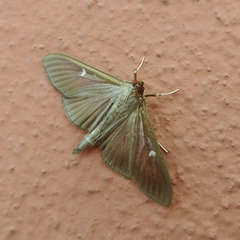 Box Tree MothCydalima perspectalisDamages trees, gardens or crops
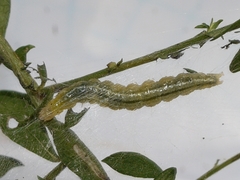 Celery Leaftier MothUdea rubigalisDamages trees, gardens or crops
 Elegant Grass-veneerMicrocrambus elegans
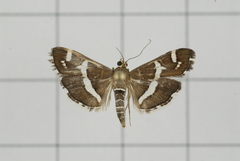 Hawaiian Beet Webworm MothSpoladea recurvalisDamages trees, gardens or crops
 Garden Grass-veneerChrysoteuchia culmellaDamages trees, gardens or crops
 Bluegrass Webworm MothParapediasia teterrellusDamages trees, gardens or crops
Sources
- Wikipedia: https://en.wikipedia.org/wiki/Catoptria_falsella
Look it up elsewhere: GBIF · iNaturalist · BugGuide · Wikipedia
Text written 2026-10-22 from the sources above and checked sentence by sentence against them. Data fetched 2026-10-22.