 Bug FAQ
Charred Dagger
Acronicta brumosa · Order: Lepidoptera · Family: Noctuidae
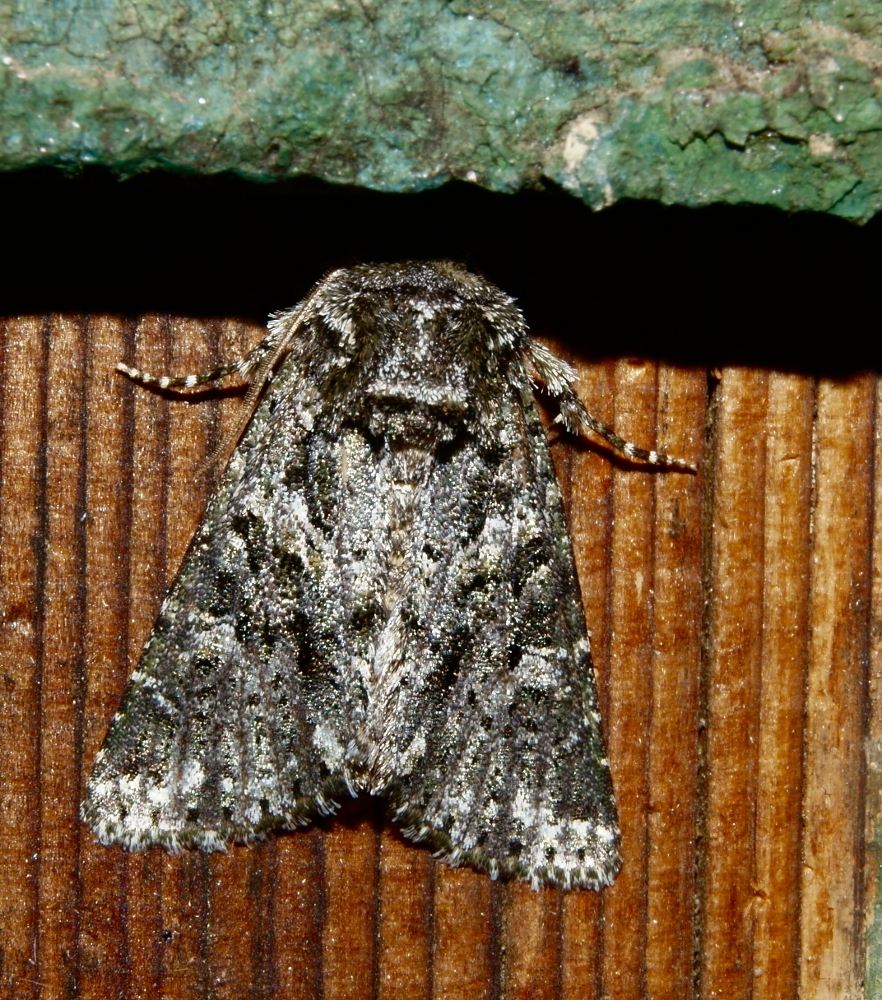
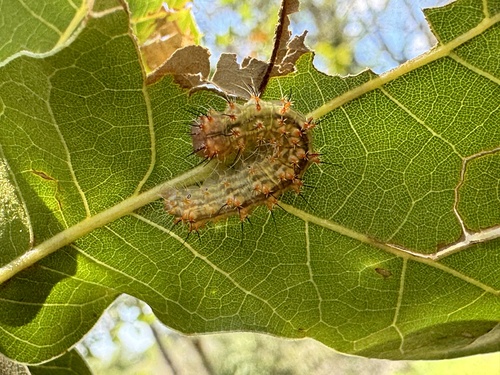
The Charred Dagger moth has a wingspan of about 38 mm. It occurs across the United States from New York down to Florida, west to California, and north to Utah. Its larvae feed on various oak (Quercus) species.
Source: Wikipedia
Size
Wingspan is roughly 38 mm.
Source: Wikipedia
What it eats
Larvae feed on several oak species.
Source: Wikipedia
Where it is found in the US
Recorded in 29 of 51 states and DC. Most records: Texas, Arizona, Georgia, Colorado, New Mexico, Florida, North Carolina, Mississippi.
Darker = more records. Counts are museum and citizen-science records, not population size.
Source: GBIF
Status: native in North America; native in United States. Source: iNaturalist
Months it is reported in the US
Source: GBIF
More photos
Questions people ask
What do the caterpillars of the Charred Dagger eat?
They feed on various oak (Quercus) species.
Source: Wikipedia
Where is the Charred Dagger found in the United States?
It ranges from New York to Florida, across the southern states to California, and up to Utah.
Source: Wikipedia
Same family (Noctuidae)
 Ipsilon Dart MothAgrotis ipsilonDamages trees, gardens or crops
 Fall Armyworm MothSpodoptera frugiperdaDamages trees, gardens or crops
 Army Cutworm MothEuxoa auxiliarisDamages trees, gardens or crops
 Large Yellow UnderwingNoctua pronubaDamages trees, gardens or crops
 Silver ΥAutographa gamma
 American DaggerAcronicta americanaCan irritate skin
Sources
- Wikipedia: https://en.wikipedia.org/wiki/Acronicta_brumosa
Look it up elsewhere: GBIF · iNaturalist · BugGuide · ITIS · Wikipedia
Text written 2026-10-25 from the sources above and checked sentence by sentence against them. Data fetched 2026-10-25.