 Bug FAQ
Central European Bicolored Ant
Lasius emarginatus · Order: Hymenoptera · Family: Formicidae
Source: Wikipedia
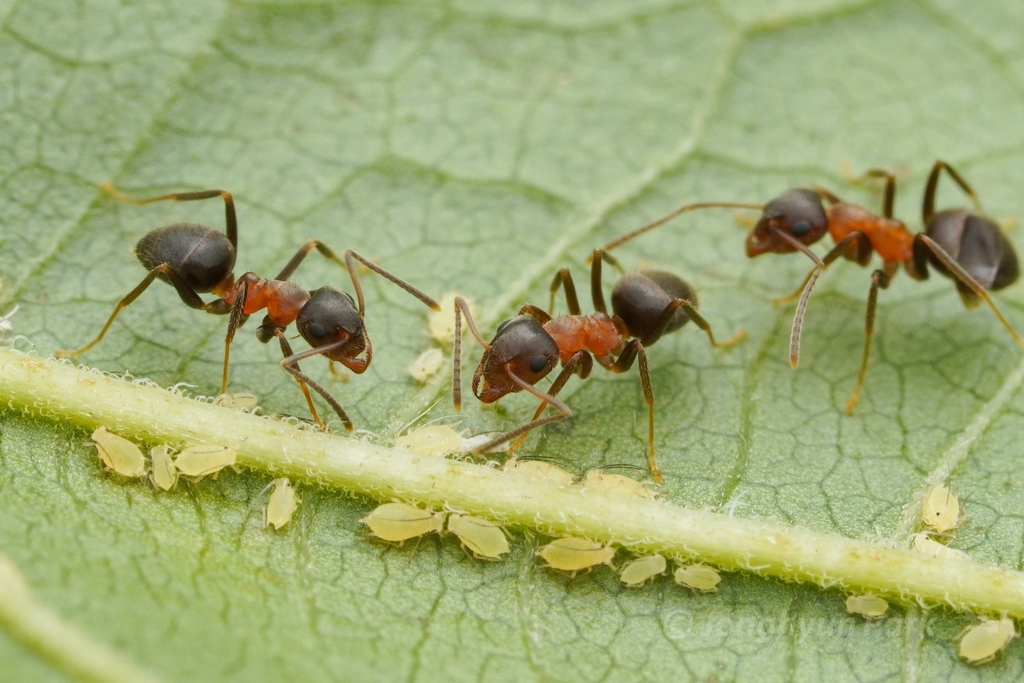
The Central European Bicolored Ant is a small ant, workers 3 to 5.5 mm, queens 7 to 10 mm and males up to 14.5 mm long. It is native to western Eurasia but has become an invasive urban pest, especially in Manhattan buildings. Queens can live up to 30 years, workers about three years, and nuptial flights occur from June to August.
Source: Wikipedia
How to recognize it
Workers and queens have a reddish-brown thorax with brown heads and abdomens, while males are all brown.
Source: Wikipedia
Size
Workers measure 3 to 5.5 mm, queens 7 to 10 mm, and males 7 to 14.5 mm in length.
Source: Wikipedia
Is it a pest in the house?
It has become a dominant urban pest despite being less problematic in its native range.
Source: Wikipedia
Does it bite or sting?
The ants are not aggressive but will defend territory if threatened.
Source: Wikipedia
How to get rid of it
Colonies can start with multiple queens working together, after which workers eliminate all but one queen.
Source: Wikipedia
Where it lives
It occurs across the Western Palearctic and has invaded Manhattan, living on upper floors of tall buildings.
Source: Wikipedia
What it eats
It feeds on a variety of foods as an omnivore.
Source: Wikipedia
Life cycle
Queens may live up to 30 years, while workers live up to three years.
Source: Wikipedia
When you see it
Mating flights take place between June and August.
Source: Wikipedia
Where it comes from
The species is native to western Eurasia.
Source: Wikipedia
Lookalikes
In the United States it is known as the invasive “ManhattAnt”.
Source: Wikipedia
Where it is found in the US
Recorded in 2 of 51 states and DC. Most records: New York, New Jersey.
Darker = more records. Counts are museum and citizen-science records, not population size.
Source: GBIF
Status: introduced in United States. Source: iNaturalist
Months it is reported in the US
Source: GBIF
More photos

Questions people ask
Do these ants bite or sting?
They are not aggressive and do not normally bite or sting people, though they will attack if provoked.
Source: Wikipedia
Are they a problem inside homes?
Yes, they are considered a dominant urban pest in buildings, especially in Manhattan.
Source: Wikipedia
When do they have their mating flights?
Nuptial flights occur from June through August.
Source: Wikipedia
Same family (Formicidae)
 Eastern Black Carpenter AntCamponotus pennsylvanicusCan damage your home
 Red Imported Fire AntSolenopsis invictaCan sting
 American Winter AntPrenolepis imparis
 Argentine AntLinepithema humileNuisance, not dangerous
 Immigrant Pavement AntTetramorium immigransCan sting
 Odorous House AntTapinoma sessileCan damage your home
Sources
- Wikipedia: https://en.wikipedia.org/wiki/Lasius_emarginatus
Look it up elsewhere: GBIF · iNaturalist · BugGuide · ITIS · Wikipedia
Text written 2026-10-22 from the sources above and checked sentence by sentence against them. Data fetched 2026-10-22.