 Bug FAQ
Caper White
Belenois java · Order: Lepidoptera · Family: Pieridae
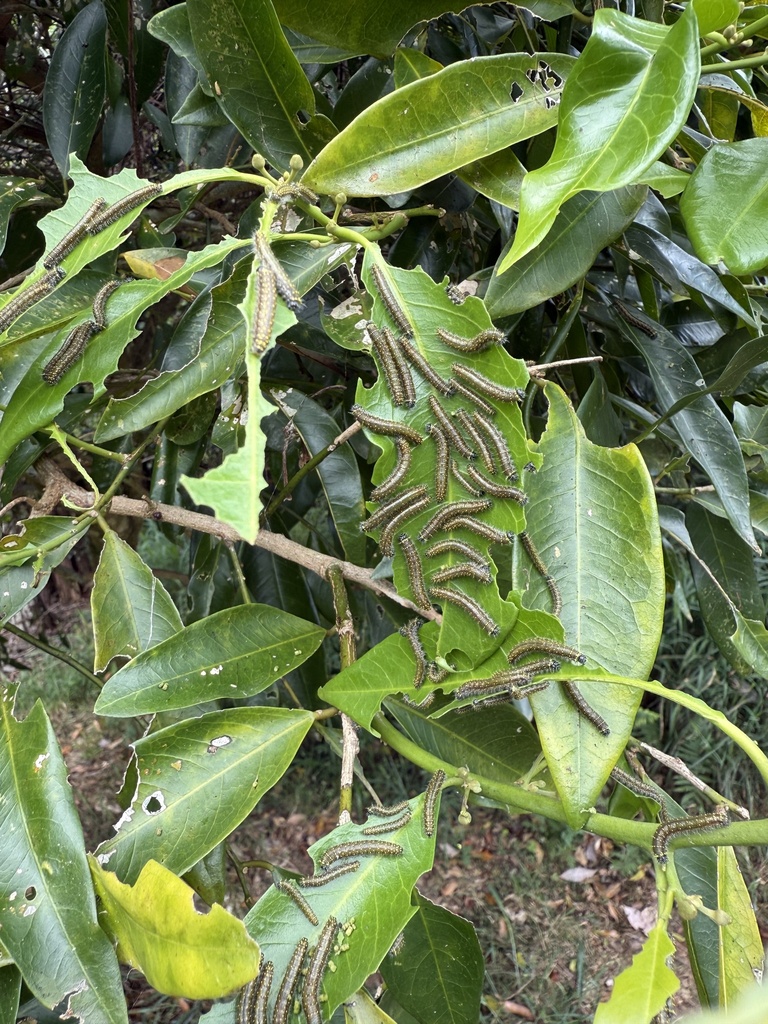
The male has a wingspan of about 5 cm and the female about 6 cm. Adults have white upper wings with a black tip and a black border on the hindwing; the underside of the hindwing is mostly black with white and yellow patches. They migrate long distances, lay eggs in groups on host-plant leaves, the caterpillars feed for three weeks before pupating, and adults emerge around December.
Source: Wikipedia
How to recognize it
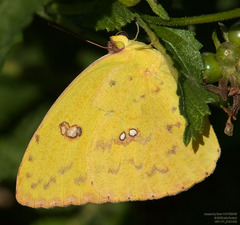
Upper wings are white with a broad black tip and a black border on the hindwing; underside of hindwing is almost all black with white and yellow patches between veins.
Source: Wikipedia
Size
Male wingspan is about 5 cm; female wingspan is about 6 cm.
Source: Wikipedia
Where it lives
The species is highly migratory.
Source: Wikipedia
What it eats
Caterpillars feed on several native caper species such as currant bush, scrub caper berry, dog caper, nipan, Australian native orange, wild orange, Australian native caper and bush orange.
Source: Wikipedia
Life cycle
Eggs are laid in groups on the tops of host-plant leaves. Caterpillars feed for about three weeks before pupating.
Source: Wikipedia
Questions people ask
Are they a garden pest?
Their caterpillars feed on native caper plants, not on cultivated garden crops.
Source: Wikipedia
Same family (Pieridae)


Sources
- Wikipedia: https://en.wikipedia.org/wiki/Belenois_java
Look it up elsewhere: GBIF · iNaturalist · BugGuide · Wikipedia
Text written 2026-10-22 from the sources above and checked sentence by sentence against them. Data fetched 2026-10-22.