 Bug FAQ
Canary Islands' Large White
Pieris cheiranthi · Order: Lepidoptera · Family: Pieridae
Also called: Canary Islands Large White, Canary Large White
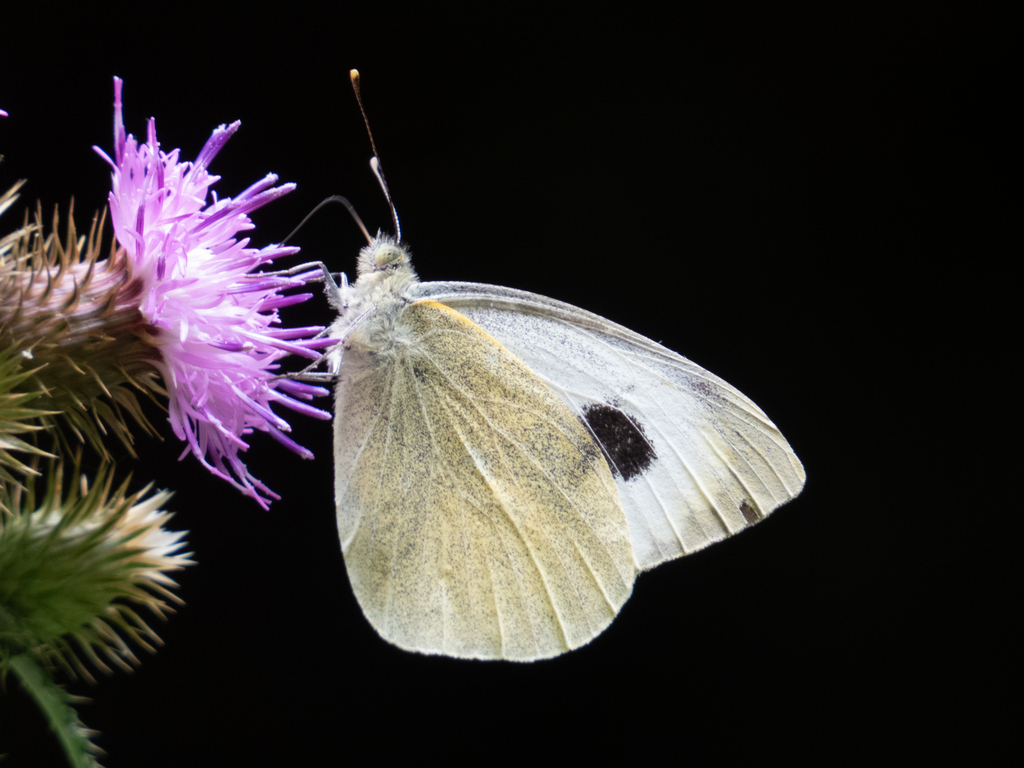
The Canary Islands' Large White butterfly reaches 57 to 66 mm in length. It lives in wet, shady gorges of laurel forests and on moist cliffs with a similar microclimate. Caterpillars feed on Canary silverwort, nasturtium, and the endemic Crambe strigosa.
Source: Wikipedia
How to recognize it
It looks like Pieris brassicae but has larger, fused black discal patches.
Source: Wikipedia
Size
Adults measure between 57 and 66 mm.
Source: Wikipedia
Where it lives
It inhabits wet, moist, shady gorges within laurel forests. It is also found on wet cliffs that provide a comparable microclimate.
Source: Wikipedia
What it eats
Crambe strigosa, another Canary endemic, appears to be their only natural host plant.
Source: Wikipedia
Life cycle
The butterfly produces seven to eight overlapping generations each year.
Source: Wikipedia
When you see it
Adults are present throughout the year and no diapause has been recorded.
Source: Wikipedia
Where it comes from
The species is endemic to Spain’s Canary Islands.
Source: Wikipedia
Questions people ask
How large does the Canary Islands' Large White get?
Adults reach 57 to 66 mm in length.
Source: Wikipedia
What habitats does this butterfly prefer?
It lives in wet, shady gorges of laurel forests and on moist cliffs with a similar microclimate.
Source: Wikipedia
What plants do the caterpillars feed on?
They eat Canary silverwort, nasturtium, and the endemic Crambe strigosa.
Source: Wikipedia
How many generations does the species have each year?
It flies in seven to eight overlapping generations annually.
Source: Wikipedia
Same family (Pieridae)


Sources
- Wikipedia: https://en.wikipedia.org/wiki/Canary_Islands_large_white
Look it up elsewhere: GBIF · iNaturalist · BugGuide · Wikipedia
Text written 2026-10-23 from the sources above and checked sentence by sentence against them. Data fetched 2026-10-23.