 Bug FAQ
Camponotus rufipes
Camponotus rufipes · Order: Hymenoptera · Family: Formicidae
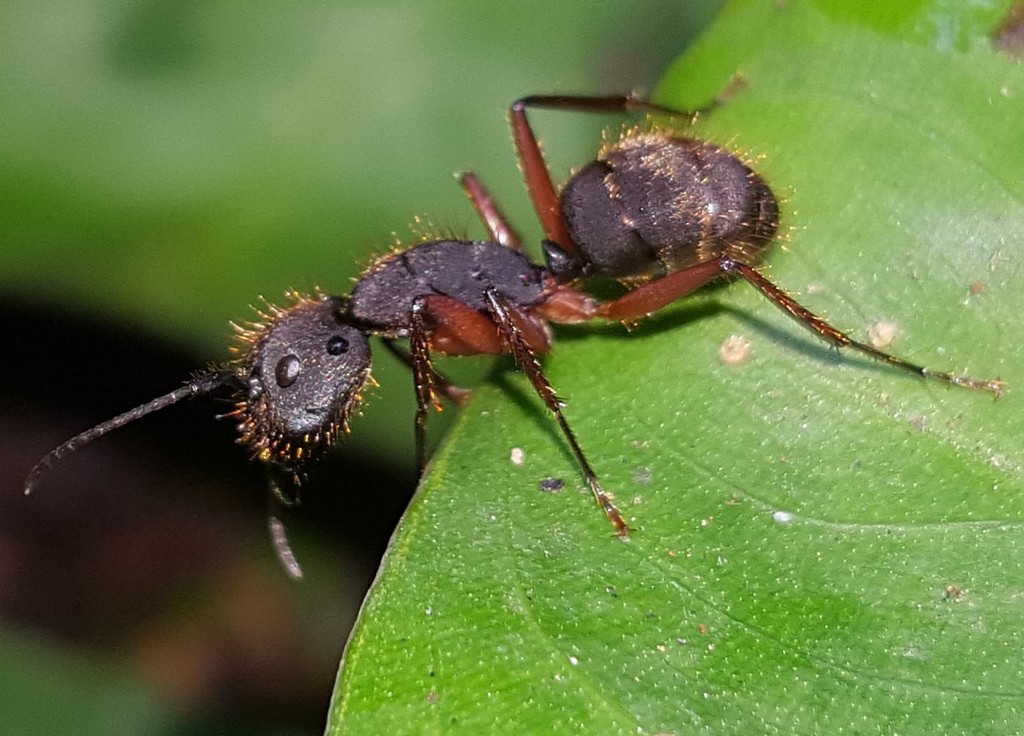
Workers are about 6 mm long and have a dark-brown body with reddish-yellow legs and fine reddish hairs. They are nocturnal, build ground nests that look like dry-grass mounds 20 to 30 cm across, and commonly raid beehives.
Source: Wikipedia
How to recognize it
They are dark-brown with reddish-yellow legs and covered in fine reddish hairs.
Source: Wikipedia
Size
Workers measure about 6 mm in length.
Source: Wikipedia
Does it bite or sting?
They do not have a stinger and their venom consists mainly of formic acid.
Source: Wikipedia
What it eats
They attack beehives.
Source: Wikipedia
Life cycle
Males go through four larval stages that have different types of hairs.
Source: Wikipedia
Where it comes from
They are very common in southeastern Brazil.
Source: Wikipedia
More photos
Questions people ask
What do Camponotus rufipes ants look like?
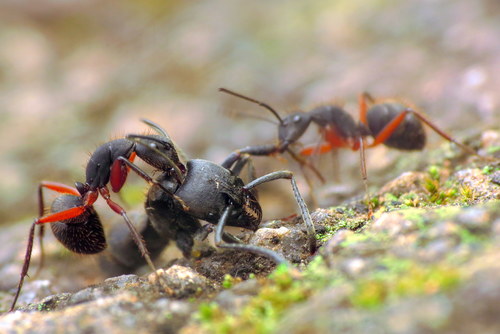
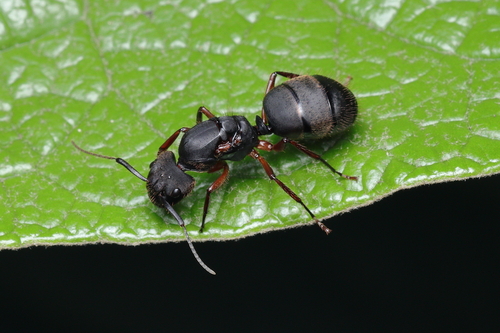
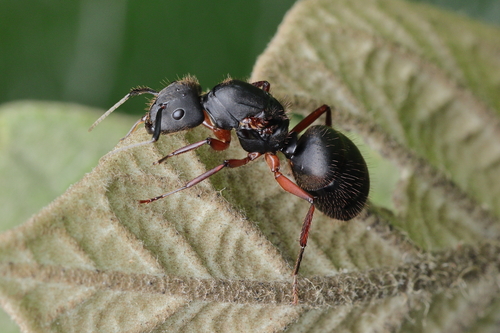
They are dark-brown with reddish-yellow legs and fine reddish hairs covering their bodies.
Source: Wikipedia
Same family (Formicidae)
 Eastern Black Carpenter AntCamponotus pennsylvanicusCan damage your home
 Red Imported Fire AntSolenopsis invictaCan sting
 American Winter AntPrenolepis imparis
 Argentine AntLinepithema humileNuisance, not dangerous
 Immigrant Pavement AntTetramorium immigransCan sting
 Odorous House AntTapinoma sessileCan damage your home
Sources
- Wikipedia: https://en.wikipedia.org/wiki/Camponotus_rufipes
Look it up elsewhere: GBIF · iNaturalist · BugGuide · ITIS · Wikipedia
Text written 2026-10-23 from the sources above and checked sentence by sentence against them. Data fetched 2026-10-22.