 Bug FAQ
Camponotus dumetorum
Camponotus dumetorum · Order: Hymenoptera · Family: Formicidae
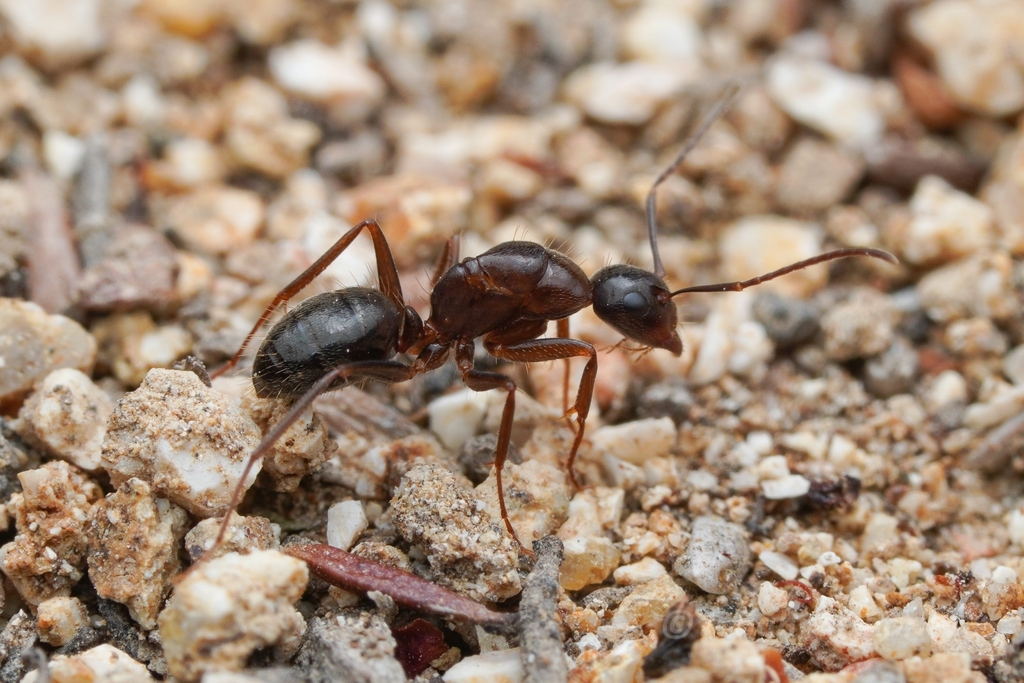
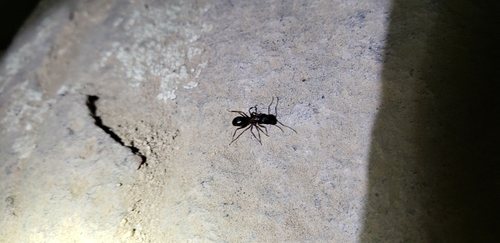
Camponotus dumetorum is a carpenter ant native to North America, especially the California floristic province. Major workers measure 10 to 13 mm, minors 6 to 9 mm, and the ant has a black head and gaster with dull brown thorax and legs covered in stiff yellow hairs. It lives underground, is active at night, and forms a mutualistic relationship with the cactus Ferocactus viridescens, protecting it for nectar.
Source: Wikipedia
How to recognize it
The head and gaster are black while the thorax and legs are dull brown. The body is covered with stiff yellow hairs and looks generally dull except for the gaster and legs.
Source: Wikipedia
Size
Major workers are typically 10 to 13 mm long. Minor workers range from 6 to 9 mm in length.
Source: Wikipedia
Is it a pest in the house?
It has a mutualistic relationship with Ferocactus viridescens and may help outcompete imported fire ants because of its larger size.
Source: Wikipedia
Can it bite, sting or make you sick?
Researchers have looked at using this ant to deter imported fire ants through competitive displacement.
Source: Wikipedia
How to get rid of it
Using C. dumetorum as a biological control agent against imported fire ants is being explored.
Source: Wikipedia
Where it lives
They are mainly nocturnal and build nests underground. Their numbers have been reduced where Argentine ants have been introduced.
Source: Wikipedia
What it eats
The ant protects Ferocactus viridescens from herbivores in exchange for nectar from the cactus’s extrafloral nectaries. Its role is considered beneficial for the environment and agriculture.
Source: Wikipedia
When you see it
Camponotus dumetorum is primarily active at night.
Source: Wikipedia
Where it comes from
Camponotus dumetorum is native to North America. It is found in Baja California and California, especially within the California floristic province.
Source: Wikipedia
Lookalikes
It is related to other western North American Tanaemyrmex ants such as C. semitestaceus and C. vicinus. It shares many features with male C. vicinus.
Source: Wikipedia
Where it is found in the US
Recorded in 1 of 51 states and DC. Most records: California.
Darker = more records. Counts are museum and citizen-science records, not population size.
Source: GBIF
Status: native in North America; native in United States. Source: iNaturalist
Months it is reported in the US
Source: GBIF
More photos
Questions people ask
What does Camponotus dumetorum look like?
It has a black head and gaster, dull brown thorax and legs, and stiff yellow hairs covering its body; majors are 10 to 13 mm and minors 6 to 9 mm long.
Source: Wikipedia
Where is Camponotus dumetorum found?
It is native to North America, especially California and Baja California within the California floristic province.
Source: Wikipedia
Can this ant help control fire ants?
Scientists are studying its use to deter imported fire ants through competitive displacement.
Source: Wikipedia
Same family (Formicidae)
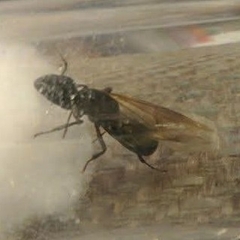 Eastern Black Carpenter AntCamponotus pennsylvanicusCan bite
 Red Imported Fire AntSolenopsis invictaCan sting
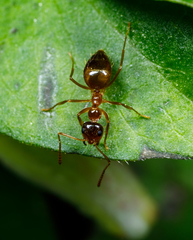 American Winter AntPrenolepis imparis
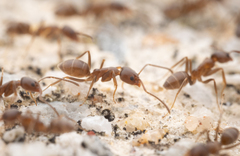 Argentine AntLinepithema humileNuisance, not dangerous
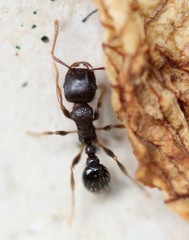 Immigrant Pavement AntTetramorium immigransCan sting
 Odorous House AntTapinoma sessileCan damage your home
Sources
- Wikipedia: https://en.wikipedia.org/wiki/Camponotus_dumetorum
Look it up elsewhere: GBIF · iNaturalist · BugGuide · ITIS · Wikipedia
Text written 2026-10-26 from the sources above and checked sentence by sentence against them. Data fetched 2026-10-26.