 Bug FAQ
California Swollenstinger Scorpion
Anuroctonus pococki · Order: Scorpiones · Family: Chactidae
Source: Wikipedia
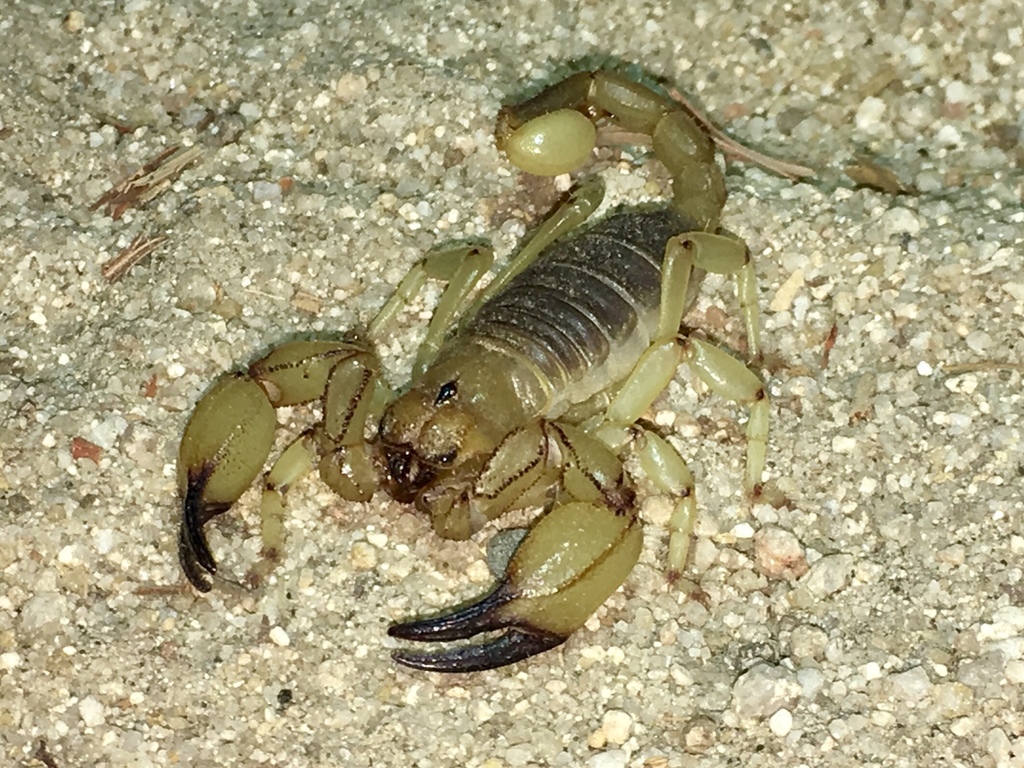
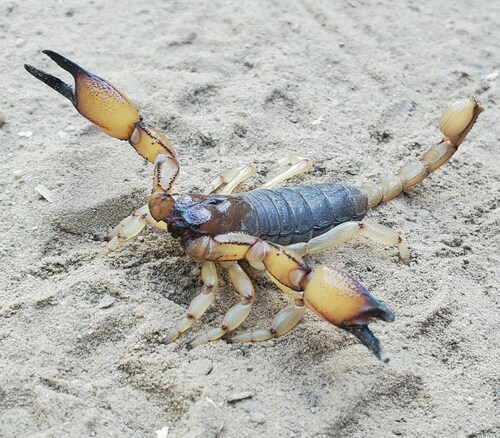
The California swollen-stinger scorpion grows to about 65 mm (2.6 in) and has large claws with black tips and a swollen area just before the stinger, especially in adult males. It lives in burrows in the coastal ranges of southern California and Baja California, waiting at night to ambush passing prey. Stings are rare, typically cause pain that fades within a day, but can pose health risks for the very young or old.
Source: Wikipedia
How to recognize it
These scorpions have oversized claws ending in black tips and a noticeably swollen segment just before the stinger, most visible in mature males.
Source: Wikipedia
Size
Adults reach roughly 65 mm (2.6 in) in length, making them large for the region.
Source: Wikipedia
Does it bite or sting?
Stings are uncommon and usually cause short-term pain that resolves within 24 hours. In rare cases, especially for very young or elderly individuals, the sting can lead to serious health problems and should be evaluated by a medical professional.
Source: Wikipedia
Where it lives
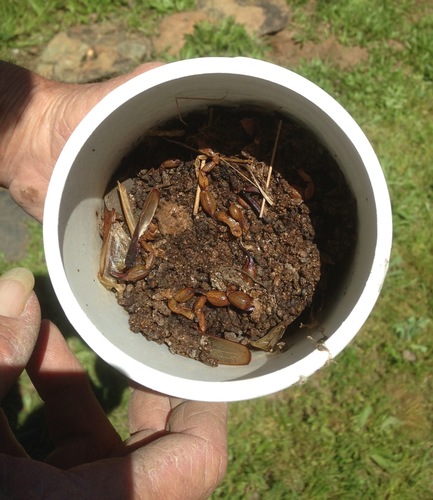
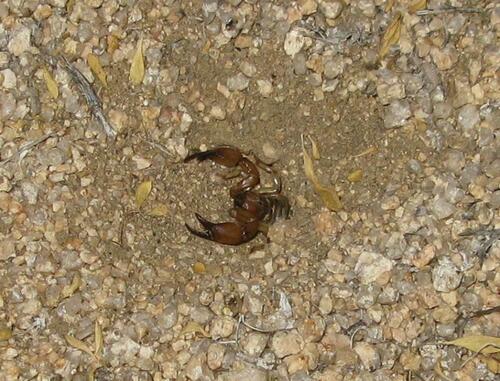
They are nocturnal hunters that stay in burrows and strike passing prey. Females dig burrows up to 60 cm deep, while males make shallower ones about 15 to 20 cm deep.
Source: Wikipedia
What it eats
They wait in their burrows and capture any small animals that pass by.
Source: Wikipedia
Life cycle
The species was formally described in 2004.
Source: Wikipedia
When you see it
They are active at night, using their burrows to ambush prey.
Source: Wikipedia
Where it comes from
They are native to the coastal ranges of southern California and extend into Baja California. They are the only Anuroctonus species found in Baja California.
Source: Wikipedia
Where it is found in the US
Recorded in 1 of 51 states and DC. Most records: California.
Darker = more records. Counts are museum and citizen-science records, not population size.
Source: GBIF
Status: native in North America; native in United States. Source: iNaturalist
Months it is reported in the US
Source: GBIF
More photos
Questions people ask
How big does the California swollen-stinger scorpion get?
It grows to about 65 mm (2.6 in) long, which is large for scorpions in that area.
Source: Wikipedia
What does this scorpion look like?
It has very large claws with black tips and a swollen segment just before the stinger, especially in adult males.
Source: Wikipedia
Where can I find this scorpion?
It lives in the coastal ranges of southern California and Baja California, digging burrows in the ground.
Source: Wikipedia
Can it sting me?
Stings are rare and usually cause pain that goes away within a day, but they can be serious for very young or old people, so see a doctor if stung.
Source: Wikipedia
Same family (Chactidae)
Sources
- Wikipedia: https://en.wikipedia.org/wiki/Anuroctonus_pococki
Look it up elsewhere: GBIF · iNaturalist · BugGuide · Wikipedia
Text written 2026-10-23 from the sources above and checked sentence by sentence against them. Data fetched 2026-10-23.