 Bug FAQ
California Dogface
Zerene eurydice · Order: Lepidoptera · Family: Pieridae
Also called: California Dogface Butterfly
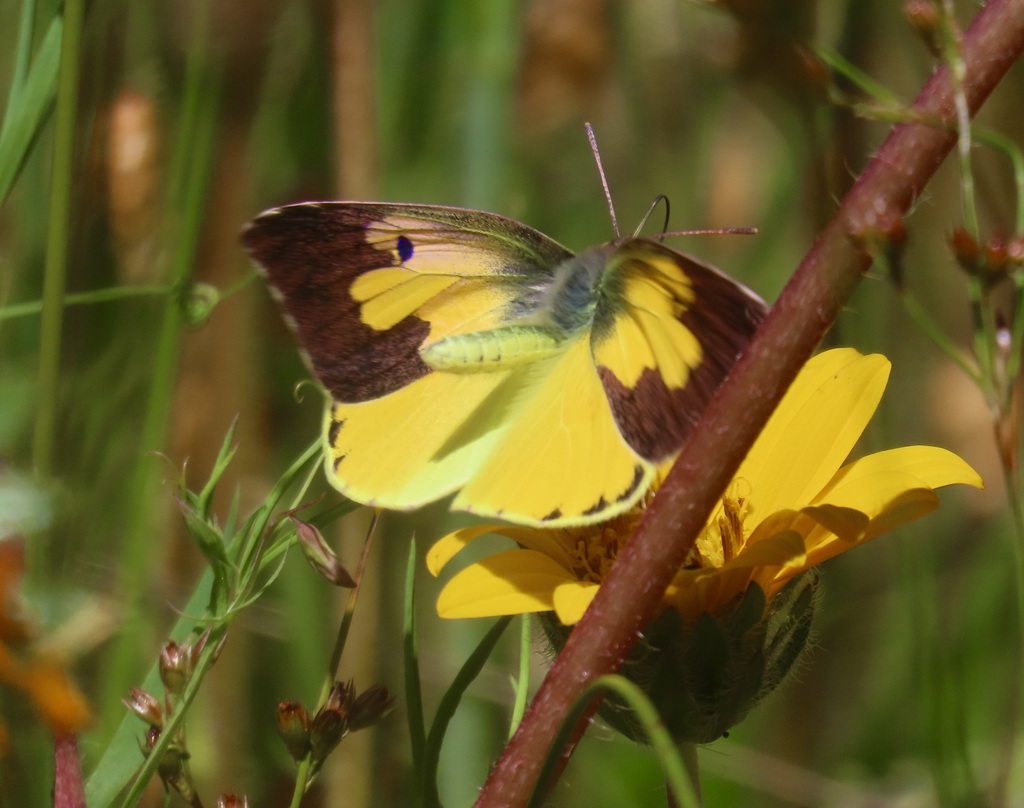
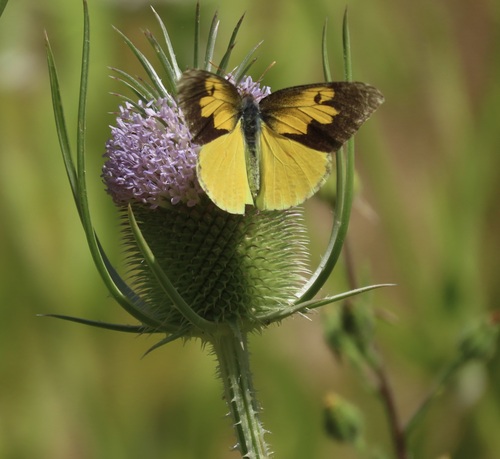
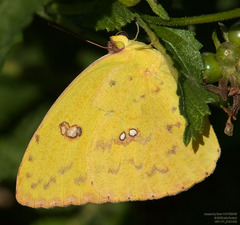
The California Dogface butterfly has a wingspan of about 5 to 6 cm (5.1-6.3 cm). Females show yellow wings with two black spots on each forewing, while males have black edging that frames a yellow-orange area and also bear two black spots; males display an iridescent sheen on the upper forewing.
Source: Wikipedia
Size
The wingspan typically ranges from 5.1 to 6.3 cm.
Source: Wikipedia
Where it lives
They live in foothills, chaparral, and oak or conifer woodlands in temperate, terrestrial areas.
Source: Wikipedia
What it eats
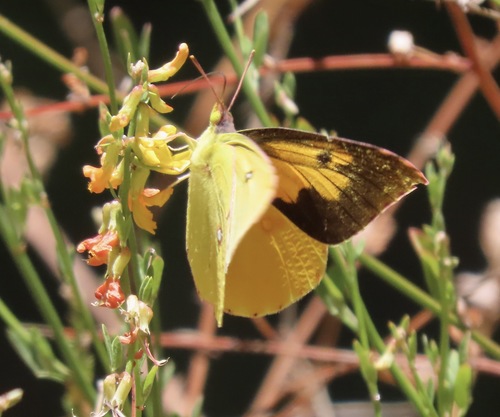
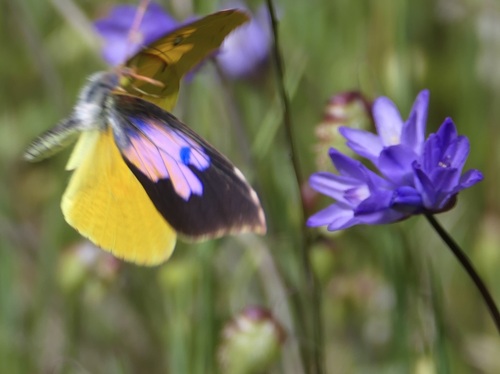
Caterpillars feed exclusively on the leaves of Amorpha californica and Amorpha fruticosa, both legumes. Adult butterflies visit moist ground and sip nectar from flowers such as blue gilia, sunflowers and thistles.
Source: Wikipedia
Life cycle
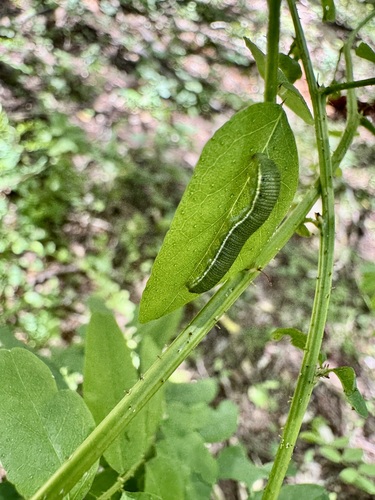
Females lay about a hundred eggs from early spring through late summer. During the larval and pupal stages the caterpillars are green-yellow, matching their host plants for camouflage.
Source: Wikipedia
When you see it
Adults usually start flying around 7 a.m. and continue into the afternoon. Their breeding period extends from early spring to late summer.
Source: Wikipedia
Where it comes from
The species is endemic to California and found only within that state.
Source: Wikipedia
Lookalikes
They share the yellow-orange and black wing pattern with butterflies of the genus Colias. Only two Zerene species exist: Zerene eurydice (California Dogface) and Zerene cesonia (Southern Dogface).
Source: Wikipedia
Where it is found in the US
Recorded in 9 of 51 states and DC. Most records: California, Kansas, New Mexico, Arizona, Colorado, Illinois, Kentucky, Texas.
Darker = more records. Counts are museum and citizen-science records, not population size.
Source: GBIF
Status: endemic in North America; endemic in United States. Source: iNaturalist
Months it is reported in the US
Source: GBIF
More photos
Questions people ask
What does a California Dogface butterfly look like?
Females have yellow wings with two black spots per forewing; males have black edges framing a yellow-orange area, two black spots, and an iridescent shine on the upper forewing.
Source: Wikipedia
When are they active during the day?
They typically begin flying at about 7 a.m. and remain active until the afternoon.
Source: Wikipedia
What do the caterpillars eat?
The larvae feed only on the leaves of Amorpha californica and Amorpha fruticosa.
Source: Wikipedia
Where can I find California Dogface butterflies?
They inhabit foothills, chaparral, and oak or conifer woodlands in temperate areas of California.
Source: Wikipedia
Same family (Pieridae)


Sources
- Wikipedia: https://en.wikipedia.org/wiki/Zerene_eurydice
Look it up elsewhere: GBIF · iNaturalist · BugGuide · ITIS · Wikipedia
Text written 2026-10-23 from the sources above and checked sentence by sentence against them. Data fetched 2026-10-23.