 Bug FAQ
Cabbage Webworm Moth
Hellula rogatalis · Order: Lepidoptera · Family: Crambidae
Also called: cabbage webworm
Source: Wikipedia
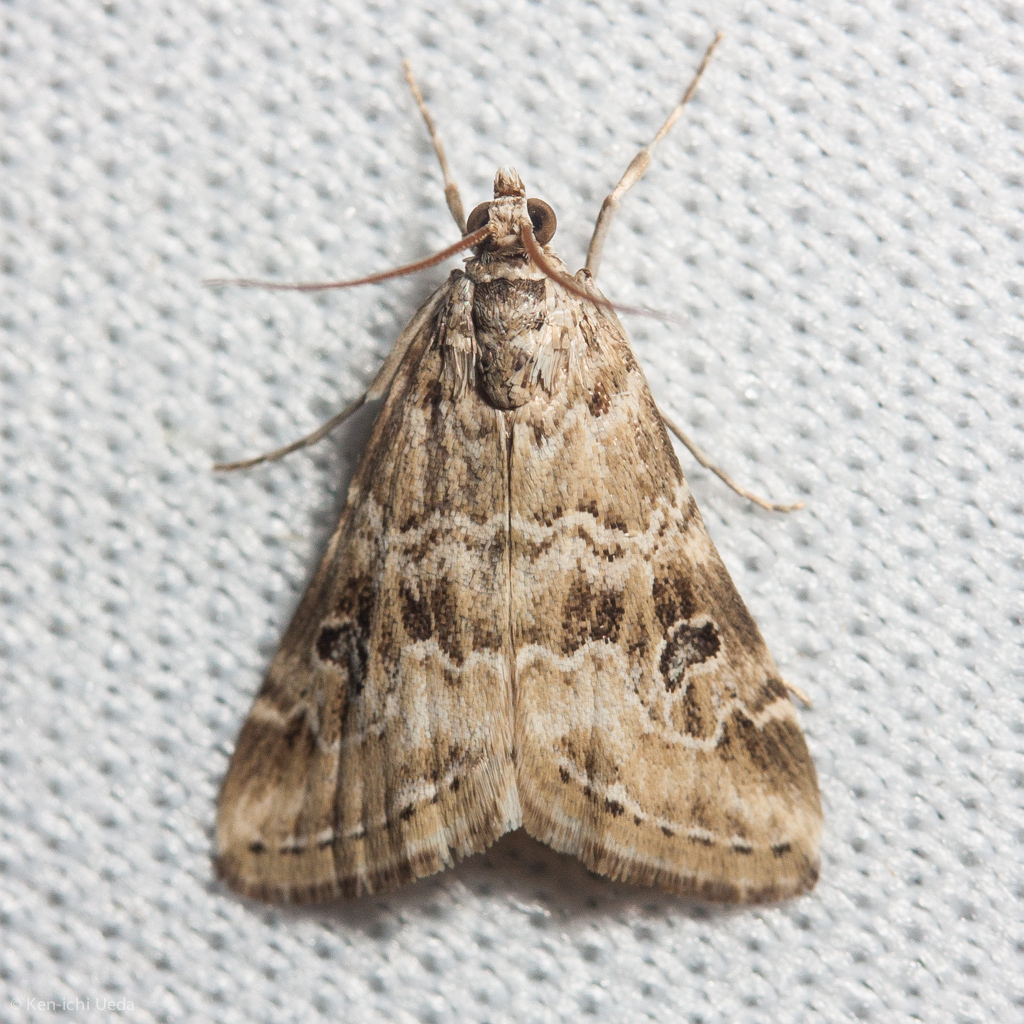
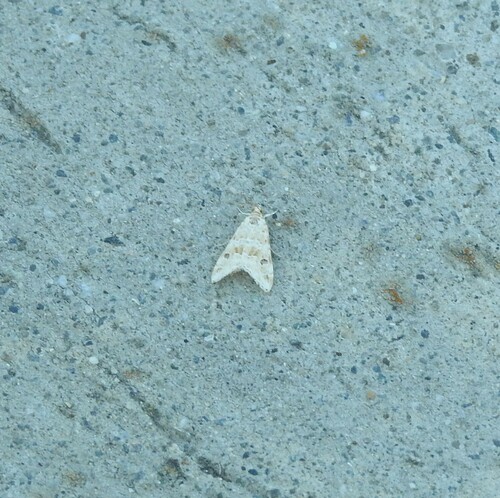
The cabbage webworm moth has a wingspan of about 15 to 21 mm and shows brown-yellow forewings with wavy white lines and a dotted subterminal line, while the hindwings are light gray with a dark edge. Its larvae feed on the buds and young leaves of many cabbage family plants, making it a pest of garden and field crops. Adults fly from late March to October in the southern range and from June to October farther north, with several generations each year in the south.
Source: Wikipedia
How to recognize it
A series of evenly spaced black dots forms the subterminal line on the forewing. Hindwings are light gray or grayish-yellow, edged with a dark terminal line and a pale fringe.
Source: Wikipedia
Size
The moth’s wingspan ranges from 15 to 21 mm.
Source: Wikipedia
Where it lives
It occurs in the southern United States and extends northward to Maryland, New York, and Ontario. Records also show it in Mexico’s Distrito Federal.
Source: Wikipedia
What it eats
Larvae eat a wide variety of Brassicaceae plants such as cabbage, turnip, kale, radish, mustard and many others.
Source: Wikipedia
Life cycle
Adults are active from late March through October in the south and from June through October in the north. In southern areas several generations occur each year.
Source: Wikipedia
Where it comes from
Native to the southern United States and reaches north to Maryland, New York, and Ontario. It is also native to Mexico, where it has been found in the Distrito Federal.
Source: Wikipedia
Where it is found in the US
Recorded in 18 of 51 states and DC. Most records: California, Texas, Florida, Arizona, Alabama, South Carolina, New Mexico, Georgia.
Darker = more records. Counts are museum and citizen-science records, not population size.
Source: GBIF
Status: native in North America; native in Canada. Source: iNaturalist
Months it is reported in the US
Source: GBIF
More photos
Questions people ask
What plants do cabbage webworm larvae damage?
They feed on the buds and young leaves of many cabbage family crops such as cabbage, kale, radish and mustard, harming garden vegetables.
Source: Wikipedia
When are adult cabbage webworm moths active?
In the southern range they fly from late March to October, while farther north they are seen from June to October.
Source: Wikipedia
Where can I expect to find this moth?
It lives in the southern United States up to Maryland, New York and Ontario, and also occurs in Mexico’s Distrito Federal.
Source: Wikipedia
How can I recognize the cabbage webworm moth?
Look for brown-yellow forewings with wavy white lines and a row of black dots near the edge, plus light gray hindwings with a dark terminal line.
Source: Wikipedia
Same family (Crambidae)
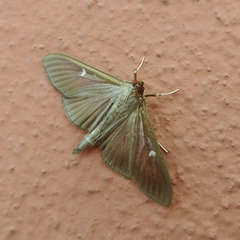 Box Tree MothCydalima perspectalisDamages trees, gardens or crops
 Celery Leaftier MothUdea rubigalisDamages trees, gardens or crops
 Elegant Grass-veneerMicrocrambus elegans
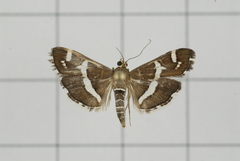 Hawaiian Beet Webworm MothSpoladea recurvalisDamages trees, gardens or crops
 Garden Grass-veneerChrysoteuchia culmellaDamages trees, gardens or crops
 Bluegrass Webworm MothParapediasia teterrellusDamages trees, gardens or crops
Sources
- Wikipedia: https://en.wikipedia.org/wiki/Hellula_rogatalis
Look it up elsewhere: GBIF · iNaturalist · BugGuide · Wikipedia
Text written 2026-10-23 from the sources above and checked sentence by sentence against them. Data fetched 2026-10-23.