 Bug FAQ
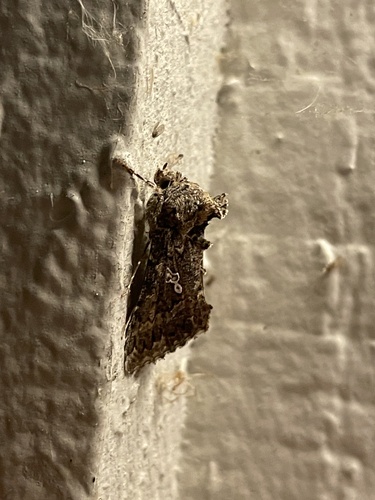
Cabbage Looper Moth
Trichoplusia ni · Order: Lepidoptera · Family: Noctuidae
Also called: Ni Moth, Cabbage Looper
Source: Wikipedia
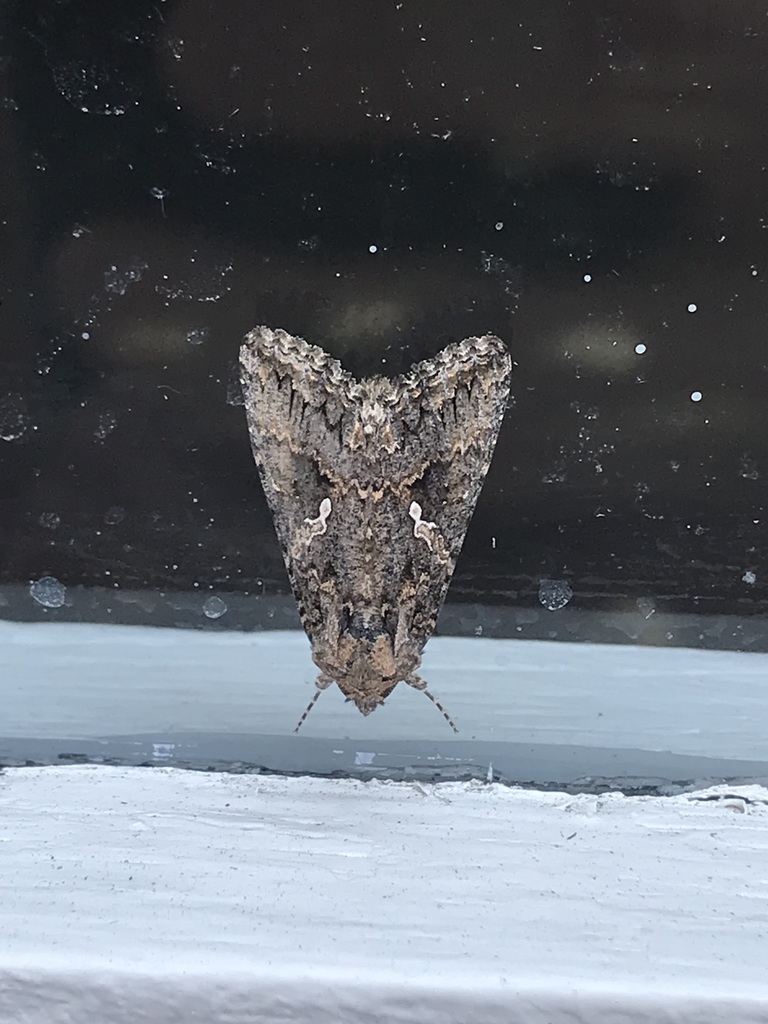
The cabbage looper is a medium-sized moth that migrates across North America and Eurasia. Its larvae feed on cabbage, broccoli, bok choy and over 160 other plant species, making it a notable garden and crop pest.
Source: Wikipedia
How to recognize it
The larvae are green, smooth caterpillars that are commonly called cabbage worms.
Source: Wikipedia
Size
Adults are medium-sized moths in the Noctuidae family.
Source: Wikipedia
Is it a pest in the house?
The larvae are minor pests of vegetables, especially crucifers. Control is difficult due to their wide distribution and resistance to many insecticides.
Source: Wikipedia
How to get rid of it
Research is ongoing for new control methods, including the use of Bacillus thuringiensis, which slows growth and reduces pupal weight.
Source: Wikipedia
Where it lives
Adults migrate widely, ranging from Florida up to British Columbia and across Eurasia.
Source: Wikipedia
What it eats
They can also feed on more than 160 other plant species.
Source: Wikipedia
Life cycle
Adults use antennae with olfactory receptors to detect pheromones for mating. Mating usually occurs 3 to 4 days after the moth emerges, but can happen up to 16 days later.
Source: Wikipedia
When you see it
Populations move north-south with the seasons, migrating from Mexico to Canada. In summer they are less common in the southern part of their range because of high temperatures.
Source: Wikipedia
Where it comes from
It is found throughout North America, from Mexico to Canada, and also in Eurasia.
Source: Wikipedia
Lookalikes
Cabbage loopers belong to the large Noctuidae family, but other cabbage worms are from different families.
Source: Wikipedia
Where it is found in the US
Recorded in 47 of 51 states and DC. Most records: California, Texas, Arizona, Colorado, New Mexico, Oklahoma, Michigan, Minnesota.
Darker = more records. Counts are museum and citizen-science records, not population size.
Source: GBIF
Status: native in North America; native in Canada; native in United States. Source: iNaturalist
Months it is reported in the US
Source: GBIF
More photos
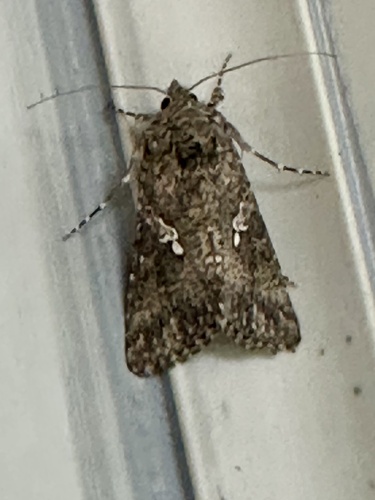
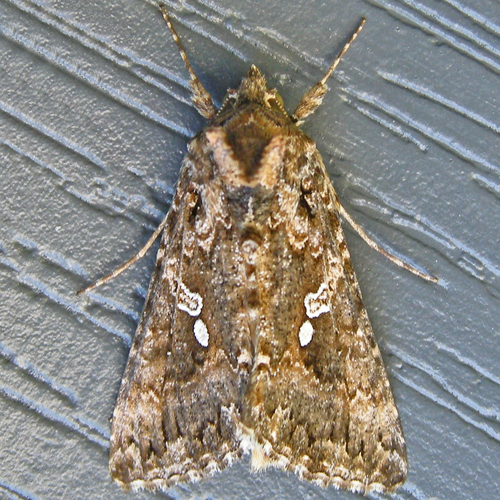
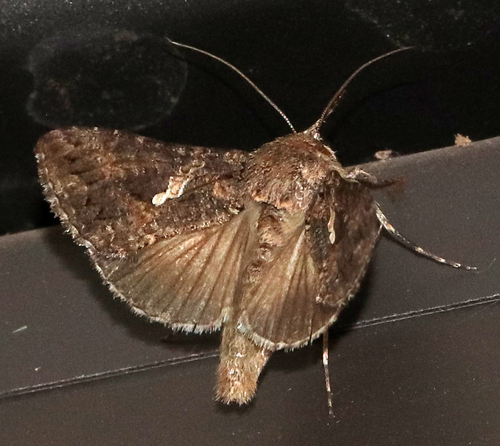
Questions people ask
How can I control cabbage loopers in my garden?
Biological insecticides like Bacillus thuringiensis can reduce their growth and pupal weight, and ongoing research seeks additional methods.
Source: Wikipedia
What plants do cabbage loopers damage?
They feed on cabbage, broccoli, bok choy and many other plants, over 160 species in total.
Source: Wikipedia
Where are cabbage loopers found?
They migrate across North America from Mexico to Canada and are also present throughout Eurasia.
Source: Wikipedia
Same family (Noctuidae)
 Ipsilon Dart MothAgrotis ipsilonDamages trees, gardens or crops
 Fall Armyworm MothSpodoptera frugiperdaDamages trees, gardens or crops
 Army Cutworm MothEuxoa auxiliarisDamages trees, gardens or crops
 Large Yellow UnderwingNoctua pronubaDamages trees, gardens or crops
 Silver ΥAutographa gamma
 American DaggerAcronicta americanaCan irritate skin
Sources
- Wikipedia: https://en.wikipedia.org/wiki/Cabbage_looper
Look it up elsewhere: GBIF · iNaturalist · BugGuide · ITIS · Wikipedia
Text written 2026-10-23 from the sources above and checked sentence by sentence against them. Data fetched 2026-10-23.