 Bug FAQ
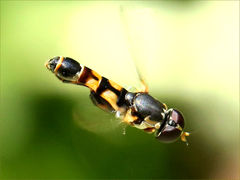
Bumblebee Catkin Fly
Brachypalpus alopex · Order: Diptera · Family: Syrphidae
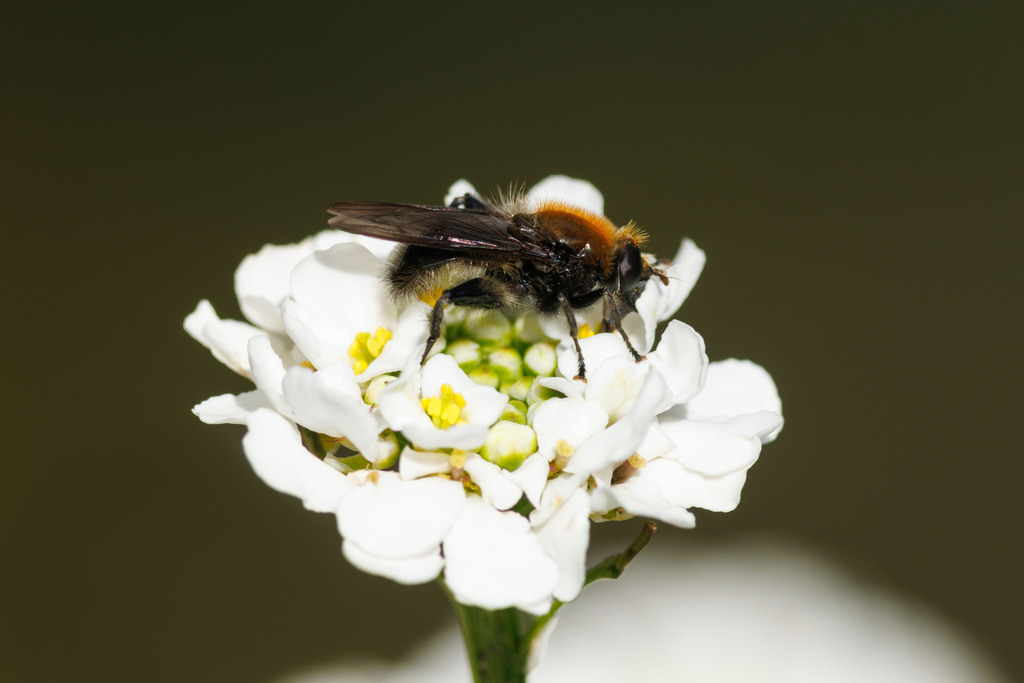
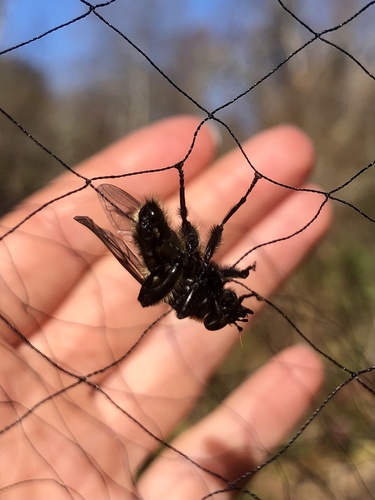
Adult bumblebee catkin flies are often seen on flowers where they sip nectar and collect pollen for protein. Their larvae are rat-tailed maggots that live under tree bark and feed on decaying sap. The species occurs along the western coast of North America and was first described in 1877.
Source: Wikipedia
How to recognize it
Brachypalpus alopex, the bumblebee catkin fly, was officially described by Osten Sacken in 1877.
Source: Wikipedia
Where it lives
Adults are commonly found on flowers, while larvae develop under bark feeding on decaying sap.
Source: Wikipedia
What it eats
Adults obtain energy from nectar and protein from pollen on flowers. Larvae feed on decaying sap that accumulates under tree bark.
Source: Wikipedia
Where it comes from
This Nearctic species is found along the western coast of North America.
Source: Wikipedia
Where it is found in the US
Recorded in 3 of 51 states and DC. Most records: Oregon, Washington, California.
Darker = more records. Counts are museum and citizen-science records, not population size.
Source: GBIF
Status: native in North America; native in Canada. Source: iNaturalist
Months it is reported in the US
Source: GBIF
More photos
Questions people ask
What do the larvae of the bumblebee catkin fly eat?
The larvae are rat-tailed maggots that feed on decaying sap found under tree bark.
Source: Wikipedia
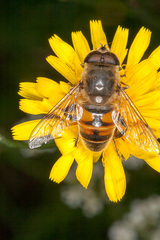
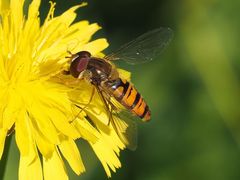
Same family (Syrphidae)


Sources
- Wikipedia: https://en.wikipedia.org/wiki/Brachypalpus_alopex
Look it up elsewhere: GBIF · iNaturalist · BugGuide · ITIS · Wikipedia
Text written 2026-10-28 from the sources above and checked sentence by sentence against them. Data fetched 2026-10-28.