 Bug FAQ
Bumblebee Blacklet
Cheilosia illustrata · Order: Diptera · Family: Syrphidae
Source: Wikipedia
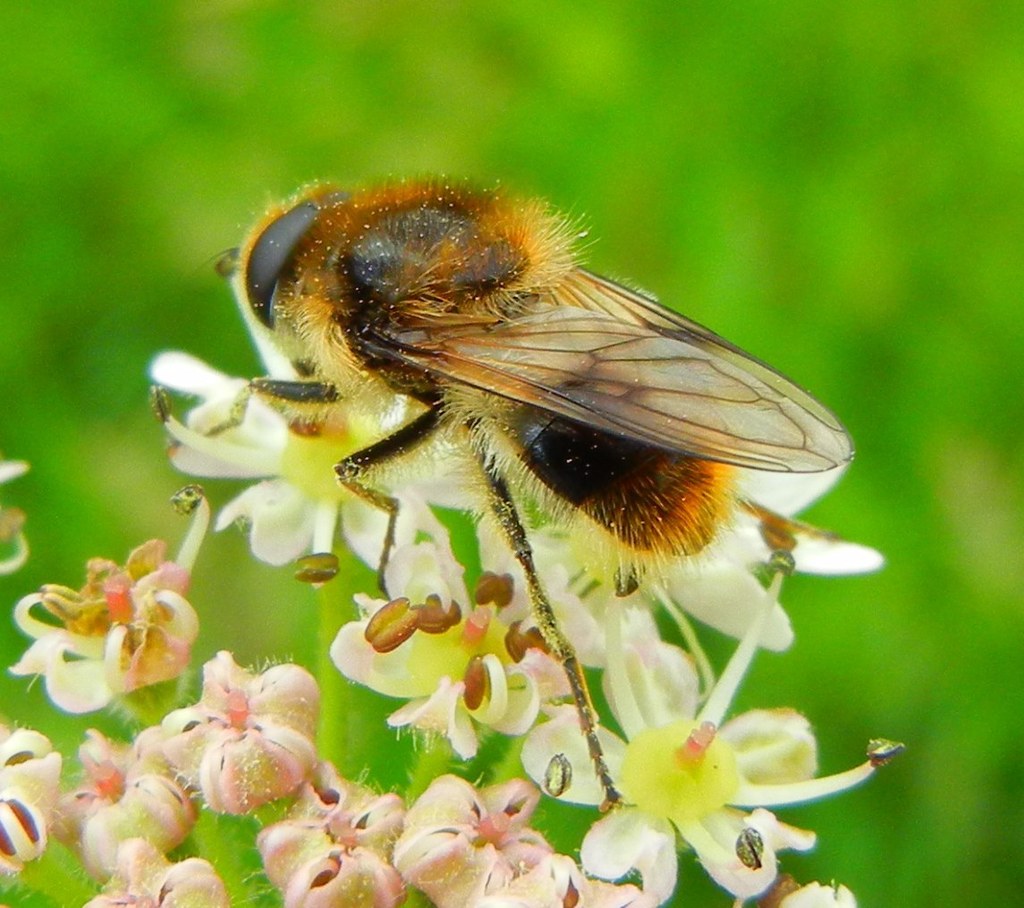
Adult Bumblebee Blacklets are 9 to 11 mm long, have a black face and scutellum, and a reddish-orange tip on the abdomen. They are common in Europe and the eastern Palearctic, flying from June to September with a peak in July-August. Adults feed on umbellifer flowers such as common hogweed and Angelica, while larvae damage hogweed stems and parsnip roots.
Source: Wikipedia
How to recognize it
They have a black face, black scutellum, black hair bands on the thorax and third abdominal segment, dark wing middle, long white hairs at the foreleg base and below the scutellum, dark antennae, and a reddish-orange hair tip on the abdomen.
Source: Wikipedia
Size
Adults measure about 9 to 11 mm (0.35 to 0.43 in) in length.
Source: Wikipedia
Where it lives
They are found along forest roads, clearings, hedgerows and roadsides.
Source: Wikipedia
What it eats
Adults visit umbellifer flowers, especially common hogweed (Heracleum sphondylium) and Angelica species, for nectar. Larvae tunnel into hogweed stems and parsnip (Pastinaca sativa) roots, feeding on the plant tissue.
Source: Wikipedia
Life cycle
Adults are on the wing from June through September, with most activity in July and August. In autumn, the larvae bore galleries into hogweed stems and parsnip roots.
Source: Wikipedia
When you see it
Flight period spans June to September, peaking in July-August.
Source: Wikipedia
Where it comes from
The species occurs throughout most of Europe and extends eastward into the eastern Palearctic, reaching Siberia.
Source: Wikipedia
Questions people ask
How can I identify a Bumblebee Blacklet?
Look for a 9 to 11 mm hoverfly with a black face and scutellum, black hair bands on the thorax and third abdominal segment, a dark central wing area, long white hairs at the foreleg base, and a reddish-orange tip on the abdomen.
Source: Wikipedia
When are Bumblebee Blacklets active?
Adults fly from June through September, with the highest numbers in July and August.
Source: Wikipedia
What do the larvae damage?
The larvae bore into the stems of hogweed and the roots of parsnip, harming these garden plants.
Source: Wikipedia
What flowers do the adults visit?
They commonly feed on umbellifer flowers such as common hogweed and Angelica species.
Source: Wikipedia
Same family (Syrphidae)






Sources
- Wikipedia: https://en.wikipedia.org/wiki/Cheilosia_illustrata
Look it up elsewhere: GBIF · iNaturalist · BugGuide · Wikipedia
Text written 2026-10-23 from the sources above and checked sentence by sentence against them. Data fetched 2026-10-22.