 Bug FAQ
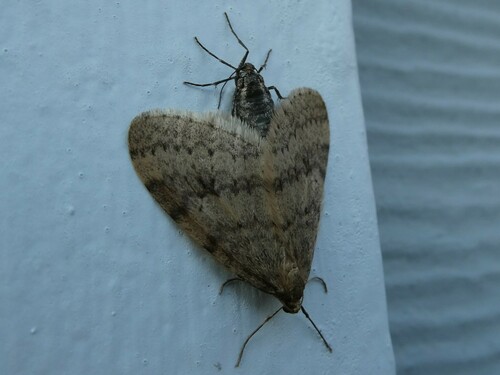
Bruce Spanworm Moth
Operophtera bruceata · Order: Lepidoptera · Family: Geometridae
Also called: Winter Moth, Bruce spanworm
Source: Wikipedia
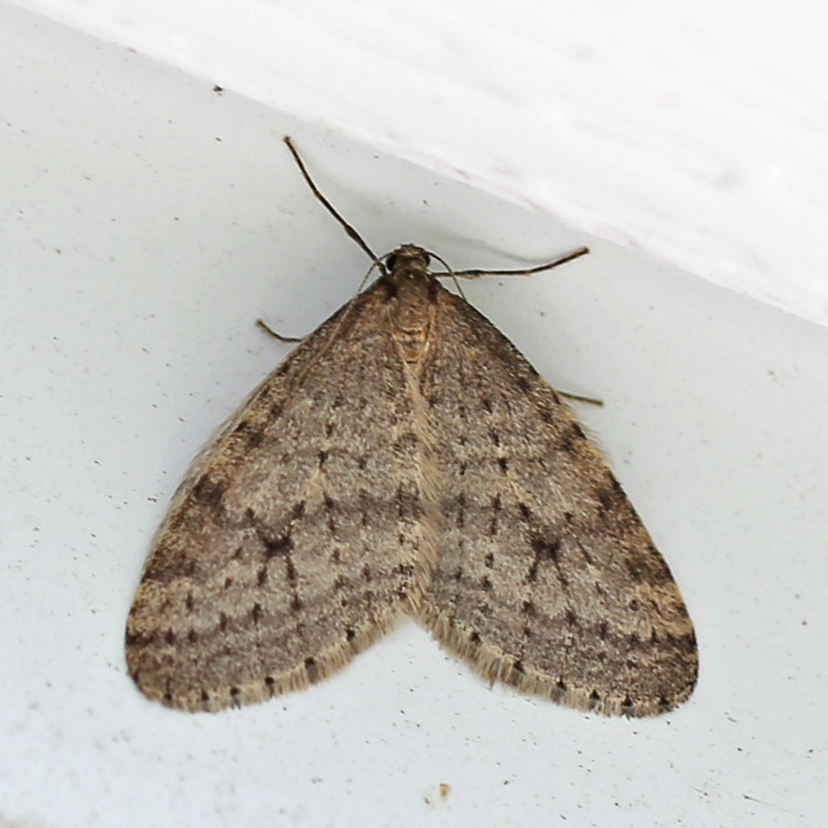
Male Bruce spanworms have a wingspan of about 25 to 30 mm. Adults fly from October through December and the larvae hatch in early spring after overwintering as eggs.
Source: Wikipedia
How to recognize it
They look almost identical to the invasive winter moth and can be separated by uncus shape or DNA testing.
Source: Wikipedia
Size
Males have a wingspan of roughly 25 to 30 mm.
Source: Wikipedia
Where it lives
They occur coast-to-coast across southern Canada and the northern United States.
Source: Wikipedia
What it eats
They have also been recorded feeding on willow and various other deciduous trees.
Source: Wikipedia
Life cycle
Larvae hatch in early spring after overwintering as eggs. Later instar caterpillars drop to the soil, build earthen cocoons, and pupate until late fall or early winter when adults emerge.
Source: Wikipedia
When you see it
Adults are on the wing from October to December.
Source: Wikipedia
Where it comes from
Their native range spans southern Canada and the northern United States.
Source: Wikipedia
Lookalikes
They closely resemble the invasive winter moth and share a similar life cycle. Morphological differences in uncus shape or DNA analysis can separate the two species.
Source: Wikipedia
Where it is found in the US
Recorded in 34 of 51 states and DC. Most records: Vermont, New York, Michigan, Wisconsin, Pennsylvania, Minnesota, Kansas, Massachusetts.
Darker = more records. Counts are museum and citizen-science records, not population size.
Source: GBIF
Status: native in North America; native in United States; native in Canada. Source: iNaturalist
Months it is reported in the US
Source: GBIF
More photos
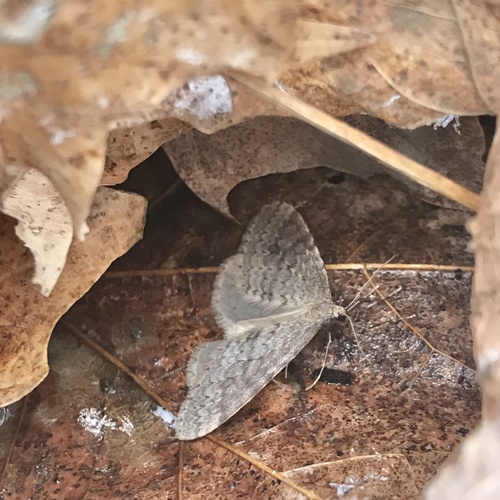
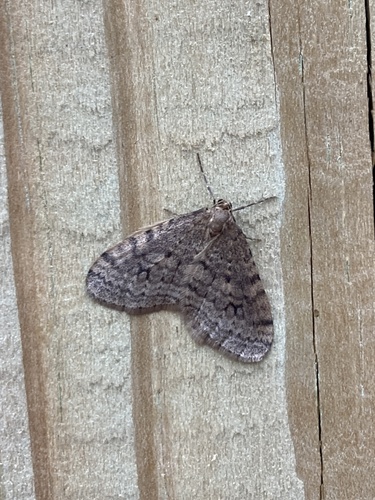
Questions people ask
What trees do the caterpillars feed on?
They eat buds and young leaves of sugar maple, American beech, trembling aspen, willow and other deciduous trees.
Source: Wikipedia
How can I tell Bruce spanworm apart from winter moth?
They look almost identical, but can be distinguished by uncus shape or DNA testing.
Source: Wikipedia
Same family (Geometridae)
 Willow BeautyPeribatodes rhomboidaria
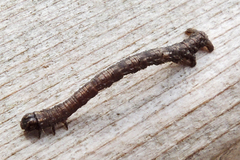 Pale BeautyCampaea perlataDamages trees, gardens or crops
 Large Lace-border MothScopula limboundataDamages trees, gardens or crops
 Riband WaveIdaea aversata
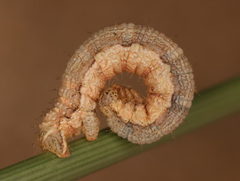 Yellow Shell MothCamptogramma bilineata
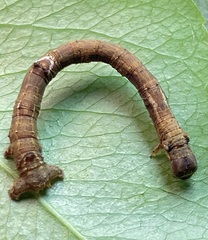 Large Maple Spanworm MothProchoerodes lineolaDamages trees, gardens or crops
Sources
- Wikipedia: https://en.wikipedia.org/wiki/Operophtera_bruceata
Look it up elsewhere: GBIF · iNaturalist · BugGuide · ITIS · Wikipedia
Text written 2026-10-23 from the sources above and checked sentence by sentence against them. Data fetched 2026-10-23.