 Bug FAQ
Brown fern moth
Chalastra pellurgata · Order: Lepidoptera · Family: Geometridae
Also called: pale fern looper

Chalastra pellurgata is a moth about 1¼ inches long with wings that spread to roughly 1 ⅜ inches. It lives in native New Zealand forests, especially dense forest ravines, and its larvae eat fern fronds in spring and summer.
Source: Wikipedia
How to recognize it
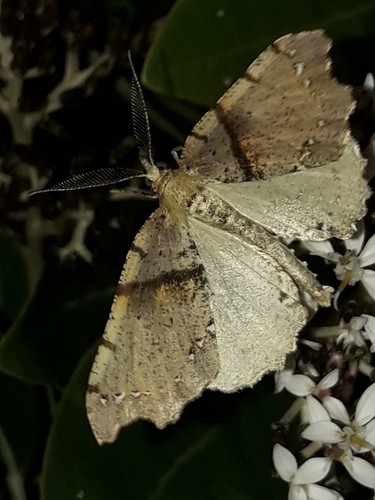
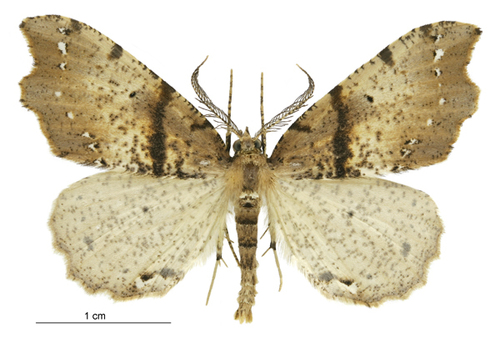
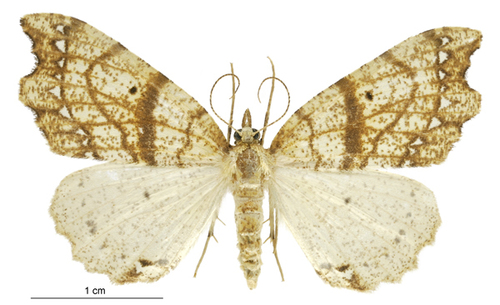
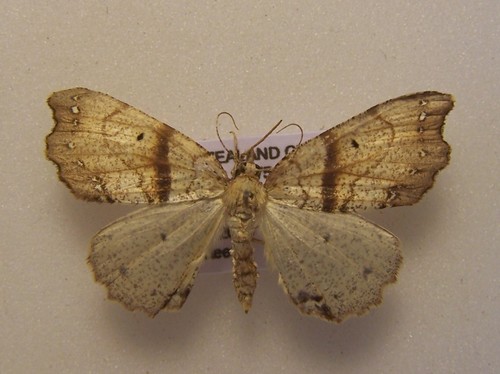
Males have forewings that range from orange-brown to pale yellow-slaty brown with several dark brown transverse lines and a series of triangular white dots near the edge.
Source: Wikipedia
Size
The wingspan is about 1 ⅜ inches when fully opened. The body length is roughly 1 ¼ inches.
Source: Wikipedia
Where it lives
It inhabits native forest environments. It is commonly found in dense forest ravines.
Source: Wikipedia
What it eats
Larvae feed on the fronds of various fern species during spring and summer.
Source: Wikipedia
Life cycle
Eggs hatch after about three weeks. Pupae form a thin cocoon on the soil among leaf litter and moss.
Source: Wikipedia
When you see it
Larvae are active in spring and summer.
Source: Wikipedia
Where it comes from
The species is endemic to New Zealand and occurs throughout the country.
Source: Wikipedia
Lookalikes
The species is extremely variable; some males are darker with purplish-brown patches while others are pale orange-brown. Intermediate forms link the two colour extremes, showing they are not separate species.
Source: Wikipedia
More photos
Questions people ask
What do the larvae of Chalastra pellurgata eat?
The larvae feed on fern fronds during spring and summer.
Source: Wikipedia
When are adult Chalastra pellurgata moths most commonly seen?
Adults are most common from September through March, though they can be seen all year.
Source: Wikipedia
Where does Chalastra pellurgata live?
It lives in native New Zealand forests, especially in dense forest ravines.
Source: Wikipedia
How can I tell a male Chalastra pellurgata from other moths?
Male forewings show a pattern of dark brown transverse lines and a row of triangular white dots near the edge, while the hind-wings have brown-edged white spots near the tornus.
Source: Wikipedia
Same family (Geometridae)
 Willow BeautyPeribatodes rhomboidaria
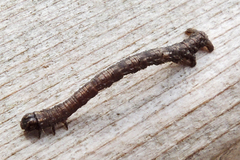 Pale BeautyCampaea perlataDamages trees, gardens or crops
 Large Lace-border MothScopula limboundataDamages trees, gardens or crops
 Riband WaveIdaea aversata
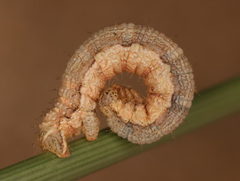 Yellow Shell MothCamptogramma bilineata
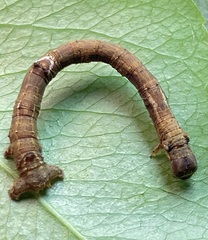 Large Maple Spanworm MothProchoerodes lineolaDamages trees, gardens or crops
Sources
- Wikipedia: https://en.wikipedia.org/wiki/Chalastra_pellurgata
Look it up elsewhere: GBIF · iNaturalist · BugGuide · Wikipedia
Text written 2026-10-23 from the sources above and checked sentence by sentence against them. Data fetched 2026-10-23.