 Bug FAQ
Brown evening moth
Gellonia dejectaria · Order: Lepidoptera · Family: Geometridae
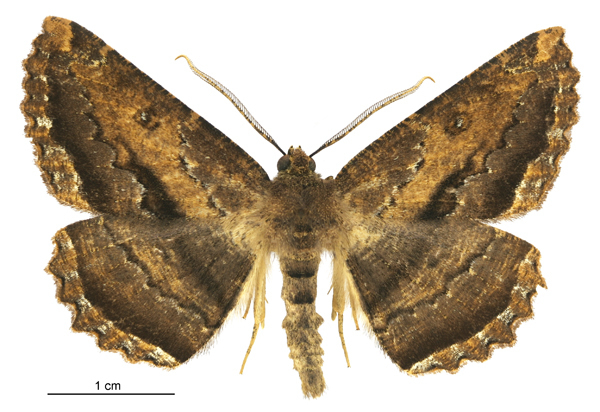
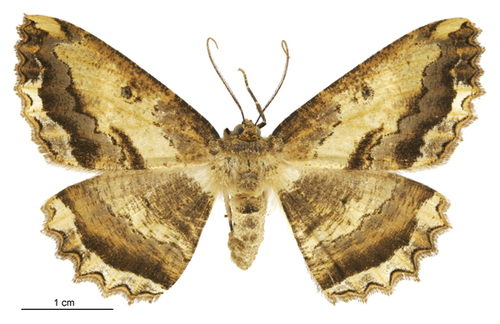
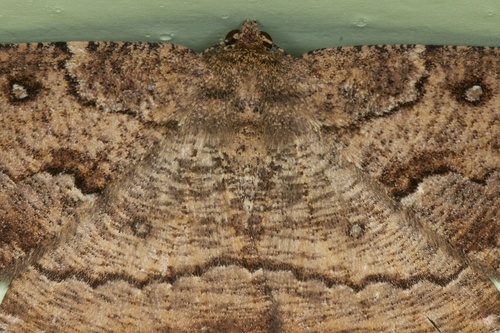
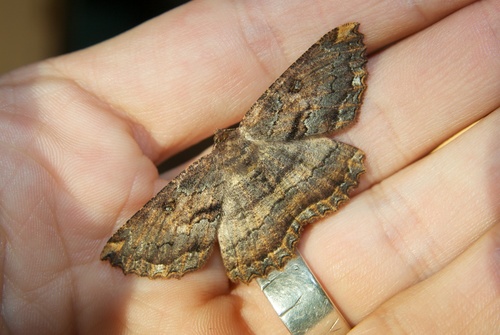
The brown evening moth has a wingspan of up to about 5 cm (2 inches). A distinctive white dot is often present near the outer edge of the larger forewing. In New Zealand it is commonly seen on buildings, shaded walls, and in native forest or shrubland habitats.
Source: Wikipedia
Size
The adult’s wingspan can reach about 5 cm (2 inches).
Source: Wikipedia
Where it lives
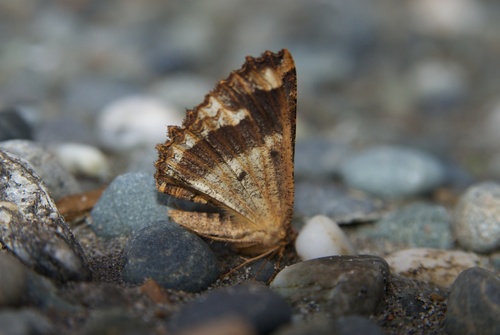
They are often found on human structures such as outhouses, sheds, and shaded house walls across New Zealand and Stewart Island. In natural settings they rest on logs in shrublands and native forests, with wings folded flat on their backs.
Source: Wikipedia
What it eats
Larvae feed on the leaves of māhoe, supplejack and bush lawyer plants. Adults sip nectar and can also consume honeydew from the Kanuka giant scale insect.
Source: Wikipedia
Life cycle
Larvae grow to about 1.5 inches or longer by late autumn, then pupate in chambers 1 to 2 inches below the soil, emerging from November to May. There are at least two, possibly three, broods per year, depending on timing of life-stage events.
Source: Wikipedia
When you see it
A third brood may emerge in February and the adults can be attracted to lights on winter nights in June and July.
Source: Wikipedia
Where it comes from
The species is endemic to New Zealand and has not been recorded elsewhere.
Source: Wikipedia
Lookalikes
The larger wings and strongly slanted crosswise lines on the forewing help separate it from similar moths.
Source: Wikipedia
More photos
Questions people ask
What plants do the larvae eat?
The caterpillars feed on the leaves of māhoe, supplejack and bush lawyer.
Source: Wikipedia
When can I expect to see these moths?
Adults are attracted to lights from November through May and can appear on winter nights in June and July.
Source: Wikipedia
Where are brown evening moths usually found?
They are common on buildings like sheds and shaded walls, and also in native forest and shrubland habitats in New Zealand.
Source: Wikipedia
Same family (Geometridae)
 Willow BeautyPeribatodes rhomboidaria
 Pale BeautyCampaea perlataDamages trees, gardens or crops
 Large Lace-border MothScopula limboundataDamages trees, gardens or crops
 Riband WaveIdaea aversata
 Yellow Shell MothCamptogramma bilineata
 Large Maple Spanworm MothProchoerodes lineolaDamages trees, gardens or crops
Sources
- Wikipedia: https://en.wikipedia.org/wiki/Gellonia_dejectaria
Look it up elsewhere: GBIF · iNaturalist · BugGuide · Wikipedia
Text written 2026-10-23 from the sources above and checked sentence by sentence against them. Data fetched 2026-10-22.