 Bug FAQ
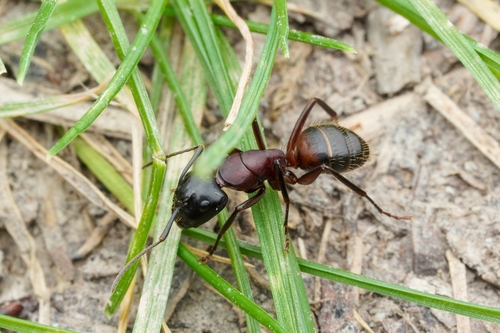
Brown-black Carpenter Ant
Camponotus ligniperda · Order: Hymenoptera · Family: Formicidae
Source: Wikipedia
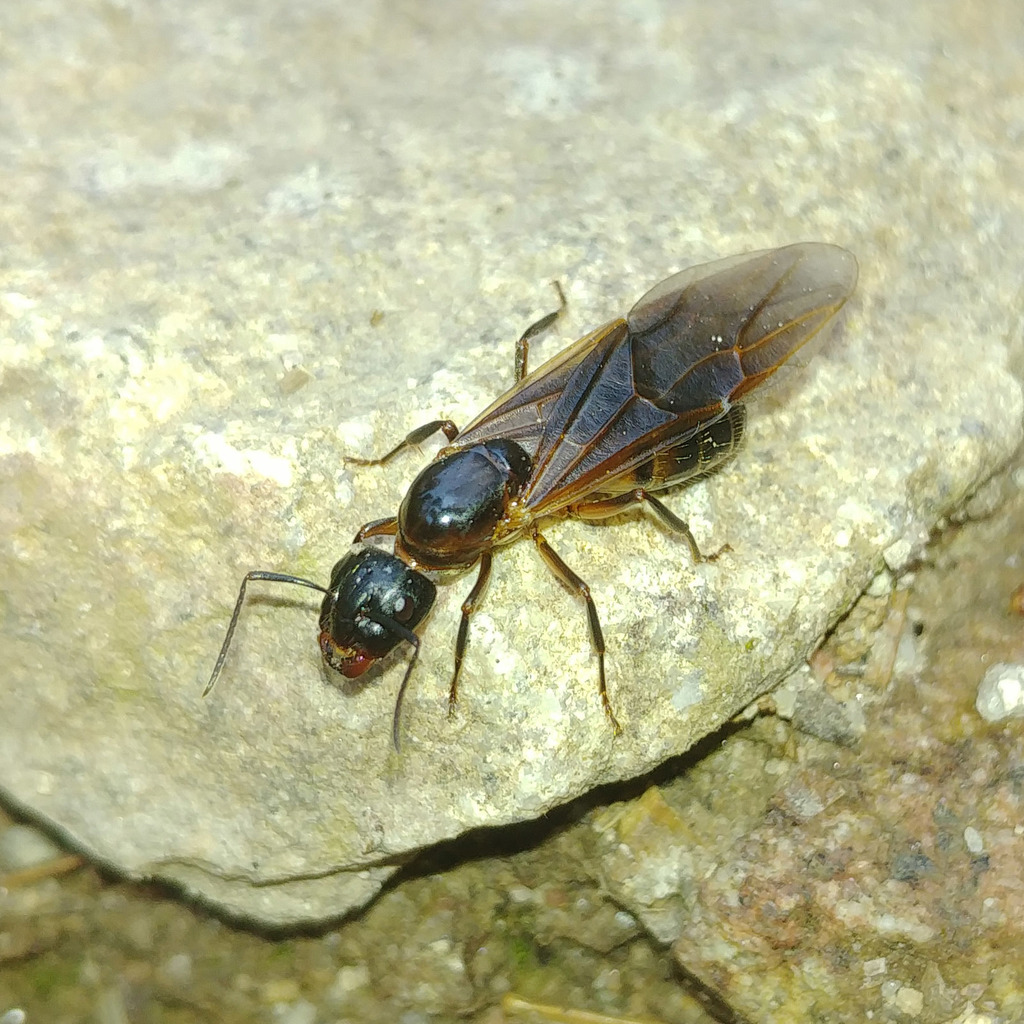
The brown-black carpenter ant is a large, bicolored ant found throughout Europe, nesting in dry wood and sunny habitats. Workers forage day and night for insects and honey-dew, and the colonies have midsummer peaks with long winter diapause. They may enter buildings and excavate wood, so treatment involves insecticide, baits, and fixing moisture problems.
Source: Wikipedia
How to recognize it
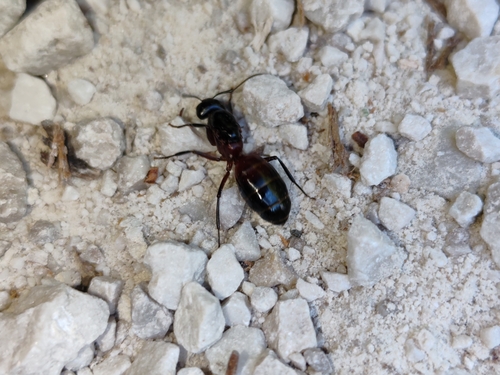
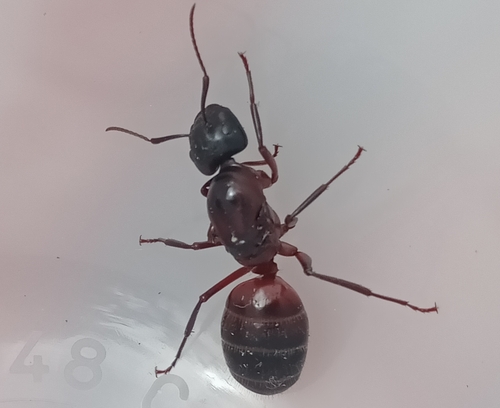
They have a black head, reddish-brown thorax, and the colour continues onto the legs and front part of the dark abdomen.
Source: Wikipedia
Size
Queens reach 16 to 18 mm (up to 20 mm when physogastric), major workers are 14 to 15 mm, and minor workers are 7 to 10 mm long.
Source: Wikipedia
Is it a pest in the house?
They can excavate and inhabit wooden parts of buildings, causing damage to structures.
Source: Wikipedia
Does it bite or sting?
Bites are not significant to humans, though majors can decapitate rival ants.
Source: Wikipedia
How to get rid of it
Control methods include insecticidal sprays, poison baits, and fixing water leaks that soften wood.
Source: Wikipedia
Where it lives
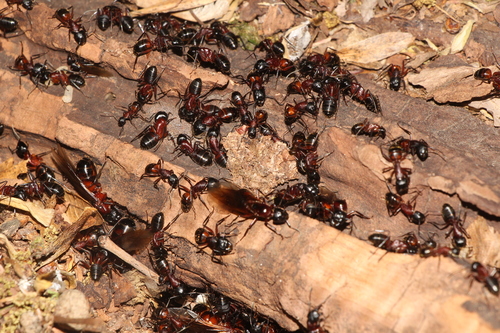
They nest in dry tree stumps, fallen logs, or under stones and partially buried wood, preferring sunny, dry areas.
Source: Wikipedia
What it eats
Workers hunt insect prey and collect sweet secretions from sap-sucking hemipterans, active both day and night.
Source: Wikipedia
Life cycle
Nuptial flights occur from late May to July, and the first workers appear about 1.8 months after eggs are laid.
Source: Wikipedia
When you see it
Colony activity peaks in midsummer and declines in autumn; they can remain in diapause for 4 to 5 months during winter.
Source: Wikipedia
Where it comes from
The species is common and widely distributed across Europe.
Source: Wikipedia
Lookalikes
It resembles Camponotus herculeanus but is larger, brighter, and has a shinier abdomen.
Source: Wikipedia
More photos
Questions people ask
How do I get rid of brown-black carpenter ants?
Use insecticidal sprays on known nests, set poison baits, and repair any water leaks that keep wood damp.
Source: Wikipedia
What wood damage can they cause?
They can excavate and live inside wooden frames and structures, weakening the wood.
Source: Wikipedia
Same family (Formicidae)
 Eastern Black Carpenter AntCamponotus pennsylvanicusCan damage your home
 Red Imported Fire AntSolenopsis invictaCan sting
 American Winter AntPrenolepis imparis
 Argentine AntLinepithema humileNuisance, not dangerous
 Immigrant Pavement AntTetramorium immigransCan sting
 Odorous House AntTapinoma sessileCan damage your home
Sources
- Wikipedia: https://en.wikipedia.org/wiki/Camponotus_ligniperda
Look it up elsewhere: GBIF · iNaturalist · BugGuide · Wikipedia
Text written 2026-10-22 from the sources above and checked sentence by sentence against them. Data fetched 2026-10-22.