 Bug FAQ
Bronze Orange Bug
Musgraveia sulciventris · Order: Hemiptera · Family: Tessaratomidae
Source: Wikipedia
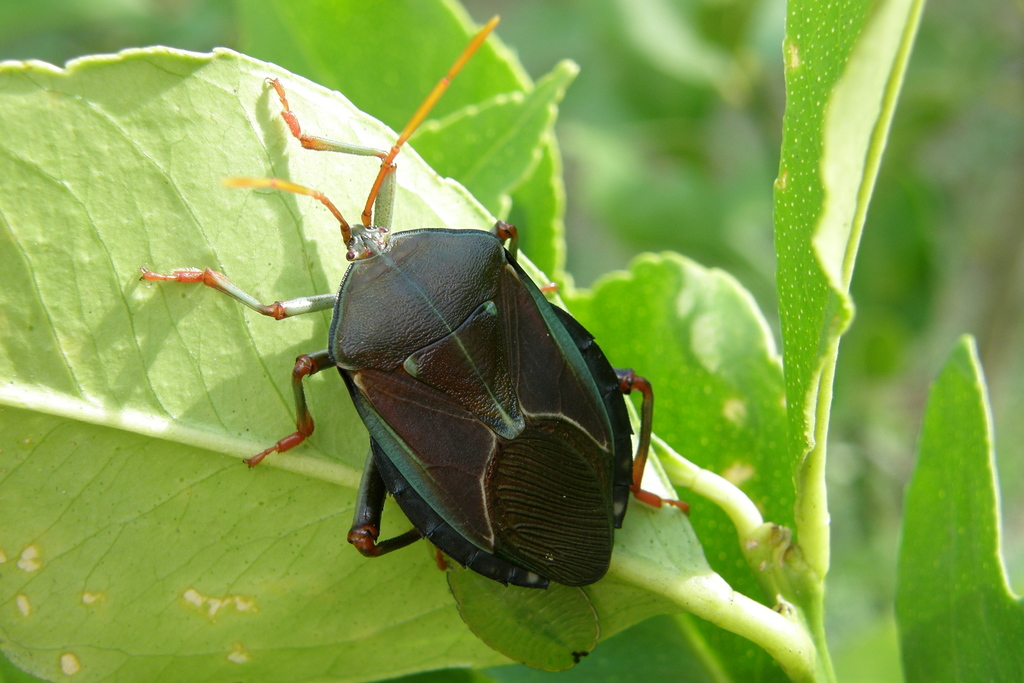
Adults are about 25 mm long and look transparent pale green with orange eyes. They feed on citrus sap, causing new shoots and young fruit to turn yellow and drop, making them a major crop pest. When threatened they can spray a foul liquid that may irritate skin or eyes.
Source: Wikipedia
Size
Adults grow to about 25 mm (0.98 in) long.
Source: Wikipedia
Is it a pest in the house?
They are a major pest of cultivated citrus crops, damaging new growth and fruit.
Source: Wikipedia
Does it bite or sting?
When threatened they spray a malodorous liquid that can irritate skin and cause temporary blindness if it gets in the eyes.
Source: Wikipedia
How to get rid of it
Natural enemies include the assassin bug Pristhesancus plagipennis, the predatory bug Amyotea hamatus, and parasitoid wasps such as Eupelmus poggioni and Telenomus spp.
Source: Wikipedia
Where it lives
They are considered pests of citrus plants.
Source: Wikipedia
What it eats
They suck sap from trees, causing flowers and fruit to fall. Their feeding makes new growth and young fruit turn yellow and drop off.
Source: Wikipedia
Life cycle
They develop through five instar stages. The first instars stay close to the eggs.
Source: Wikipedia
When you see it
They are first seen on trees in late winter. Mating occurs from late November through early March.
Source: Wikipedia
Where it comes from
They are native to Australia and originally fed on desert lime, finger lime, and Correas.
Source: Wikipedia
Lookalikes
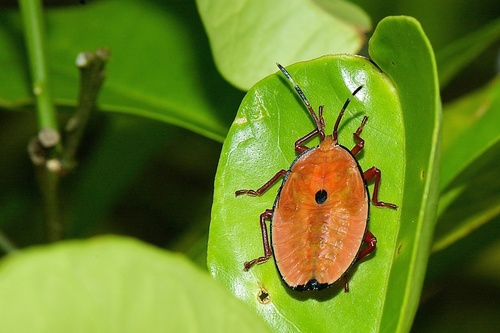
The light-green nymphs are hard to spot and can be mistaken for other species.
Source: Wikipedia
More photos
Questions people ask
How can I control bronze orange bugs?
Encourage natural predators like assassin bugs, predatory Asopinae bugs, and parasitoid wasps to keep their numbers down.
Source: Wikipedia
Do they bite or sting people?
If handled they may spray a foul liquid that can irritate skin and even cause temporary blindness if it gets into the eyes.
Source: Wikipedia
Same family (Tessaratomidae)
Sources
- Wikipedia: https://en.wikipedia.org/wiki/Musgraveia_sulciventris
Look it up elsewhere: GBIF · iNaturalist · BugGuide · ITIS · Wikipedia
Text written 2026-10-23 from the sources above and checked sentence by sentence against them. Data fetched 2026-10-22.