 Bug FAQ
Broad-banded Aphideater
Eupeodes latifasciatus · Order: Diptera · Family: Syrphidae
Also called: Variable Aphideater
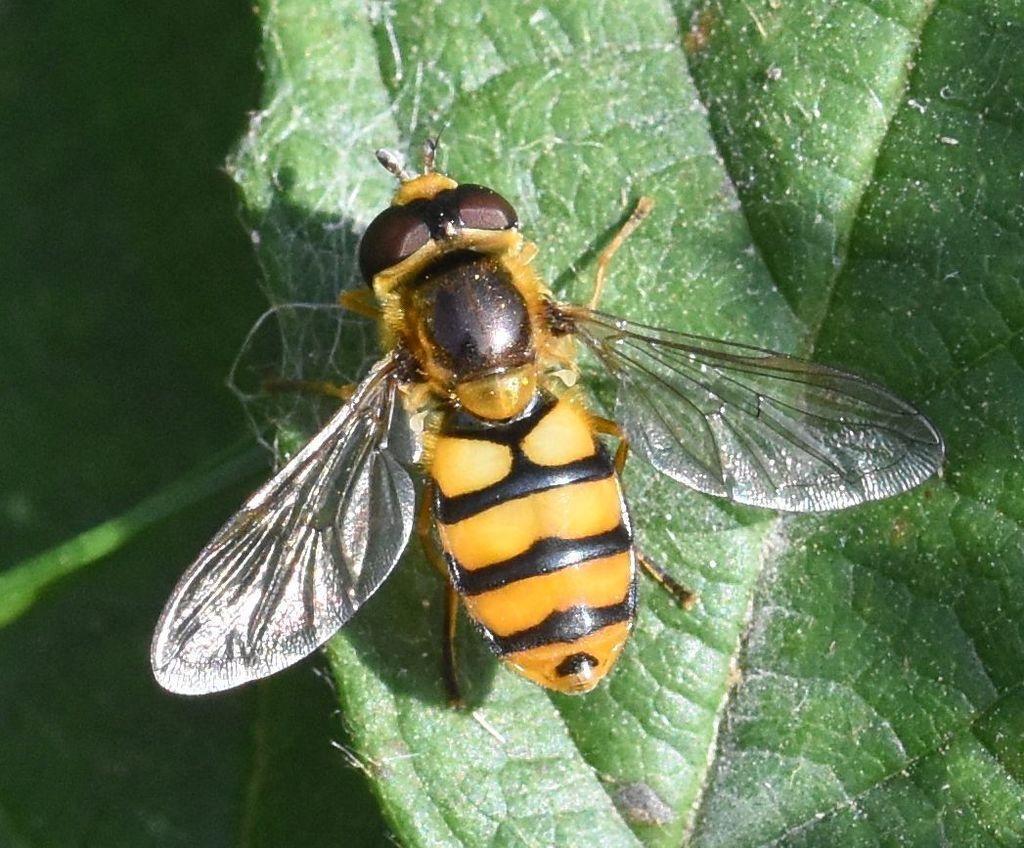
The broad-banded aphideater is a hoverfly with wing length about 6.5 to 8.5 mm. Males have connected yellow spots on tergites 3 and 4 and a mainly yellow-haired scutellum, while females lack frontal dust spots and have yellow lateral margins on tergite 5.
Source: Wikipedia
How to recognize it
Males show yellow spots on tergites 3 and 4 that are joined, with a straight front margin; the scutellum is mostly yellow-haired. Females have a completely shiny frons, no frontal dust spots, yellow lateral margins on tergite 5, and the yellow spots on tergites 3 and 4 form bands reaching the sides.
Source: Wikipedia
Size
Wing length ranges from 6.5 to 8.5 mm.
Source: Wikipedia
Where it lives
Found in wetlands, fens, humid grasslands and along streams in open country, including unsown fallow land.
Source: Wikipedia
What it eats
Adults feed on nectar, while larvae prey on aphids and scale insects.
Source: Wikipedia
Life cycle
Male genitalia were illustrated by Dusek and Laska (1976) and the larva was described by Dusek & Laska (1960).
Source: Wikipedia
When you see it
Adults are on the wing from May through September, extending to April to October in southern Europe.
Source: Wikipedia
Where it comes from
Its Palearctic range extends from Fennoscandia south to Iberia and the Mediterranean, through Europe to Russia and the Far East, and it also occurs in the Nearctic from Alaska to California and Texas.
Source: Wikipedia
Where it is found in the US
Recorded in 30 of 51 states and DC. Most records: Washington, Oregon, New York, Pennsylvania, Maine, Vermont, California, Ohio.
Darker = more records. Counts are museum and citizen-science records, not population size.
Source: GBIF
Status: native in North America; native in Canada. Source: iNaturalist
Months it is reported in the US
Source: GBIF
More photos
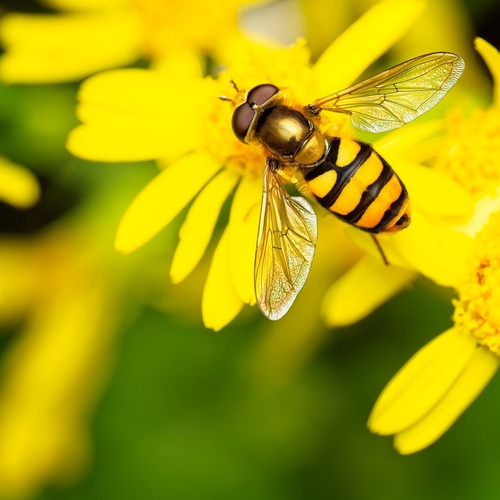
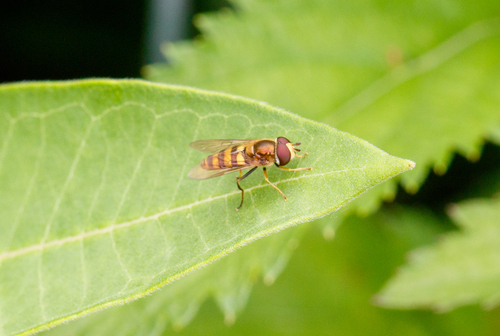
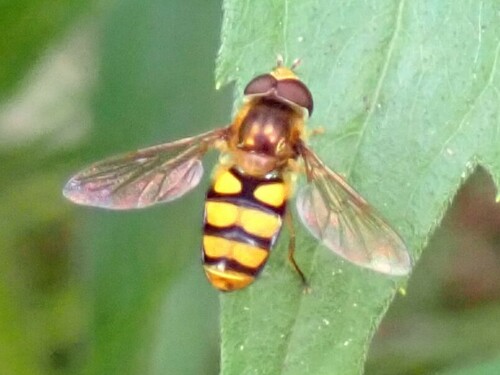
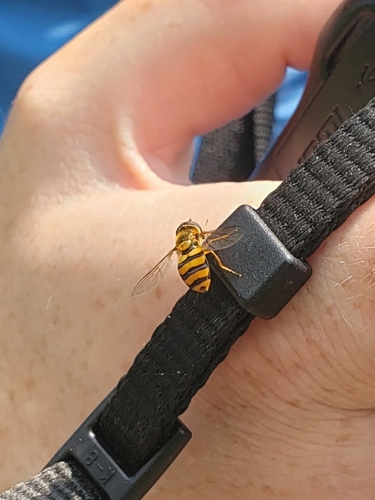
Same family (Syrphidae)






Sources
- Wikipedia: https://en.wikipedia.org/wiki/Eupeodes_latifasciatus
Look it up elsewhere: GBIF · iNaturalist · BugGuide · ITIS · Wikipedia
Text written 2026-10-23 from the sources above and checked sentence by sentence against them. Data fetched 2026-10-22.