 Bug FAQ
Brimstone Moth
Opisthograptis luteolata · Order: Lepidoptera · Family: Geometridae
Source: Wikipedia
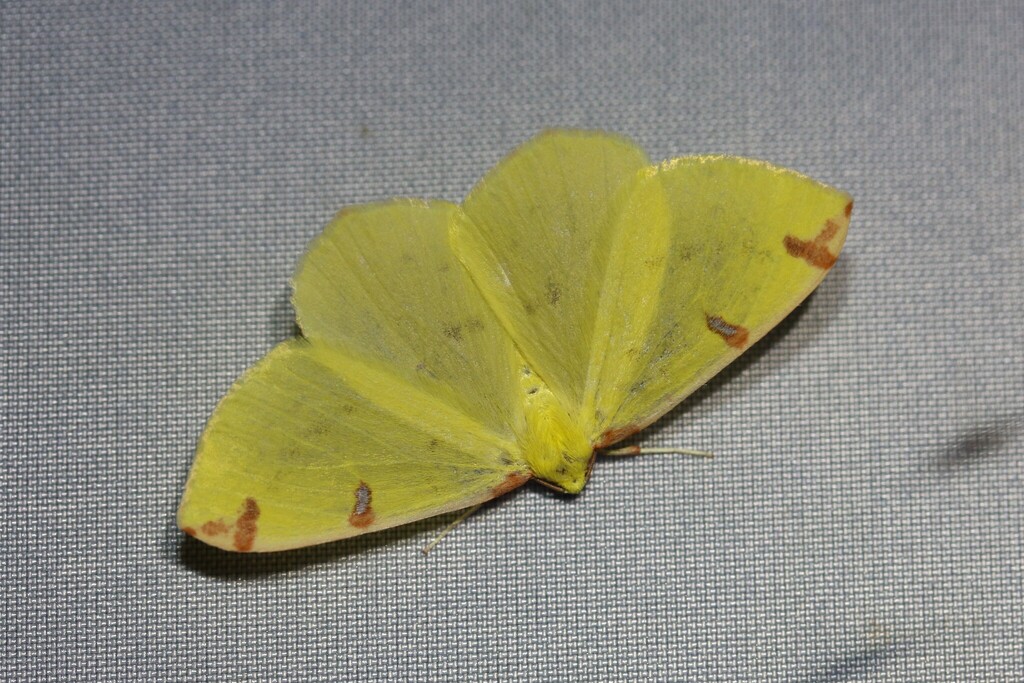
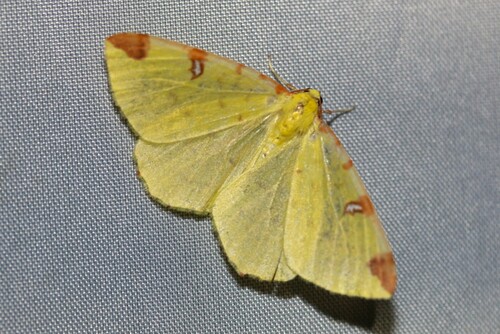
The brimstone moth has a wingspan of about 33 to 46 mm and bright yellow wings with distinctive brown markings. It is found across the Palearctic region and western Asia and flies from April to October, producing up to three generations in warm areas. Its larvae are brown or green with a horn on the back and eat leaves of trees such as blackthorn, hawthorn and rowan, which can harm garden plants.
Source: Wikipedia
How to recognize it
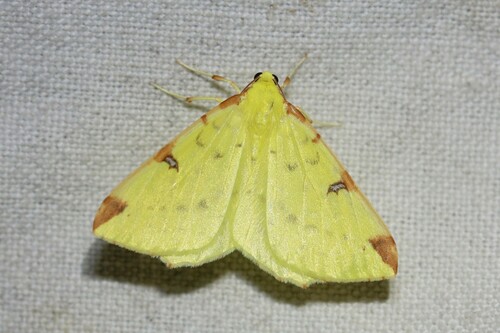
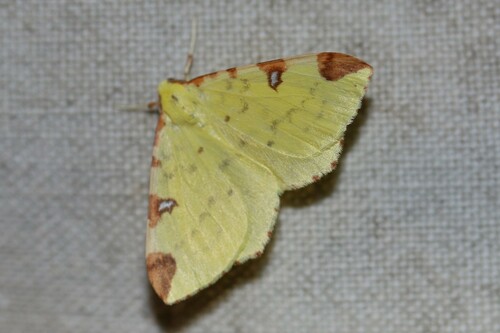
Bright yellow wings with small brown patches along the forewing edge and a brown-edged white spot make it unmistakable.
Source: Wikipedia
Size
Wingspan ranges from 33 to 46 mm.
Source: Wikipedia
What it eats
Larvae are brown or green with a dorsal horn and feed on various trees and shrubs. Host plants include blackthorn (Prunus spinosa), common hawthorn (Crataegus monogyna) and rowan (Sorbus aucuparia).
Source: Wikipedia
Life cycle
Adults are on the wing from April to October. In warm climates there are usually three overlapping generations, while cooler areas have just one.
Source: Wikipedia
When you see it
Active adult period spans April through October.
Source: Wikipedia
Lookalikes
Do not confuse it with the brimstone butterfly, Gonepteryx rhamni.
Source: Wikipedia
More photos
Questions people ask
How can I identify a brimstone moth?
Look for bright yellow wings with small brown patches along the forewing edge and a brown-edged white stigma.
Source: Wikipedia
When are brimstone moths active?
Adults fly from April through October, with up to three generations in warm areas.
Source: Wikipedia
What do the caterpillars look like?
They are brown or green, have a horn on their back, and feed on the leaves of various trees and shrubs.
Source: Wikipedia
What plants do the larvae feed on?
They eat leaves of blackthorn, common hawthorn and rowan, among other trees and shrubs.
Source: Wikipedia
Same family (Geometridae)
 Willow BeautyPeribatodes rhomboidaria
 Pale BeautyCampaea perlataDamages trees, gardens or crops
 Large Lace-border MothScopula limboundataDamages trees, gardens or crops
 Riband WaveIdaea aversata
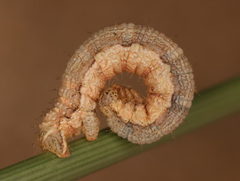 Yellow Shell MothCamptogramma bilineata
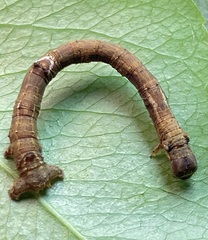 Large Maple Spanworm MothProchoerodes lineolaDamages trees, gardens or crops
Sources
- Wikipedia: https://en.wikipedia.org/wiki/Brimstone_moth
Look it up elsewhere: GBIF · iNaturalist · BugGuide · Wikipedia
Text written 2026-10-22 from the sources above and checked sentence by sentence against them. Data fetched 2026-10-22.