 Bug FAQ
Bright-line Brown-eye
Lacanobia oleracea · Order: Lepidoptera · Family: Noctuidae
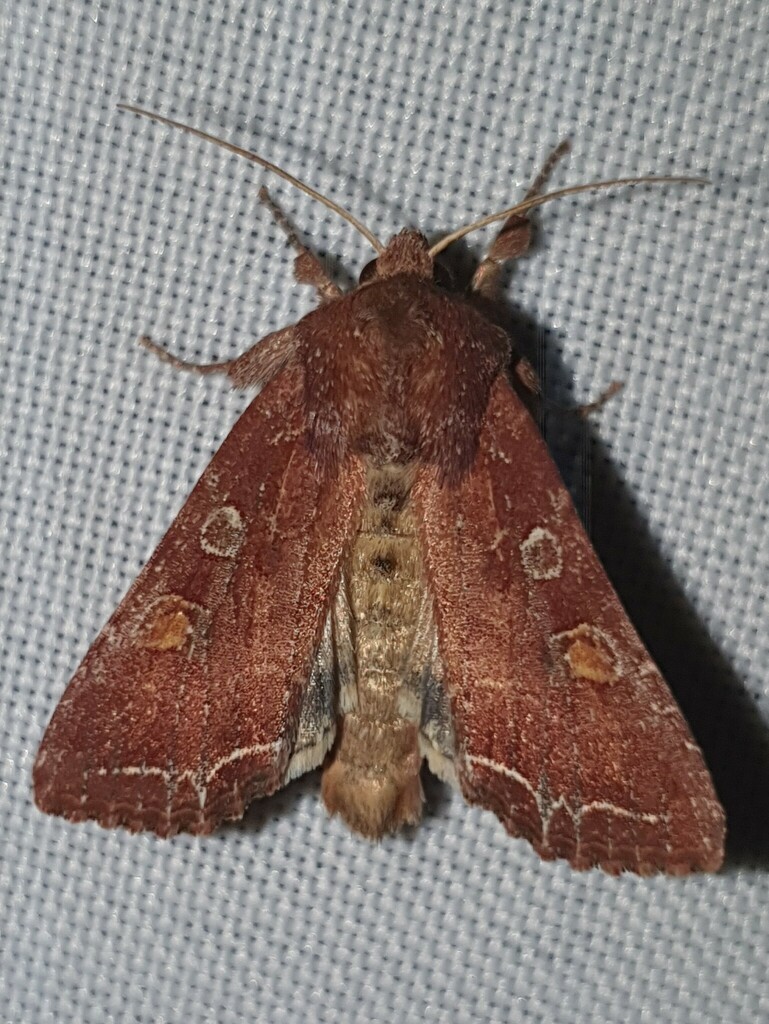
The bright-line brown-eye moth has a wingspan of about 34 to 44 mm and shows dark reddish-brown forewings with a light orange-brown spot and a bright white line near the edge. It lives mainly in cultivated areas like gardens and parks, but can also be found in swamp forests and floodplains. Adults fly from late June to July and sometimes again in late August to early September; the species overwinters as a pupa.
Source: Wikipedia
How to recognize it
The forewing pattern includes a cloudy red-brown ground colour, orange upper part of the reniform stigma, a small white-edged orbicular spot, and a finely white submarginal line.
Source: Wikipedia
Size
Wingspan ranges from 34 to 44 mm. Typical wingspan is about 35 to 40 mm.
Source: Wikipedia
Where it lives
Found mainly in cultivated land such as gardens, parks and fallow fields where host plants grow. Also occurs in swamp forests, valley floors and floodplains.
Source: Wikipedia
Life cycle
Overwinters in the pupal stage.
Source: Wikipedia
When you see it
A second generation may appear from late August to early September.
Source: Wikipedia
Where it comes from
Common throughout Europe and also present in North Africa, temperate North and Central Asia, Asia Minor, the Middle East, northern India, China, Korea and Japan.
Source: Wikipedia
More photos

Same family (Noctuidae)
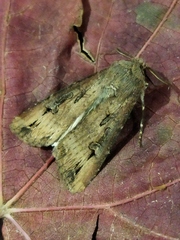 Ipsilon Dart MothAgrotis ipsilonDamages trees, gardens or crops
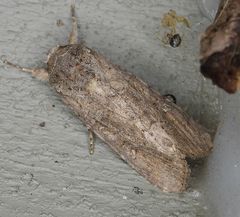 Fall Armyworm MothSpodoptera frugiperdaDamages trees, gardens or crops
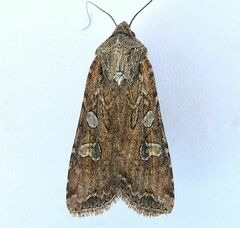 Army Cutworm MothEuxoa auxiliarisDamages trees, gardens or crops
 Large Yellow UnderwingNoctua pronubaDamages trees, gardens or crops
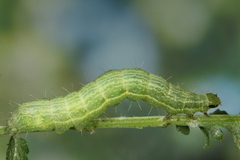 Silver ΥAutographa gamma
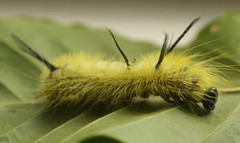 American DaggerAcronicta americanaCan irritate skin
Sources
- Wikipedia: https://en.wikipedia.org/wiki/Bright-line_brown-eye
Look it up elsewhere: GBIF · iNaturalist · BugGuide · Wikipedia
Text written 2026-10-22 from the sources above and checked sentence by sentence against them. Data fetched 2026-10-22.