 Bug FAQ
Box Bug
Gonocerus acuteangulatus · Order: Hemiptera · Family: Coreidae
Source: Wikipedia
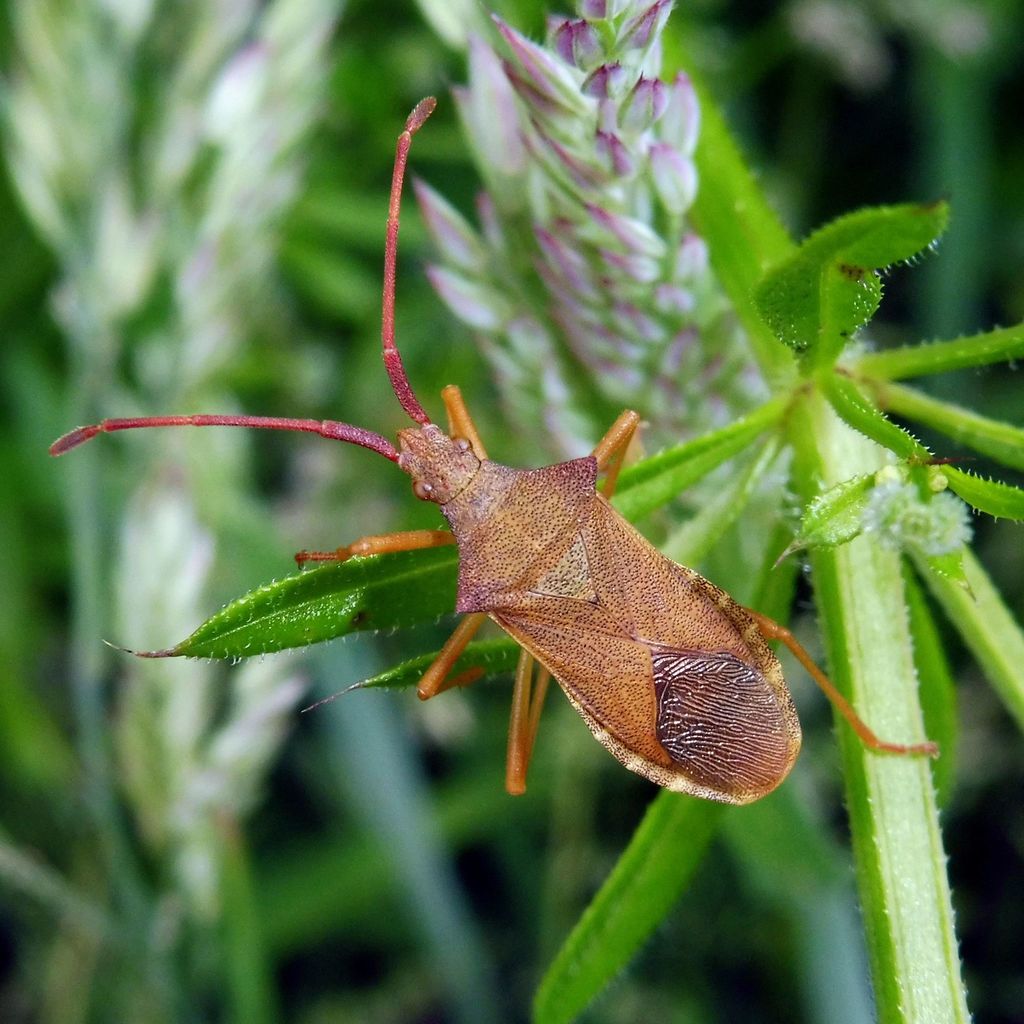
Box bugs are medium-sized (11-14 mm) reddish-brown insects with a slightly expanded abdomen; nymphs are green-abdomened. They live in dry, warm, south-exposed habitats with shrubs and berry-bearing plants, mainly around the Mediterranean and into Central Asia. Adults feed on ripe fruit juices and are pests of hazel and pistachio, also carrying a fungus that causes stigmatomycosis.
Source: Wikipedia
Size
Adults measure about 11 to 14 mm in length.
Source: Wikipedia
Is it a pest in the house?
They damage hazel and pistachio crops and can transmit the fungus Nematospora coryli, which causes stigmatomycosis.
Source: Wikipedia
Where it lives
They prefer dry, warm, south-exposed areas with bushes, forest edges, and shrubs that bear berries, especially Buxaceae, Rhamnaceae, Rosa canina, Crataegus, and Lonicera xylosteum.
Source: Wikipedia
What it eats
They mainly suck the juice of ripe fruits and are harmful pests of hazel and pistachio.
Source: Wikipedia
Life cycle
Adults can be found throughout the year.
Source: Wikipedia
When you see it
Adults are present all year round.
Source: Wikipedia
Where it comes from
Their range covers the Mediterranean region, extends into Central Asia, and reaches parts of north-western Europe.
Source: Wikipedia
Lookalikes
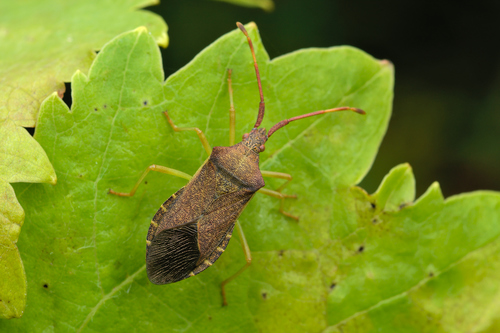
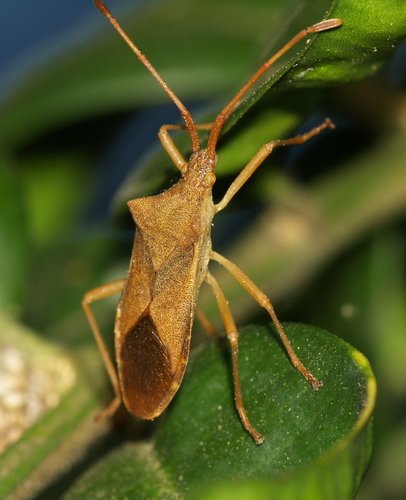
They resemble Coreus marginatus but have a narrower abdomen and sharper lateral pronotum margins.
Source: Wikipedia
More photos
Questions people ask
What plants do Box Bugs damage?
They are known to damage hazel and pistachio trees and can spread a fungal disease to these crops.
Source: Wikipedia
Same family (Coreidae)
 Western Conifer Seed BugLeptoglossus occidentalisDamages trees, gardens or crops
 Squash BugAnasa tristisDamages trees, gardens or crops
 Dock BugCoreus marginatus
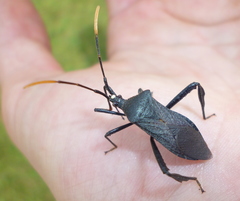 Acanthocephala terminalisAcanthocephala terminalisHarmless
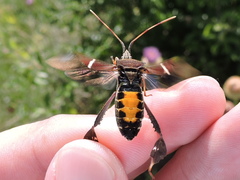 Eastern Leaf-footed BugLeptoglossus phyllopusDamages trees, gardens or crops
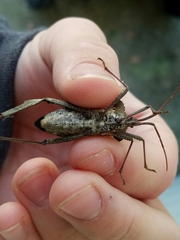 Giant leaf-footed bugAcanthocephala declivis
Sources
- Wikipedia: https://en.wikipedia.org/wiki/Gonocerus_acuteangulatus
Look it up elsewhere: GBIF · iNaturalist · BugGuide · Wikipedia
Text written 2026-10-22 from the sources above and checked sentence by sentence against them. Data fetched 2026-10-22.