 Bug FAQ
Bog Odorous Ant
Dolichoderus pustulatus · Order: Hymenoptera · Family: Formicidae

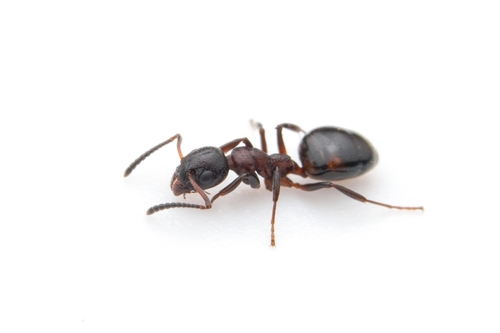
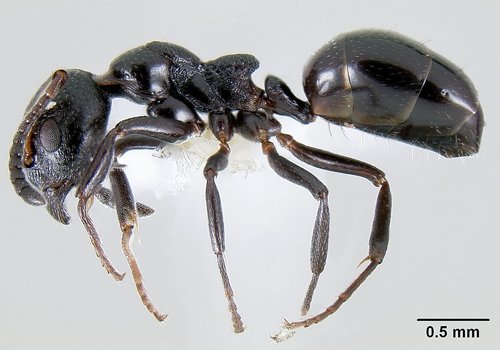
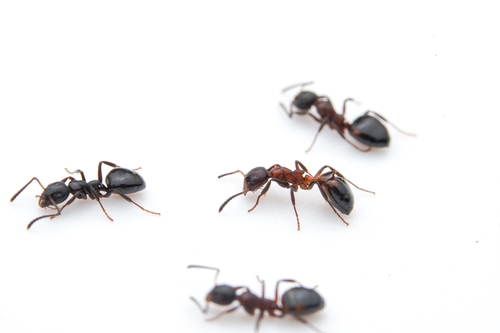
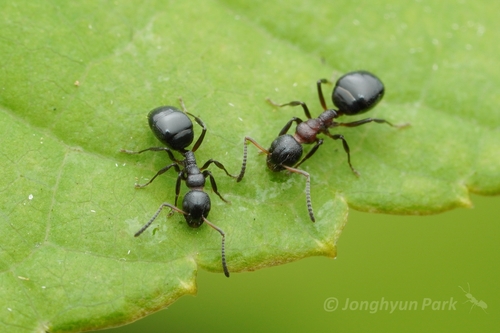
Workers show regional colour differences: southern individuals have orangish-brown heads, antennae, metasoma and legs with a darker gaster, while northern ones are uniformly reddish-brown or dark brown. Their nests are hidden in soil among plant roots and colonies are smaller than those of similar Dolichoderus species.
Source: Wikipedia
How to recognize it
Southern workers have orangish-brown heads, antennae, metasoma and legs with a darker gaster.
Source: Wikipedia
Where it lives
They are found in fens, prairies, glades and at the edges of woods. Nests are concealed in soil among plant roots.
Source: Wikipedia
Lookalikes
Colonies are smaller than those of Dolichoderus mariae and Dolichoderus taschenbergi.
Source: Wikipedia
Where it is found in the US
Recorded in 30 of 51 states and DC. Most records: Mississippi, New York, Illinois, Florida, Massachusetts, North Carolina, Ohio, Michigan.
Darker = more records. Counts are museum and citizen-science records, not population size.
Source: GBIF
Status: native in North America; native in Canada; native in United States. Source: iNaturalist
Months it is reported in the US
Source: GBIF
More photos
Questions people ask
What do the workers look like?
Southern workers have orangish-brown heads, antennae, metasoma and legs with a darker gaster, while northern workers are uniformly reddish-brown or dark brown.
Source: Wikipedia
How can I tell this ant apart from similar species?
Its colonies are smaller than those of Dolichoderus mariae and Dolichoderus taschenbergi.
Source: Wikipedia
Same family (Formicidae)
 Eastern Black Carpenter AntCamponotus pennsylvanicusCan damage your home
 Red Imported Fire AntSolenopsis invictaCan sting
 American Winter AntPrenolepis imparis
 Argentine AntLinepithema humileNuisance, not dangerous
 Immigrant Pavement AntTetramorium immigransCan sting
 Odorous House AntTapinoma sessileCan damage your home
Sources
- Wikipedia: https://en.wikipedia.org/wiki/Dolichoderus_pustulatus
Look it up elsewhere: GBIF · iNaturalist · BugGuide · ITIS · Wikipedia
Text written 2026-10-24 from the sources above and checked sentence by sentence against them. Data fetched 2026-10-24.