 Bug FAQ
Blood-spotted Noctuid
Peripyra sanguinipuncta · Order: Lepidoptera · Family: Noctuidae

The Blood-spotted Noctuid has a wingspan of about 40 mm and its forewings are covered with crimson spots, making it easy to recognise in New Zealand. It originated in Australia, was first recorded in New Zealand in February 2007, and is now common in North Island grasslands and has been seen at the top of the South Island. Adults fly from February to April, and the larvae feed on a variety of grasses.
Source: Wikipedia
How to recognize it
The forewings are covered with crimson spots, a pattern not shared by any other New Zealand moth.
Source: Wikipedia
Size
The wingspan is roughly 40 mm.
Source: Wikipedia
What it eats
The larvae feed on various grasses.
Source: Wikipedia
Life cycle
Adults are on the wing from February to April in New Zealand.
Source: Wikipedia
When you see it
The flight period in New Zealand runs from February through April.
Source: Wikipedia
Where it comes from
The species is native to Australia and has been present in New Zealand since February 2007.
Source: Wikipedia
Lookalikes
No other New Zealand moth shares the crimson-spotted forewings, so it is unlikely to be confused with another species.
Source: Wikipedia
Questions people ask
When are Blood-spotted Noctuids active?
Adults fly from February to April in New Zealand.
Source: Wikipedia
Same family (Noctuidae)
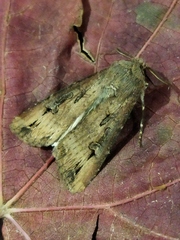 Ipsilon Dart MothAgrotis ipsilonDamages trees, gardens or crops
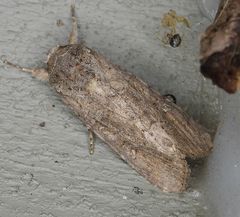 Fall Armyworm MothSpodoptera frugiperdaDamages trees, gardens or crops
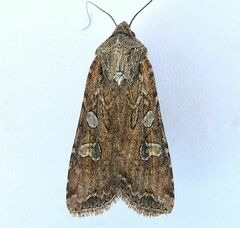 Army Cutworm MothEuxoa auxiliarisDamages trees, gardens or crops
 Large Yellow UnderwingNoctua pronubaDamages trees, gardens or crops
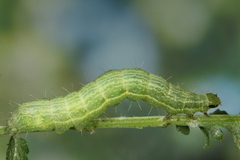 Silver ΥAutographa gamma
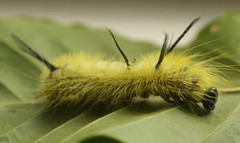 American DaggerAcronicta americanaCan irritate skin
Sources
- Wikipedia: https://en.wikipedia.org/wiki/Proteuxoa_sanguinipuncta
Look it up elsewhere: GBIF · iNaturalist · BugGuide · Wikipedia
Text written 2026-10-23 from the sources above and checked sentence by sentence against them. Data fetched 2026-10-23.