 Bug FAQ
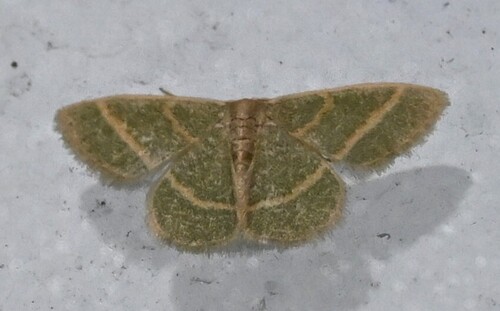
Blackberry Looper Moth
Chlorochlamys chloroleucaria · Order: Lepidoptera · Family: Geometridae
Also called: Blackberry Looper
Source: Wikipedia
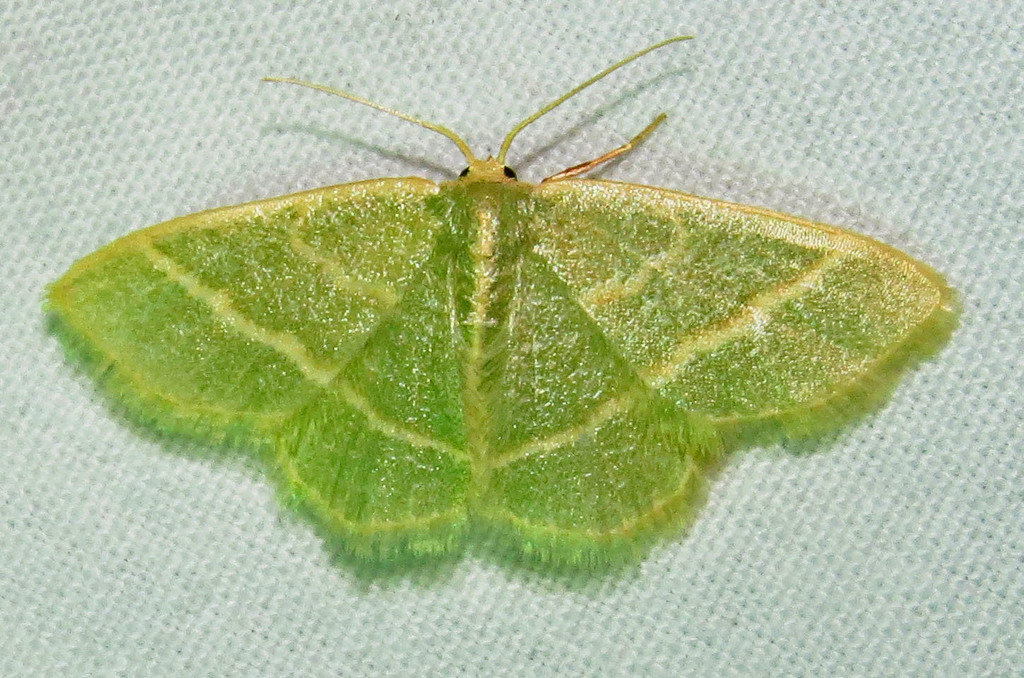
The blackberry looper is a small moth with a wingspan of about 1.4 to 2.3 cm. Adults fly from spring through fall, earlier in the north and longer in the south. Its caterpillars feed on blackberry fruit and a wide range of garden plants.
Source: Wikipedia
How to recognize it
Chlorochlamys chloroleucaria, called the blackberry looper, belongs to the Geometridae family.
Source: Wikipedia
Size
The wingspan ranges from 14 to 23 mm.
Source: Wikipedia
Where it lives
It occurs from Nova Scotia down to Florida, west to the Rocky Mountains, and into Mexico, and it has also been recorded in Great Britain.
Source: Wikipedia
What it eats
Larvae eat blackberry fruit and the petals of many composite flowers. Recorded host plants include yarrow, ragweed, asters, chrysanthemums, goldenrod, sunflowers, and many others.
Source: Wikipedia
Life cycle
There are at least two generations each year.
Source: Wikipedia
Where it comes from
Its native range covers eastern Canada and the United States, extending west to the Rockies and south into Mexico.
Source: Wikipedia
Lookalikes
It is a typical geometrid moth, similar in shape to other looper moths.
Source: Wikipedia
Where it is found in the US
Recorded in 46 of 51 states and DC. Most records: Texas, Vermont, New York, Pennsylvania, Massachusetts, Ohio, Alabama, Michigan.
Darker = more records. Counts are museum and citizen-science records, not population size.
Source: GBIF
Status: native in North America; native in United States; native in Canada. Source: iNaturalist
Months it is reported in the US
Source: GBIF
More photos
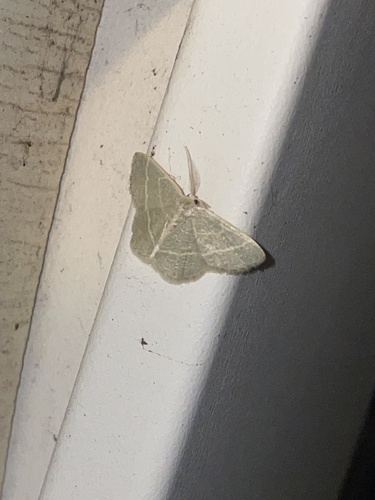
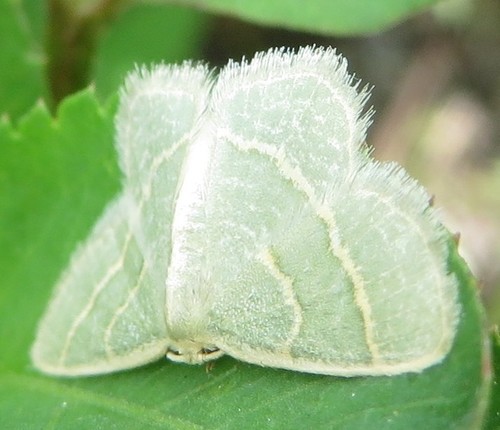
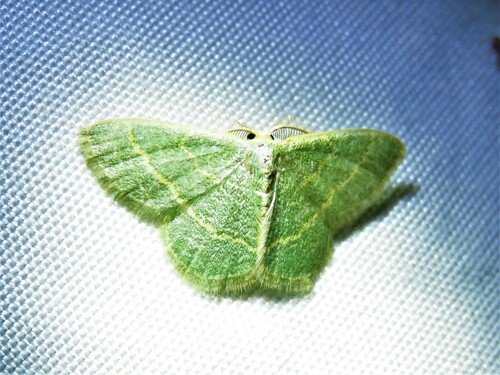
Questions people ask
Do blackberry looper caterpillars damage garden plants?
Yes, the caterpillars feed on blackberry fruit and a variety of garden flowers, which can harm ornamental and edible plants.
Source: Wikipedia
Same family (Geometridae)
 Willow BeautyPeribatodes rhomboidaria
 Pale BeautyCampaea perlataDamages trees, gardens or crops
 Large Lace-border MothScopula limboundataDamages trees, gardens or crops
 Riband WaveIdaea aversata
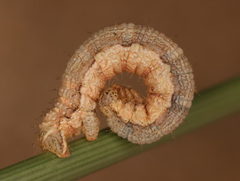 Yellow Shell MothCamptogramma bilineata
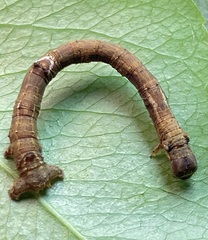 Large Maple Spanworm MothProchoerodes lineolaDamages trees, gardens or crops
Sources
- Wikipedia: https://en.wikipedia.org/wiki/Chlorochlamys_chloroleucaria
Look it up elsewhere: GBIF · iNaturalist · BugGuide · ITIS · Wikipedia
Text written 2026-10-22 from the sources above and checked sentence by sentence against them. Data fetched 2026-10-22.