 Bug FAQ
Black-veined White
Aporia crataegi · Order: Lepidoptera · Family: Pieridae
Also called: Glogov bijelac
Source: Wikipedia
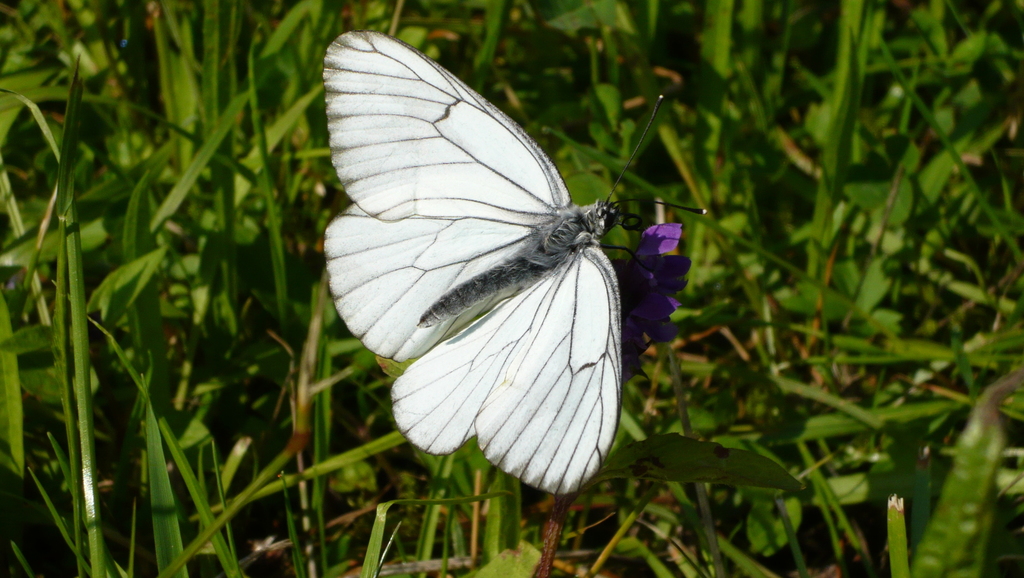
The black-veined white is a medium-sized butterfly with a wingspan of about 5 to 7 cm; females are usually larger than males. It lives in open woods, orchards, gardens and meadows across most of Europe and temperate Asia, and it flies from April to July.
Source: Wikipedia
How to recognize it
Both forewings and hindwings are translucent white with bold black veins on the upper side; males have similar undersides, while females show brown veining underneath.
Source: Wikipedia
Size
Wingspan ranges from 51 to 70 mm (about 2.0 to 2.8 in). Females are generally larger than males.
Source: Wikipedia
Where it lives
It has been extirpated from the British Isles, though re-introduction attempts have occurred in southern England.
Source: Wikipedia
What it eats
Eggs are laid on various Rosaceae plants such as apple, pear, hawthorn, rowan and crabapple, as well as on birch and willow. Caterpillars start feeding close together on leaves and later spread to other parts of the host tree.
Source: Wikipedia
Life cycle
The species produces one generation per year. The pupal stage lasts about three weeks.
Source: Wikipedia
When you see it
Adults are on the wing from April through July.
Source: Wikipedia
Where it comes from
Its natural range stretches from northwest Africa eastward across the Palearctic to Siberia and Japan, covering all of Europe and North Asia but not Egypt.
Source: Wikipedia
Lookalikes
Its bold black veining distinguishes it from other white Pieris butterflies.
Source: Wikipedia
Questions people ask
Can they damage my garden?
Yes, their caterpillars feed on the leaves of many fruit and ornamental trees, which can harm garden plants.
Source: Wikipedia
Same family (Pieridae)
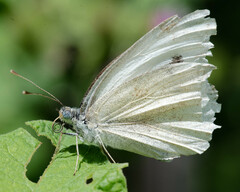

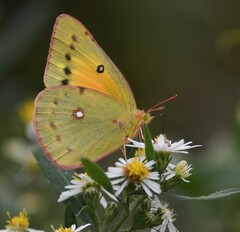

Sources
- Wikipedia: https://en.wikipedia.org/wiki/Aporia_crataegi
Look it up elsewhere: GBIF · iNaturalist · BugGuide · Wikipedia
Text written 2026-10-22 from the sources above and checked sentence by sentence against them. Data fetched 2026-10-22.