 Bug FAQ
Black-veined Moth
Siona lineata · Order: Lepidoptera · Family: Geometridae
Source: Wikipedia
The black-veined moth has a wingspan of about 35 to 40 mm and white or cream wings with dark veins on top and blackish veins underneath, often showing a faint dark stripe beyond the middle of the forewings. It lives in limestone or chalk grasslands, open woods and grassy pastures across most of Europe and parts of Asia, and its larvae feed on a variety of herbs and some woody plants.
Source: Wikipedia
How to recognize it
The upper side of the wings is white or cream with dusky veins, while the underside shows dark veins and often a faint blackish transverse stripe beyond the middle of the forewings.
Source: Wikipedia
Size
Adults have a wingspan ranging from 35 to 40 mm.
Source: Wikipedia
Where it lives
They are found on limestone and chalk grasslands, rough downland, open woodlands, pastures and other grassy areas.
Source: Wikipedia
What it eats
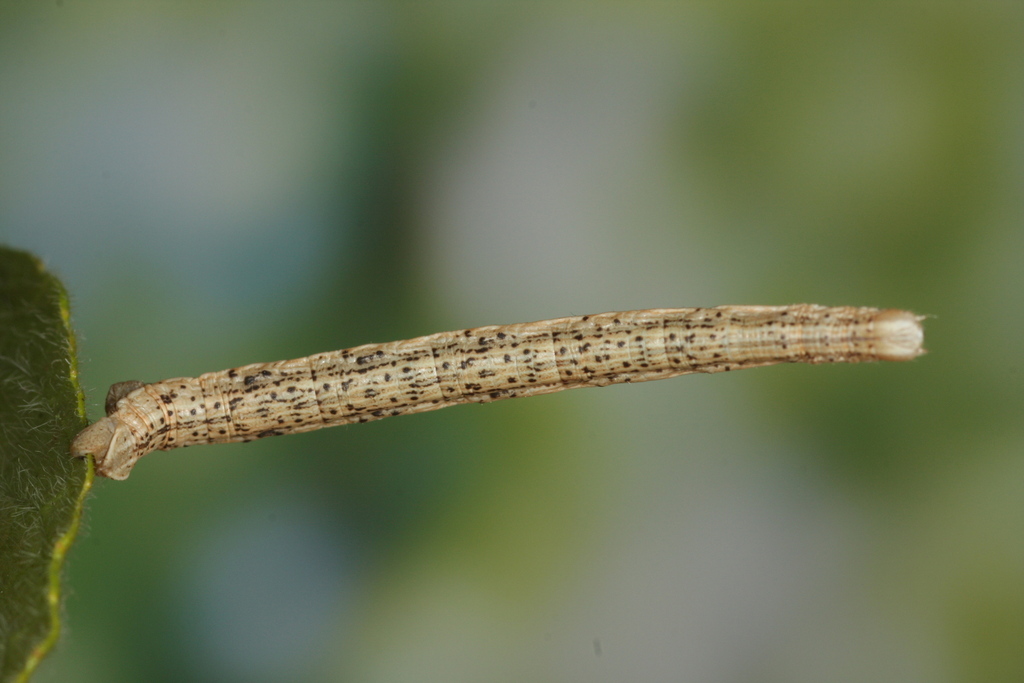
Caterpillars eat a range of herbaceous plants such as oregano, meadow grass, St. John’s wort, vetch, lady-vetch, yellow-rattle, goldenrod, yarrow, tansy, and also feed on willow, and common viburnum.
Source: Wikipedia
Life cycle
Adults fly by day in a single generation from early May to late June.
Source: Wikipedia
When you see it
Adults are on the wing from the beginning of May through the end of June.
Source: Wikipedia
Where it comes from
The species is common throughout Europe.
Source: Wikipedia
More photos

Questions people ask
Do black-veined moth caterpillars damage garden plants?
Yes, the larvae feed on many garden herbs and some shrubs, which can lead to leaf loss and reduced plant vigor.
Source: Wikipedia
When can I see adult black-veined moths?
Adults are active during the day from early May until the end of June.
Source: Wikipedia
Same family (Geometridae)
 Willow BeautyPeribatodes rhomboidaria
 Pale BeautyCampaea perlataDamages trees, gardens or crops
 Large Lace-border MothScopula limboundataDamages trees, gardens or crops
 Riband WaveIdaea aversata
 Yellow Shell MothCamptogramma bilineata
 Large Maple Spanworm MothProchoerodes lineolaDamages trees, gardens or crops
Sources
- Wikipedia: https://en.wikipedia.org/wiki/Siona_lineata
Look it up elsewhere: GBIF · iNaturalist · BugGuide · Wikipedia
Text written 2026-10-22 from the sources above and checked sentence by sentence against them. Data fetched 2026-10-22.