 Bug FAQ
Black Spur Fly
Teuchocnemis lituratus · Order: Diptera · Family: Syrphidae
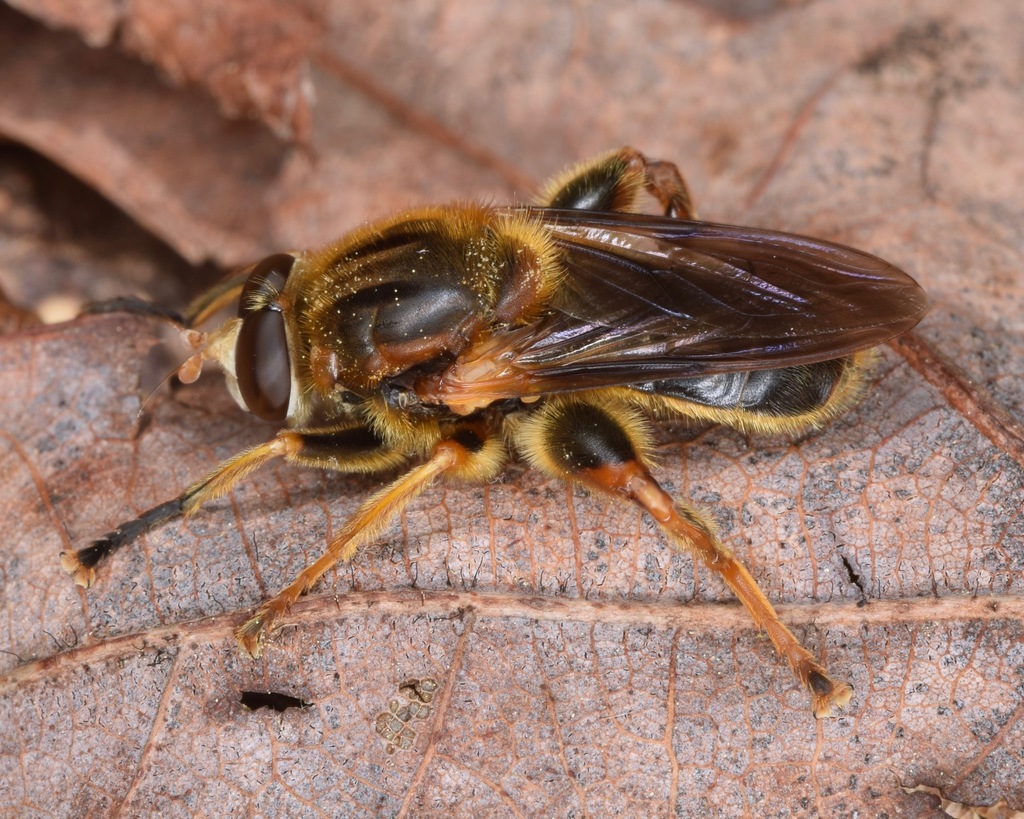
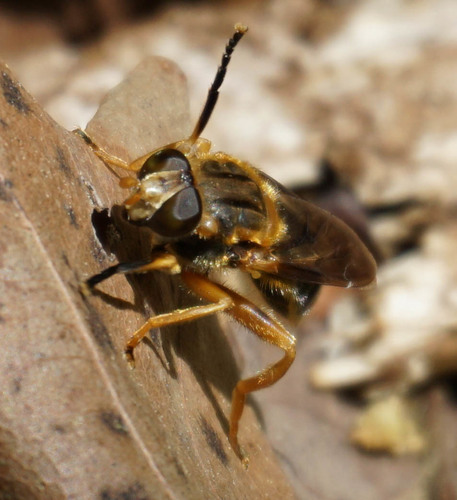
They are black with a yellow scutellum and males have a spiked hind tibia. They hover around flowers to sip nectar and pollen and are native to the eastern half of North America.
Source: Wikipedia
How to recognize it
The fly is black with a yellow scutellum and the male’s hind tibia ends in a spike.
Source: Wikipedia
Where it lives
They are often seen hovering over flowers where they feed.
Source: Wikipedia
What it eats
Adults feed on nectar and pollen.
Source: Wikipedia
Where it comes from
They occur in the eastern half of North America.
Source: Wikipedia
Lookalikes
They may be confused with an uncommon syrphid fly.
Source: Wikipedia
Where it is found in the US
Recorded in 26 of 51 states and DC. Most records: Virginia, Pennsylvania, Illinois, Massachusetts, North Carolina, Connecticut, New York, Ohio.
Darker = more records. Counts are museum and citizen-science records, not population size.
Source: GBIF
Status: native in North America; native in Canada. Source: iNaturalist
Months it is reported in the US
Source: GBIF
More photos
Questions people ask
What do Black Spur Flies look like?
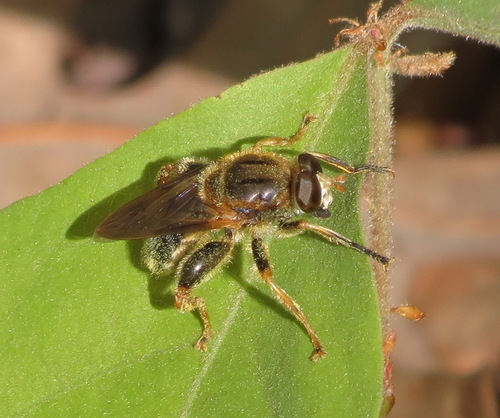
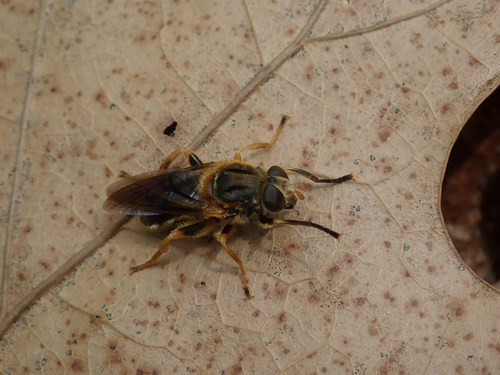
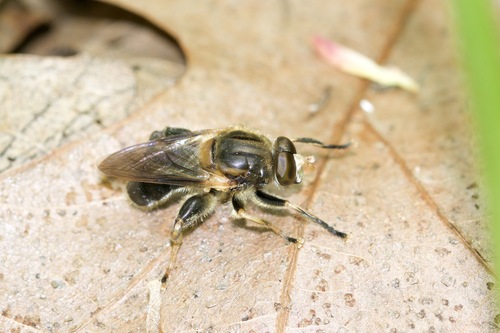
They are black with a yellow scutellum and males have a spiked hind tibia.
Source: Wikipedia
Where are they found?
They live in the eastern half of North America and are often seen around flowers.
Source: Wikipedia
Same family (Syrphidae)






Sources
- Wikipedia: https://en.wikipedia.org/wiki/Teuchocnemis_lituratus
Look it up elsewhere: GBIF · iNaturalist · BugGuide · ITIS · Wikipedia
Text written 2026-10-27 from the sources above and checked sentence by sentence against them. Data fetched 2026-10-27.