 Bug FAQ
Black Looper
Hyposidra talaca · Order: Lepidoptera · Family: Geometridae
Source: Wikipedia
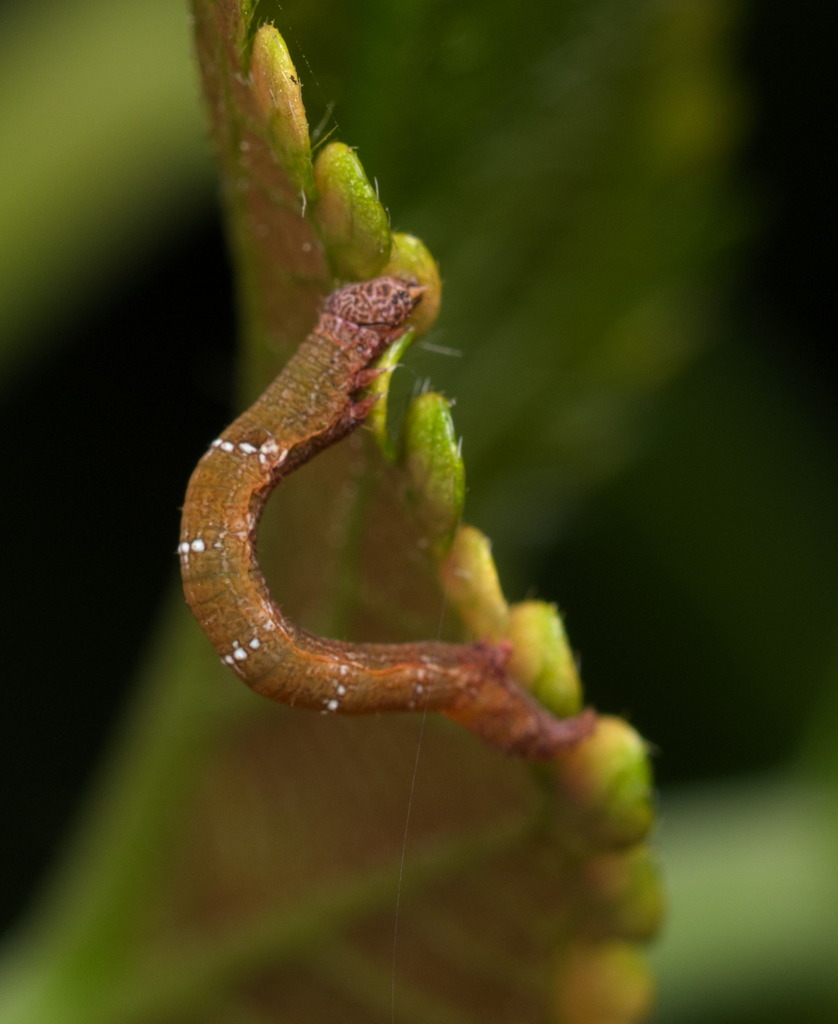
Adults have a wingspan of about 30 mm and are dark olive-brown with faint wing lines. The caterpillars are pink-olive green loopers with black speckles and dark patches on the 4th and 6th segments. They are a major defoliating pest in tea plantations and also feed on a wide range of other trees and crops.
Source: Wikipedia
How to recognize it
Body is dark olive-fuscous, speckled and suffused with grey. Both wings show faint medial and crenulate postmedial lines. Larva is a looper, pinkish olive green with black speckles and dark patches on the 4th and 6th somites.
Source: Wikipedia
Size
Wingspan is about 30 mm.
Source: Wikipedia
How to get rid of it
Eco-friendly control methods and a nucleopolyhedrovirus have been studied for managing this pest.
Source: Wikipedia
What it eats
Larvae feed on many plant species such as tea, coffee, citrus, cacao, rubber, mango, fig, mulberry and numerous forest trees.
Source: Wikipedia
Life cycle
Studies on egg-laying patterns and developmental traits in tea plantations provide details for pest management.
Source: Wikipedia
When you see it
Seasonal occurrence of this looper in tea crops has been documented.
Source: Wikipedia
Where it comes from
Native range includes the same regions listed for habitat.
Source: Wikipedia
Questions people ask
How can I control Black Looper infestations in my garden?
Biological controls such as specific viruses and eco-friendly practices have been shown to reduce their numbers.
Source: Wikipedia
What plants are at risk from Black Looper larvae?
They feed on a wide range of trees and crops, including tea, coffee, citrus, cacao, rubber and many forest species.
Source: Wikipedia
Same family (Geometridae)
 Willow BeautyPeribatodes rhomboidaria
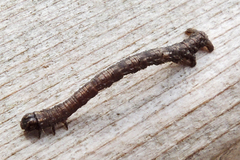 Pale BeautyCampaea perlataDamages trees, gardens or crops
 Large Lace-border MothScopula limboundataDamages trees, gardens or crops
 Riband WaveIdaea aversata
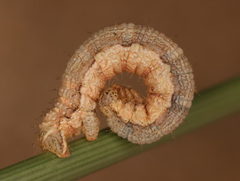 Yellow Shell MothCamptogramma bilineata
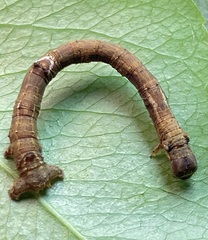 Large Maple Spanworm MothProchoerodes lineolaDamages trees, gardens or crops
Sources
- Wikipedia: https://en.wikipedia.org/wiki/Hyposidra_talaca
Look it up elsewhere: GBIF · iNaturalist · BugGuide · Wikipedia
Text written 2026-10-22 from the sources above and checked sentence by sentence against them. Data fetched 2026-10-22.