 Bug FAQ
Black Locust Leafminer
Macrosaccus robiniella · Order: Lepidoptera · Family: Gracillariidae
Also called: Leaf blotch miner moth
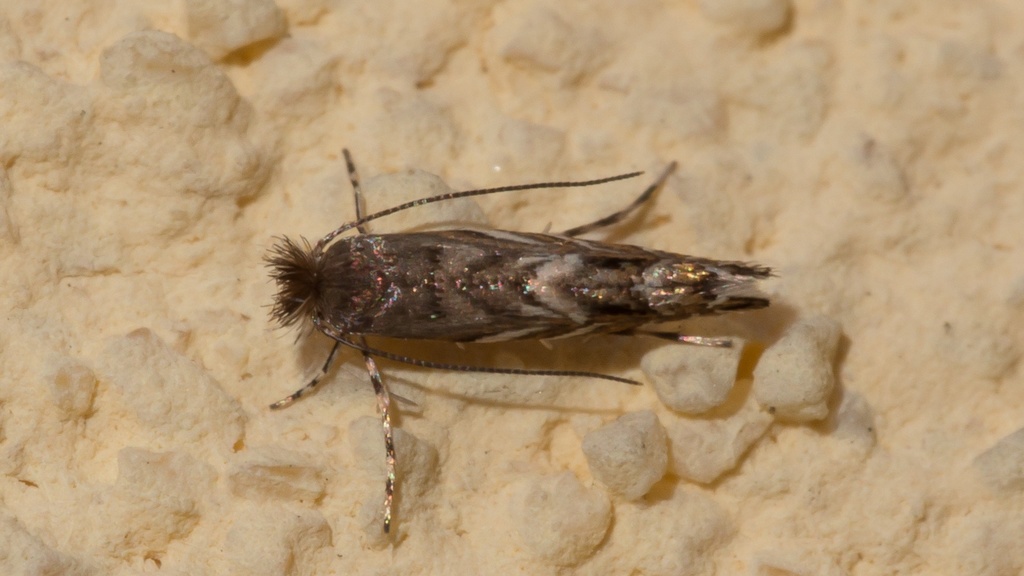
The black locust leafminer is a tiny moth with a wingspan of about 5.5 to 6.5 mm. Its body is pale green to white in colour. It is native to North America, widely distributed there, and has been introduced to Europe.
Source: Wikipedia
How to recognize it
The adult’s body colour ranges from pale green to white.
Source: Wikipedia
Size
The wingspan measures between 5.5 and 6.5 mm.
Source: Wikipedia
Where it lives
It is native to North America and now also occurs in Europe as an introduced species.
Source: Wikipedia
What it eats
The larvae feed on the leaves of Robinia pseudoacacia, Robinia viscosa and Robinia hispida.
Source: Wikipedia
Life cycle
There are two to three generations each year. The caterpillars pass through five larval instars.
Source: Wikipedia
Where it comes from
Its native range is broadly across North America.
Source: Wikipedia
Where it is found in the US
Recorded in 31 of 51 states and DC. Most records: Maryland, Massachusetts, New York, Pennsylvania, Ohio, Michigan, North Carolina, Washington.
Darker = more records. Counts are museum and citizen-science records, not population size.
Source: GBIF
Months it is reported in the US
Source: GBIF
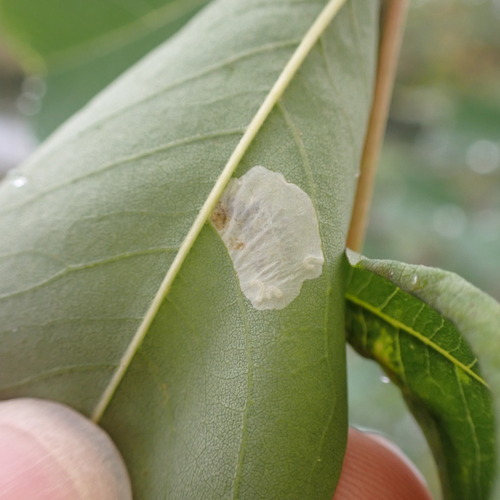
More photos
Questions people ask
How many generations does this moth have per year?
It produces two to three generations annually.
Source: Wikipedia
Where is this species originally from?
It is native to and widely distributed across North America.
Source: Wikipedia
Same family (Gracillariidae)
 Horse-chestnut LeafminerCameraria ohridellaDamages trees, gardens or crops
 Aspen Serpentine Leafminer MothPhyllocnistis populiellaDamages trees, gardens or crops
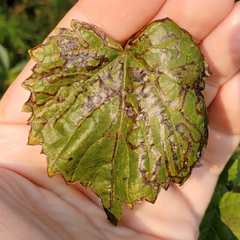 Phyllocnistis vitegenella complexPhyllocnistis vitegenellaDamages trees, gardens or crops
 Locust Digitate Leafminer MothParectopa robiniellaDamages trees, gardens or crops
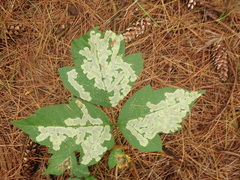 Poison Ivy Leaf-miner MothCameraria guttifinitella
 Phyllocnistis insignisDamages trees, gardens or crops
Sources
- Wikipedia: https://en.wikipedia.org/wiki/Macrosaccus_robiniella
Look it up elsewhere: GBIF · iNaturalist · BugGuide · Wikipedia
Text written 2026-10-25 from the sources above and checked sentence by sentence against them. Data fetched 2026-10-25.