 Bug FAQ
Black Hairy Scorpion
Hadrurus spadix · Order: Scorpiones · Family: Hadruridae
Source: Wikipedia
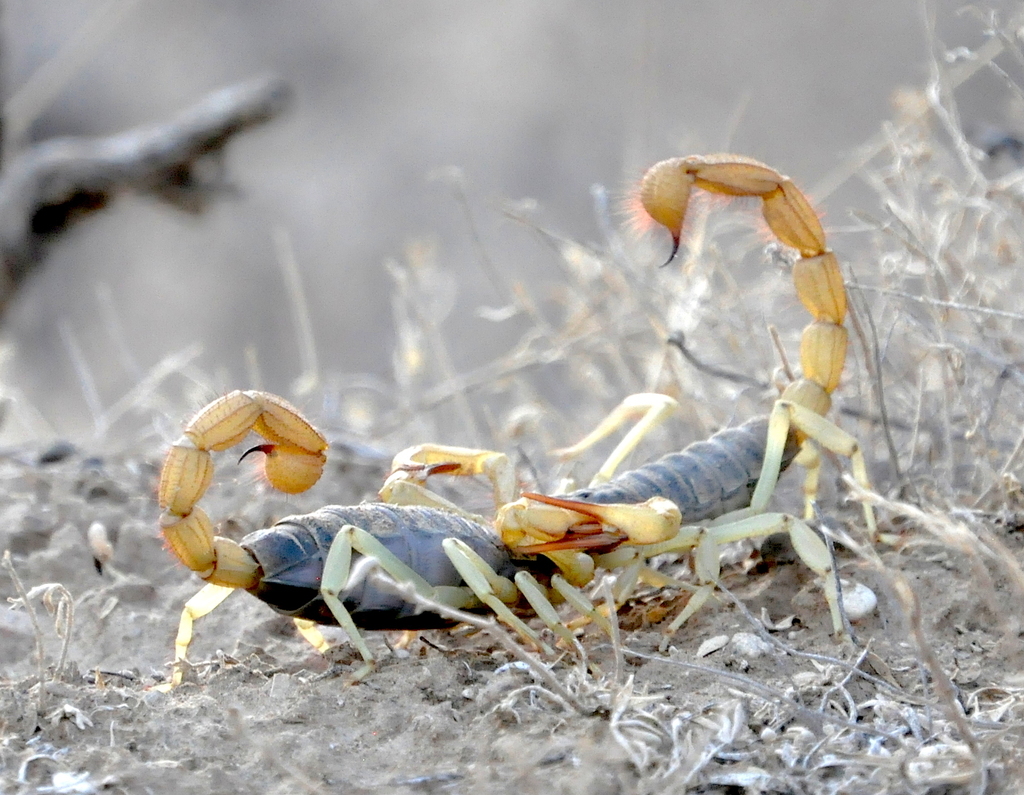
The black-hairy scorpion grows to about 15 cm (6 in) in length. It lives in burrows it digs in sand and can be kept in a large vivarium. It eats small insects, with crickets being the most common food offered.
Source: Wikipedia
How to recognize it
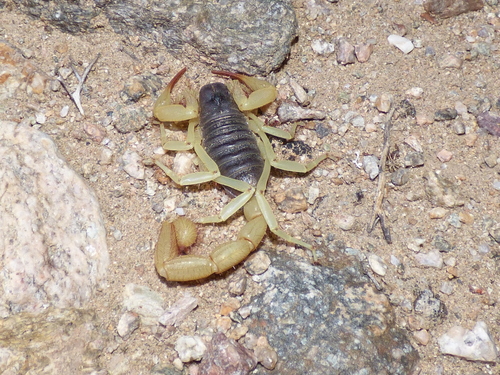
Its back (prosoma) is completely black, which sets it apart from the similar giant desert hairy scorpion.
Source: Wikipedia
Size
Adults reach roughly 15 cm (5.9 in) long.
Source: Wikipedia
Can it bite, sting or make you sick?
Its venom is considered low in toxicity, but a sting can be quite painful.
Source: Wikipedia
Where it lives
It is a burrowing species that spends much of its time digging and enlarging sand burrows. In captivity it requires a spacious vivarium.
Source: Wikipedia
What it eats
It can be fed most small insects, though crickets are the most common choice.
Source: Wikipedia
Where it comes from
It is a burrowing scorpion that lives in sandy habitats.
Source: Wikipedia
Where it is found in the US
Recorded in 7 of 51 states and DC. Most records: Nevada, Utah, Idaho, California, Arizona, Oregon, Colorado.
Darker = more records. Counts are museum and citizen-science records, not population size.
Source: GBIF
Status: native in North America; native in United States. Source: iNaturalist
Months it is reported in the US
Source: GBIF
More photos
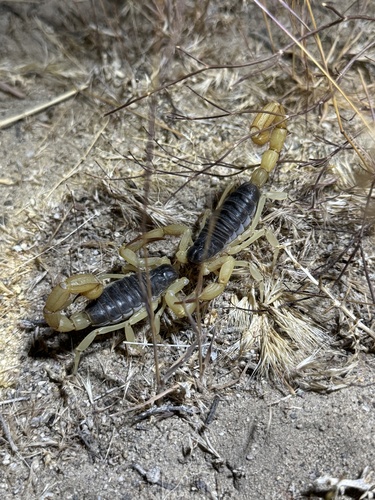
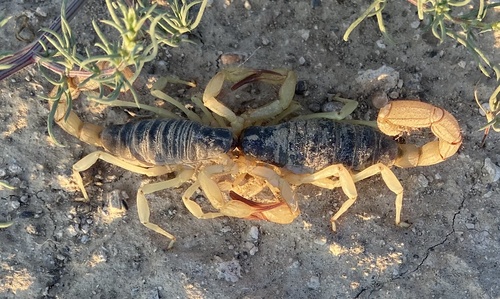
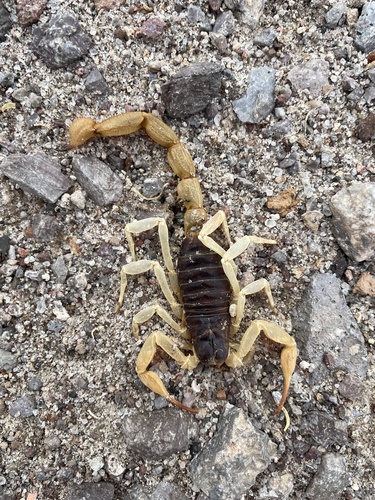
Questions people ask
How large does the black-hairy scorpion get?
It grows to about 15 cm (5.9 in) in length.
Source: Wikipedia
What does this scorpion eat?
It eats a variety of small insects, with crickets being the most common food.
Source: Wikipedia
Can it sting humans?
Yes, its sting can be quite painful, though the venom is of low toxicity.
Source: Wikipedia
Same family (Hadruridae)
Sources
- Wikipedia: https://en.wikipedia.org/wiki/Hadrurus_spadix
Look it up elsewhere: GBIF · iNaturalist · BugGuide · Wikipedia
Text written 2026-10-25 from the sources above and checked sentence by sentence against them. Data fetched 2026-10-25.