 Bug FAQ
Desert Hairy Scorpion
Hadrurus arizonensis · Order: Scorpiones · Family: Hadruridae
Also called: Arizona Hairy Scorpion, Giant Desert Hairy Scorpion, Giant Desert Scorpion, Giant hairy scorpion
Source: Wikipedia
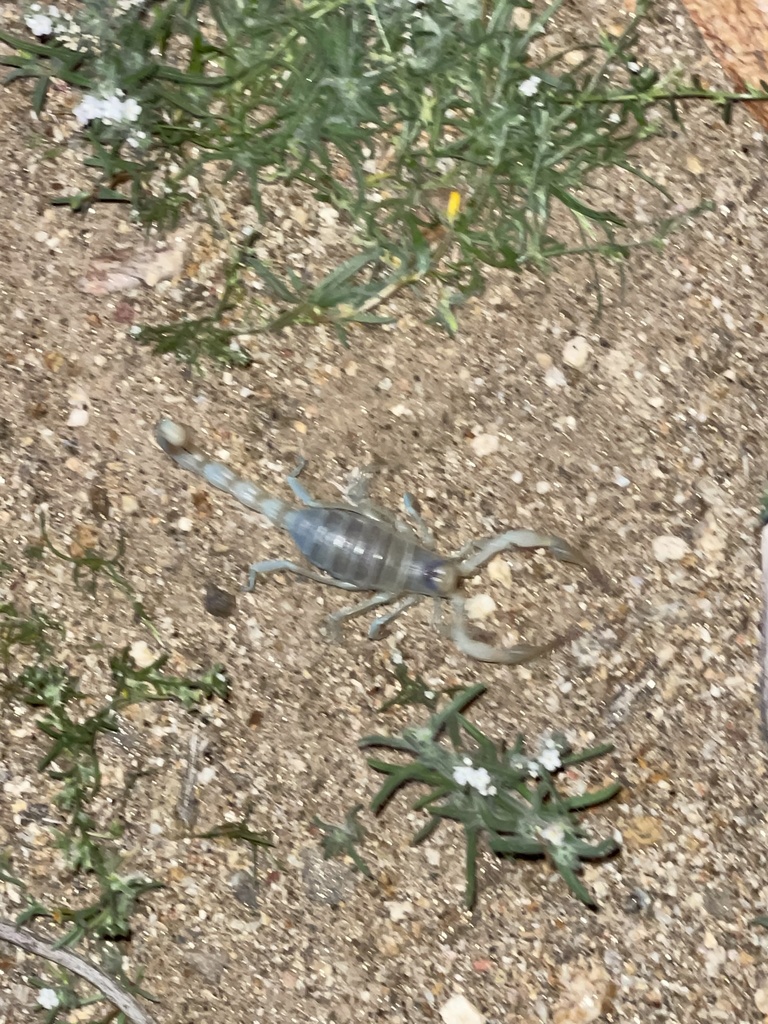
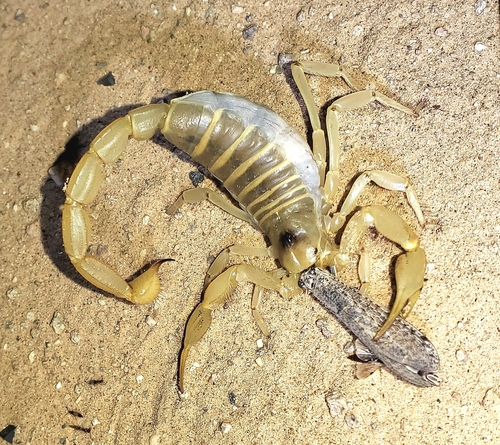
The desert hairy scorpion can reach up to 18 cm long and weigh around 5 g. It lives in the Sonoran and Mojave deserts, often in abandoned burrows, caves, crevices, or under moist rocks at elevations of 900 to 1800 m. It hunts large insects, spiders, small lizards, rodents, and occasionally other scorpions or small snakes.
Source: Wikipedia
How to recognize it
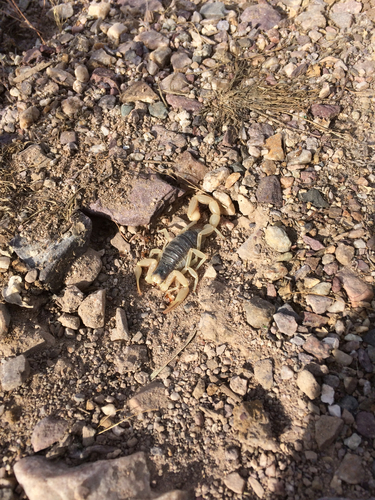
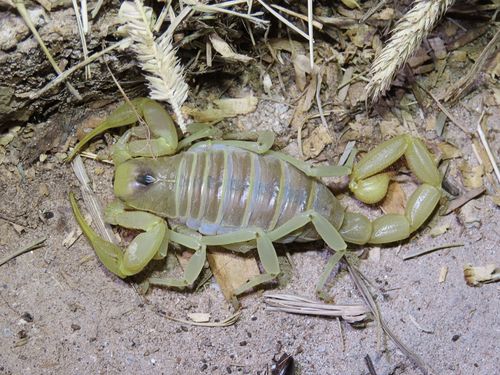
Both sexes look similar, usually tan to olive-green with a darker back and yellow legs, pedipalps, and tail.
Source: Wikipedia
Size
It is the largest scorpion in North America, reaching up to 14 cm (5.5 in) in length. Typical length ranges from 10 to 18 cm, averaging about 15 cm, and it weighs 4 to 7 g, averaging 5 g.
Source: Wikipedia
Does it bite or sting?
Its venom is weak; a sting feels like a honeybee sting. The sting is not lethal.
Source: Wikipedia
Where it lives
Found throughout the Sonoran and Mojave deserts. Occupies abandoned burrows, small caves, crevices, ornamental plants, and irrigated lawns, usually at 900 to 1800 m elevation.
Source: Wikipedia
What it eats
Small snakes, especially Leptotyphlopidae, can make up about 10 % of its diet.
Source: Wikipedia
Life cycle
Displays distinct courtship and aggressive behaviors similar to other large scorpions.
Source: Wikipedia
When you see it
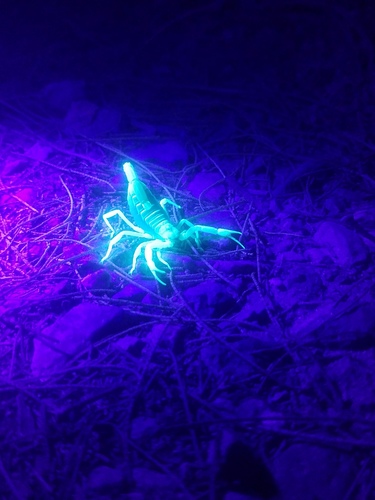
Burrows but is often found under moist rocks. Active at night.
Source: Wikipedia
Where it comes from
Native to western North America, including most of Arizona, southern California, southern Nevada, extreme southwestern Utah, and the Gulf of California region in Sonora and Baja California, Mexico.
Source: Wikipedia
Lookalikes
A similar species is Hadrurus spadix.
Source: Wikipedia
Where it is found in the US
Recorded in 6 of 51 states and DC. Most records: Arizona, California, Nevada, Utah, New York, New Mexico.
Darker = more records. Counts are museum and citizen-science records, not population size.
Source: GBIF
Status: native in North America; native in United States. Source: iNaturalist
Months it is reported in the US
Source: GBIF
More photos
Questions people ask
How big does the desert hairy scorpion get?
It can grow up to about 18 cm long and weigh around 5 g.
Source: Wikipedia
Where does this scorpion live?
It lives in the Sonoran and Mojave deserts, often in burrows, caves, crevices, or under moist rocks at elevations of 900 to 1800 m.
Source: Wikipedia
Is its sting dangerous?
The sting is mild, comparable to a honeybee sting, and is not fatal.
Source: Wikipedia
What does it eat?
It hunts large insects, spiders, small lizards, rodents, and sometimes other scorpions or small snakes.
Source: Wikipedia
Sources
- Wikipedia: https://en.wikipedia.org/wiki/Hadrurus_arizonensis
Look it up elsewhere: GBIF · iNaturalist · BugGuide · Wikipedia
Text written 2026-10-23 from the sources above and checked sentence by sentence against them. Data fetched 2026-10-22.