 Bug FAQ
Black-footed Drone Fly
Eristalis hirta · Order: Diptera · Family: Syrphidae
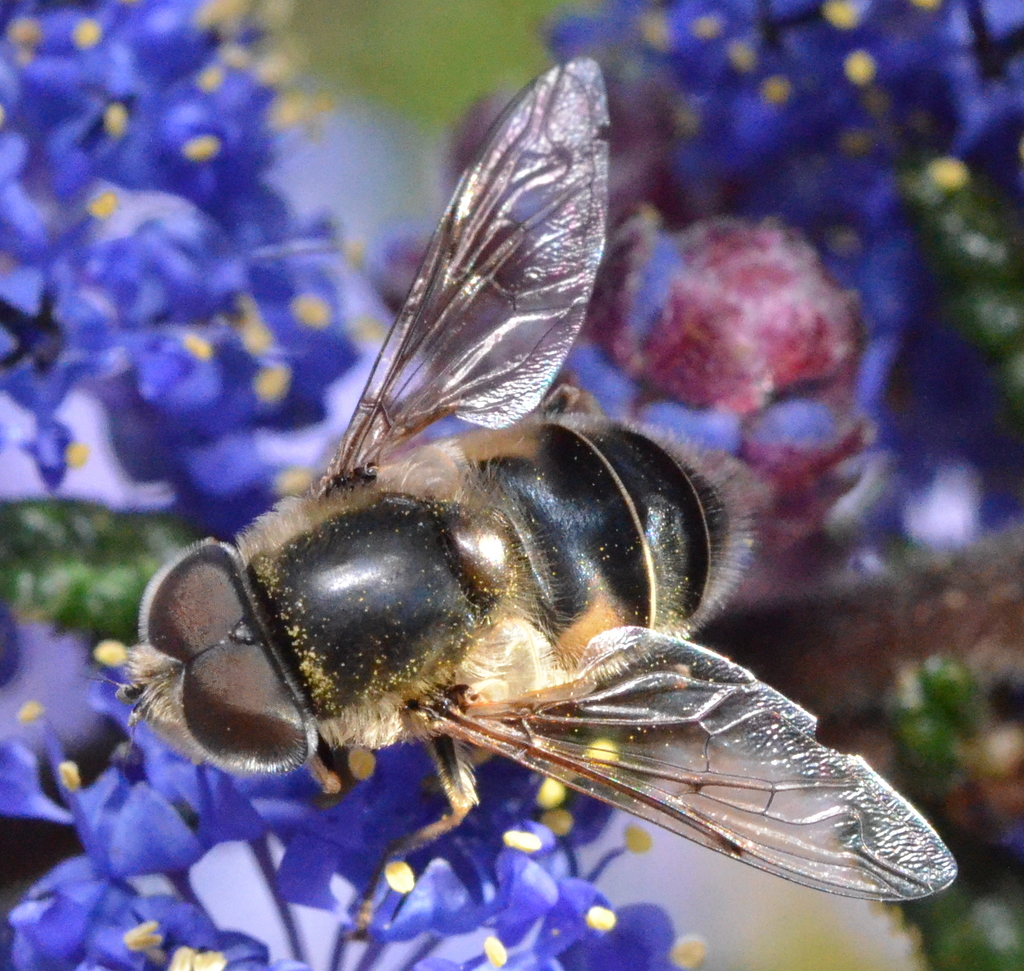
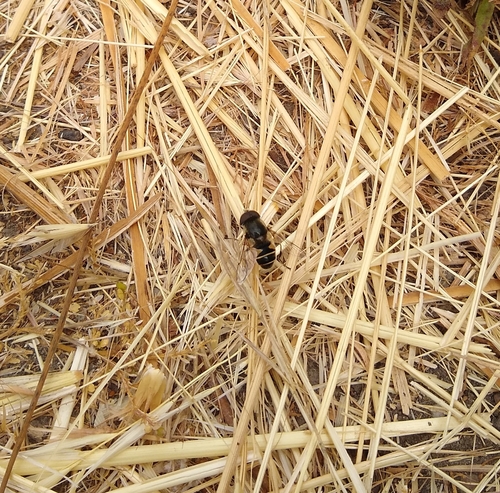
The black-footed drone fly is 10 to 15 mm long and has black and yellow legs, with a black abdomen marked by yellow bands and spots. It lives in raised bogs, ditches and temporary pools across western North America and northern Europe. Adults feed on nectar and pollen from flowers, while the aquatic larvae filter-feed as rat-tailed maggots.
Source: Wikipedia
Size
Length ranges from 10 to 15 mm (0.39 to 0.59 in).
Source: Wikipedia
Where it lives
Found in raised bogs, ditches and temporary pools in western North America and northern Europe.
Source: Wikipedia
What it eats
Adults visit flowers for nectar and pollen; larvae are aquatic filter-feeders with a rat-tailed shape.
Source: Wikipedia
Life cycle
Hoverflies can hover in place while flying.
Source: Wikipedia
Where it comes from
It is a common species in western North America.
Source: Wikipedia
Lookalikes
It is a common western North American syrphid fly.
Source: Wikipedia
Where it is found in the US
Recorded in 14 of 51 states and DC. Most records: California, Oregon, Washington, Colorado, Alaska, Idaho, Wyoming, Utah.
Darker = more records. Counts are museum and citizen-science records, not population size.
Source: GBIF
Status: native in North America; native in Canada; native in United States. Source: iNaturalist
Months it is reported in the US
Source: GBIF
More photos
Questions people ask
What do adult black-footed drone flies eat?
They feed on nectar for energy and pollen for protein from flowers.
Source: Wikipedia
Where can I find black-footed drone flies?
They occur in raised bogs, ditches and temporary pools in western North America and northern Europe.
Source: Wikipedia
What do the larvae look like and eat?
The larvae are aquatic, have a rat-tailed shape, and filter-feed in water.
Source: Wikipedia
Same family (Syrphidae)


Sources
- Wikipedia: https://en.wikipedia.org/wiki/Eristalis_hirta
Look it up elsewhere: GBIF · iNaturalist · BugGuide · ITIS · Wikipedia
Text written 2026-10-23 from the sources above and checked sentence by sentence against them. Data fetched 2026-10-22.