 Bug FAQ
Black-dashed Apamea Moth
Apamea nigrior · Order: Lepidoptera · Family: Noctuidae
Also called: Black-dashed Apamea
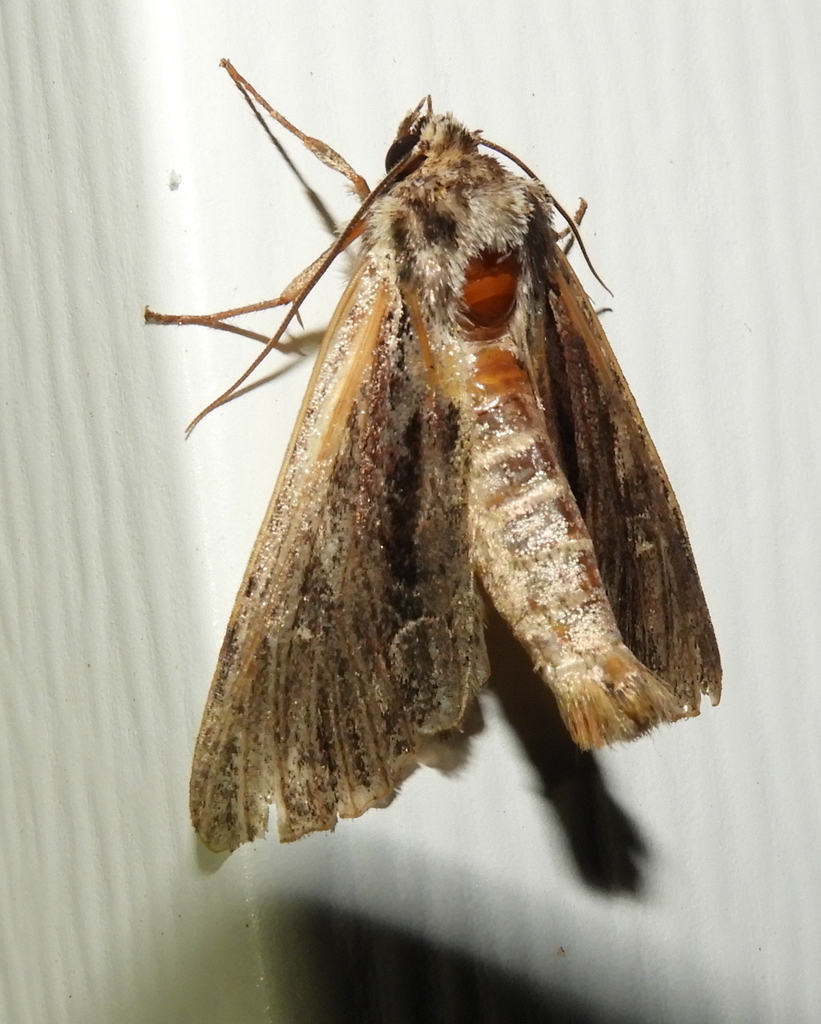
The black-dashed apamea moth has a wingspan of about 38 mm. Adults fly from May through July, depending on where they live. It occurs from New Brunswick down to Georgia, west to Indiana, and north to Wisconsin and Ontario.
Source: Wikipedia
How to recognize it
Apamea nigrior belongs to the Noctuidae family and is known as the black-dashed or dark apamea.
Source: Wikipedia
Size
Its wingspan measures roughly 38 mm.
Source: Wikipedia
When you see it
Adults are on the wing between May and July, varying with location.
Source: Wikipedia
Where it comes from
Its range includes eastern Canada and the eastern United States, from New Brunswick to Georgia and west to Indiana, reaching north to Wisconsin and Ontario.
Source: Wikipedia
Where it is found in the US
Recorded in 19 of 51 states and DC. Most records: Connecticut, Pennsylvania, Massachusetts, Michigan, Ohio, Vermont, New York, Maine.
Darker = more records. Counts are museum and citizen-science records, not population size.
Source: GBIF
Status: native in North America; native in Canada. Source: iNaturalist
Months it is reported in the US
Source: GBIF
Questions people ask
When are black-dashed apamea moths active?
Adults fly from May through July, depending on the region.
Source: Wikipedia
Same family (Noctuidae)
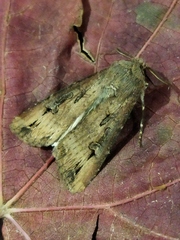 Ipsilon Dart MothAgrotis ipsilonDamages trees, gardens or crops
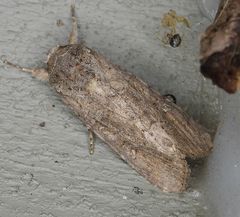 Fall Armyworm MothSpodoptera frugiperdaDamages trees, gardens or crops
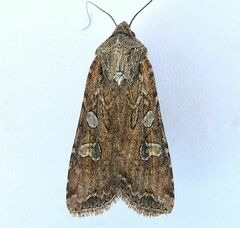 Army Cutworm MothEuxoa auxiliarisDamages trees, gardens or crops
 Large Yellow UnderwingNoctua pronubaDamages trees, gardens or crops
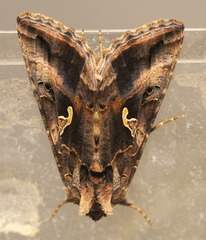 Silver ΥAutographa gamma
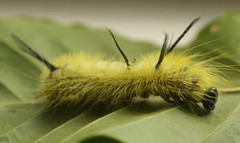 American DaggerAcronicta americanaCan irritate skin
Sources
- Wikipedia: https://en.wikipedia.org/wiki/Apamea_nigrior
Look it up elsewhere: GBIF · iNaturalist · BugGuide · ITIS · Wikipedia
Text written 2026-10-28 from the sources above and checked sentence by sentence against them. Data fetched 2026-10-28.