 Bug FAQ
Bityla defigurata
Bityla defigurata · Order: Lepidoptera · Family: Noctuidae

Bityla defigurata is a noctuid moth found throughout both the North and South Islands of New Zealand. Adults fly from January to March and are attracted to light, while the larvae feed on native vines such as Muehlenbeckia australis and Muehlenbeckia complexa.
Source: Wikipedia
How to recognize it
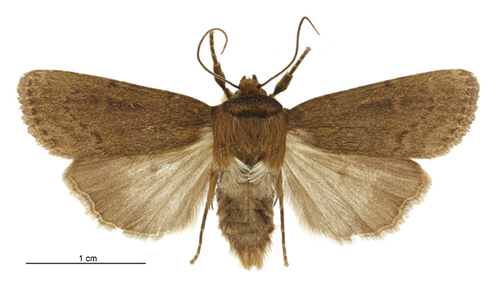
Females are cinereous-brown with dark brown heads and fore-tegulae; the forewings show faint brown lunule lines and indistinct brown-bordered orbicular and reniform marks.
Source: Wikipedia
Size
The body is about ten lines long and the wings span roughly twenty-two lines.
Source: Wikipedia
Where it lives
It is endemic to New Zealand and occurs on both the North and South Islands.
Source: Wikipedia
What it eats
Larvae have been reared on the native plants Muehlenbeckia australis and Muehlenbeckia complexa.
Source: Wikipedia
When you see it
The flight period for adults runs from January through March.
Source: Wikipedia
Where it comes from
The species is native to New Zealand.
Source: Wikipedia
Lookalikes
Bityla defigurata belongs to the moth family Noctuidae.
Source: Wikipedia
More photos
Questions people ask
When can I expect to see adult Bityla defigurata?
Adults are active from January to March.
Source: Wikipedia
What do the caterpillars of this moth eat?
The larvae feed on the vines Muehlenbeckia australis and Muehlenbeckia complexa.
Source: Wikipedia
Same family (Noctuidae)
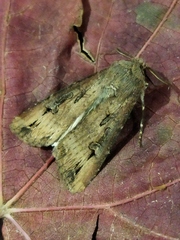 Ipsilon Dart MothAgrotis ipsilonDamages trees, gardens or crops
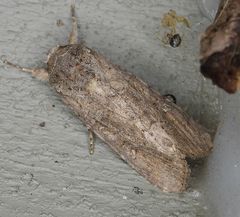 Fall Armyworm MothSpodoptera frugiperdaDamages trees, gardens or crops
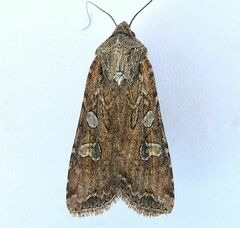 Army Cutworm MothEuxoa auxiliarisDamages trees, gardens or crops
 Large Yellow UnderwingNoctua pronubaDamages trees, gardens or crops
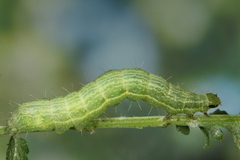 Silver ΥAutographa gamma
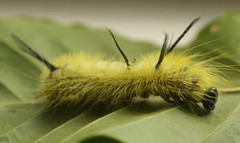 American DaggerAcronicta americanaCan irritate skin
Sources
- Wikipedia: https://en.wikipedia.org/wiki/Bityla_defigurata
Look it up elsewhere: GBIF · iNaturalist · BugGuide · Wikipedia
Text written 2026-10-23 from the sources above and checked sentence by sentence against them. Data fetched 2026-10-23.