 Bug FAQ
Big-headed Lagoon Fly
Eristalinus megacephalus · Order: Diptera · Family: Syrphidae
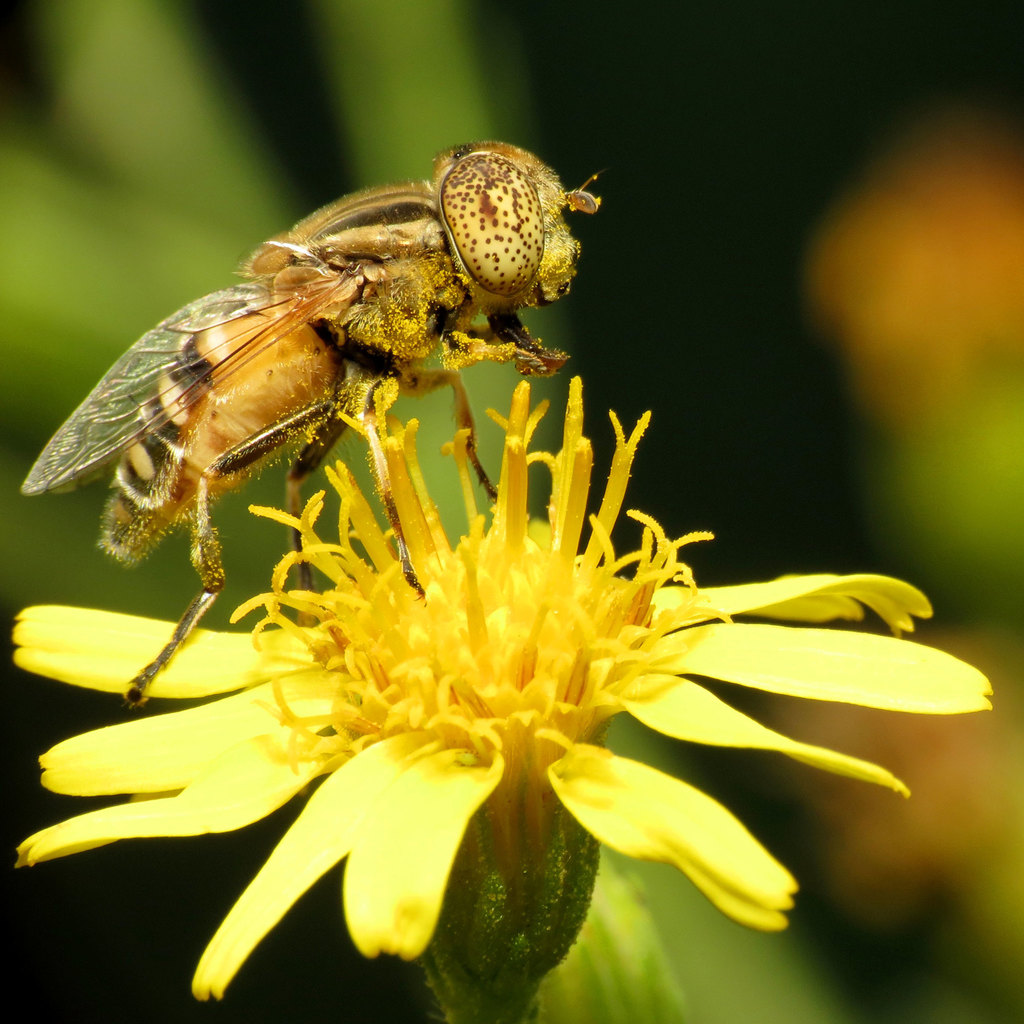
The big-headed lagoon fly is 8 to 11 mm long and has a large head with golden eyes that show pale purple spots. It flies from May through October, being most common in June and July. It occurs in many countries across Africa, Asia, Europe and the Pacific, including South Africa, Egypt, India, China and Spain.
Source: Wikipedia
Size
Adults are about 8 to 11 mm long.
Source: Wikipedia
Where it lives
Its flight period runs from May to October, peaking in June and July.
Source: Wikipedia
What it eats
It is a good pollinator.
Source: Wikipedia
Life cycle
Adults are active from May to October, with the highest numbers in June and July.
Source: Wikipedia
When you see it
The species is most plentiful between June and July.
Source: Wikipedia
Lookalikes
It looks similar to bee flies of the family Bombyliidae.
Source: Wikipedia
Same family (Syrphidae)






Sources
- Wikipedia: https://en.wikipedia.org/wiki/Eristalinus_megacephalus
Look it up elsewhere: GBIF · iNaturalist · BugGuide · Wikipedia
Text written 2026-10-23 from the sources above and checked sentence by sentence against them. Data fetched 2026-10-22.