 Bug FAQ
Bicolored Pennant Ant
Tetramorium bicarinatum · Order: Hymenoptera · Family: Formicidae
Also called: Bicoloured Pennant Ant, Guinea Ant, Penny Ant, Tramp Ant
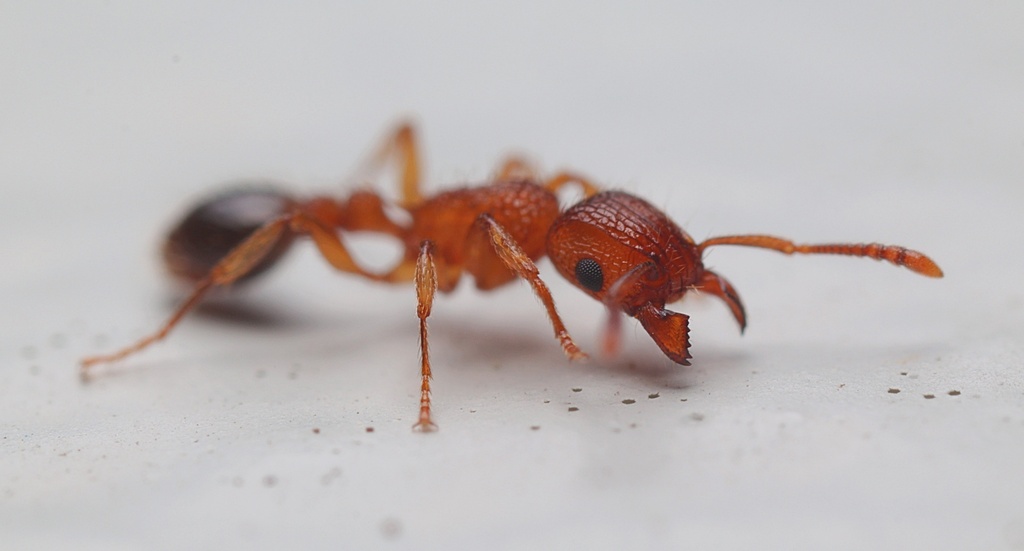
The bicolored pennant ant is a medium-sized ant with a reddish head and a dark abdomen, giving it a two-tone appearance. It originates from Southeast Asia but is now a common tramp species found inside homes, greenhouses, and landscaped areas near houses. The species can negatively affect native biodiversity when it establishes outdoors.
Source: Wikipedia
How to recognize it
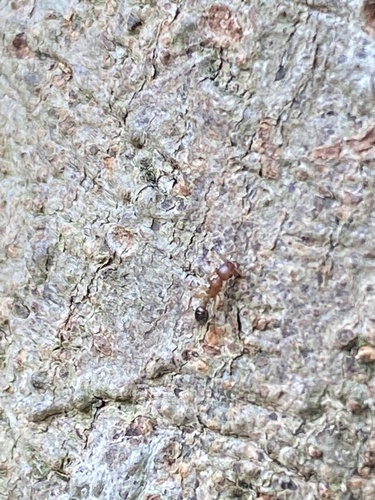
It has a reddish head, a mesosoma and waist that contrast with a dark gaster.
Source: Wikipedia
Size
It is a medium-sized ant.
Source: Wikipedia
Is it a pest in the house?
It is a common tramp species that frequently occurs inside homes.
Source: Wikipedia
Where it lives
It is often found inside houses, greenhouses, shade houses, or nearby landscaped areas.
Source: Wikipedia
Where it comes from
The species originated in Southeast Asia.
Source: Wikipedia
Where it is found in the US
Recorded in 25 of 51 states and DC. Most records: Texas, Florida, Louisiana, Mississippi, Hawaii, California, Alabama, New York.
Darker = more records. Counts are museum and citizen-science records, not population size.
Source: GBIF
Status: introduced in North America; introduced in United States. Source: iNaturalist
Months it is reported in the US
Source: GBIF
More photos
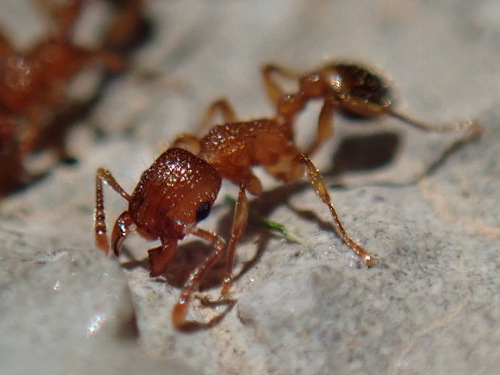
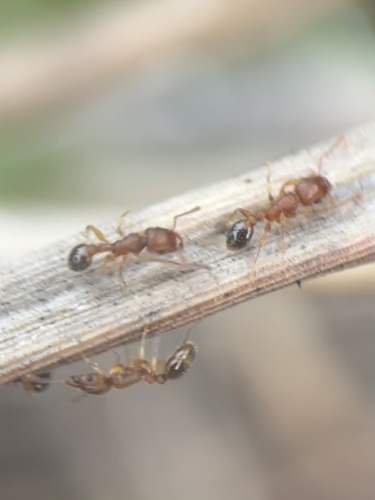
Questions people ask
Where might I find this ant in my home?
They are commonly found inside houses, greenhouses, shade houses, and landscaped areas near homes.
Source: Wikipedia
Is this ant harmful to native wildlife?
Yes, it can adversely affect native biodiversity.
Source: Wikipedia
Same family (Formicidae)
 Eastern Black Carpenter AntCamponotus pennsylvanicusCan damage your home
 Red Imported Fire AntSolenopsis invictaCan sting
 American Winter AntPrenolepis imparis
 Argentine AntLinepithema humileNuisance, not dangerous
 Immigrant Pavement AntTetramorium immigransCan sting
 Odorous House AntTapinoma sessileCan damage your home
Sources
- Wikipedia: https://en.wikipedia.org/wiki/Tetramorium_bicarinatum
Look it up elsewhere: GBIF · iNaturalist · BugGuide · ITIS · Wikipedia
Text written 2026-10-22 from the sources above and checked sentence by sentence against them. Data fetched 2026-10-22.