 Bug FAQ
Belostoma flumineum
Belostoma flumineum · Order: Hemiptera · Family: Belostomatidae
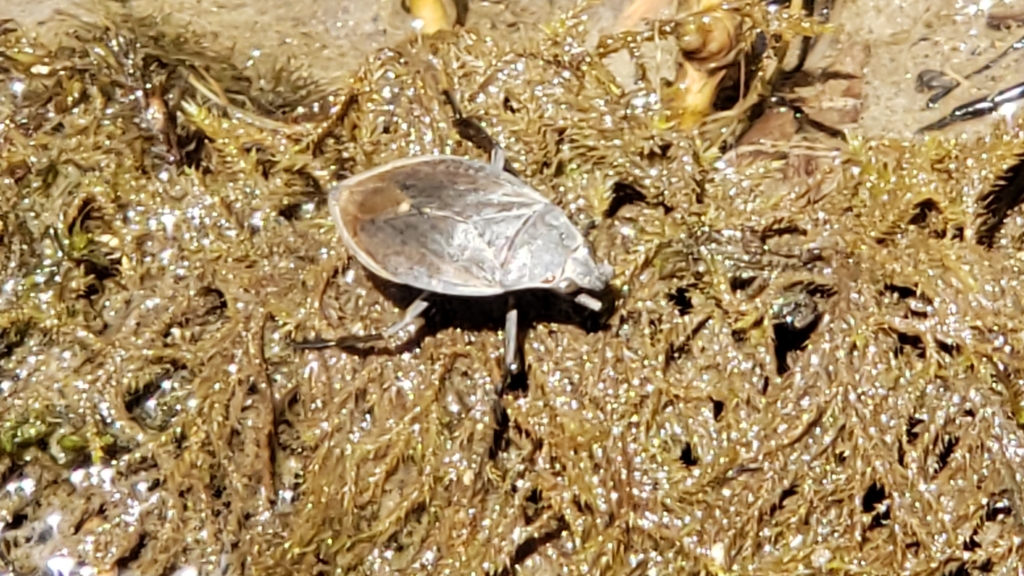
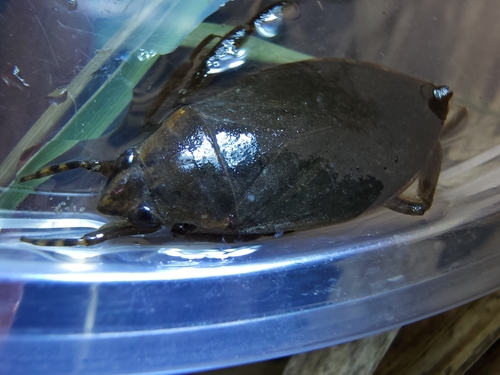
Belostoma flumineum is a relatively large water bug about 2 to 2.5 cm long. It has a flattened brown body, large eyes but no ocelli, and strong front raptorial legs. It lives in North American wetlands, marshes and ponds, often among weeds on muddy bottoms.
Source: Wikipedia
How to recognize it
The bug’s body is ovoid-elongate, dorsoventrally flattened and brown. It has large eyes and lacks ocelli.
Source: Wikipedia
Where it lives
They are common in wetlands, marshes and ponds across North America. They hide among aquatic weeds and prefer ponds with muddy bottoms for overwintering.
Source: Wikipedia
What it eats
They prey on backswimmers, water boatmen, dragonfly nymphs and snails. They may also attack smaller members of their own species.
Source: Wikipedia
Life cycle
Reproduction occurs in two cycles: a fall cycle when they are young breeders and a spring cycle when adults emerge after overwintering. Males can carry up to about 100 eggs on their backs.
Source: Wikipedia
When you see it
The species reproduces in fall and again in spring.
Source: Wikipedia
Where it comes from
Belostoma flumineum is native to North America.
Source: Wikipedia
Where it is found in the US
Recorded in 40 of 51 states and DC. Most records: Vermont, Michigan, Minnesota, Illinois, Texas, Missouri, Kansas, Kentucky.
Darker = more records. Counts are museum and citizen-science records, not population size.
Source: GBIF
Status: native in North America; native in Canada; native in United States. Source: iNaturalist
Months it is reported in the US
Source: GBIF
More photos
Questions people ask
What do Belostoma flumineum bugs eat?
They feed on backswimmers, water boatmen, dragonfly nymphs and snails, and may also attack smaller conspecifics.
Source: Wikipedia
How do they reproduce?
They have a fall breeding cycle as young insects and a spring cycle as overwintered adults, with males carrying up to 100 eggs on their backs.
Source: Wikipedia
Same family (Belostomatidae)
Sources
- Wikipedia: https://en.wikipedia.org/wiki/Belostoma_flumineum
Look it up elsewhere: GBIF · iNaturalist · BugGuide · ITIS · Wikipedia
Text written 2026-10-23 from the sources above and checked sentence by sentence against them. Data fetched 2026-10-23.