 Bug FAQ
American Giant Water Bug
Lethocerus americanus · Order: Hemiptera · Family: Belostomatidae
Also called: Electric Light Bug, Giant Water Bug
Source: Wikipedia
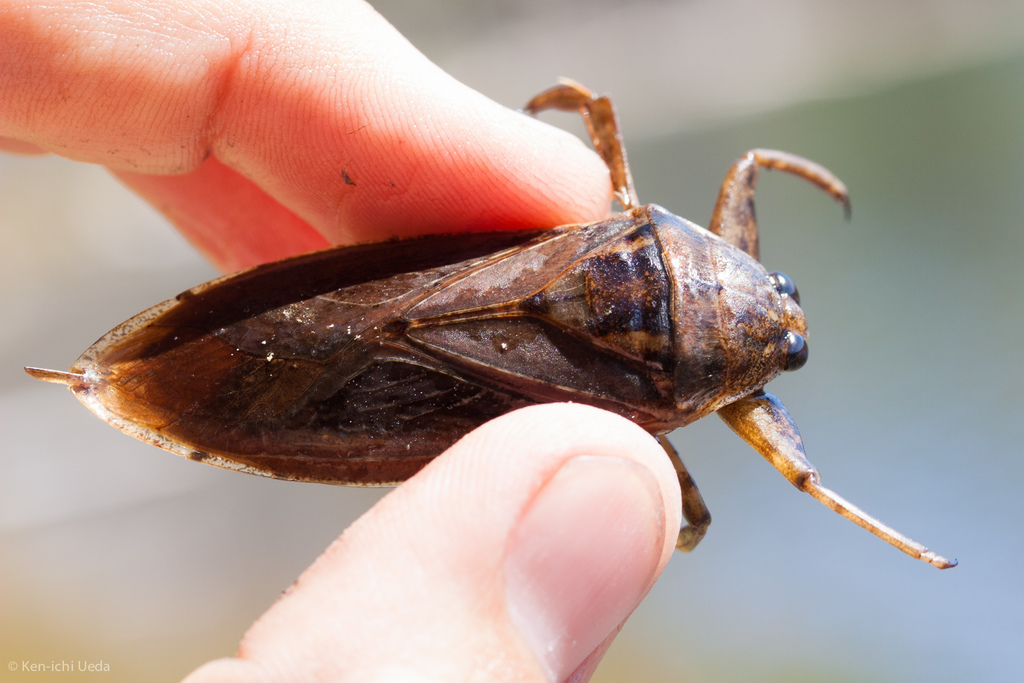
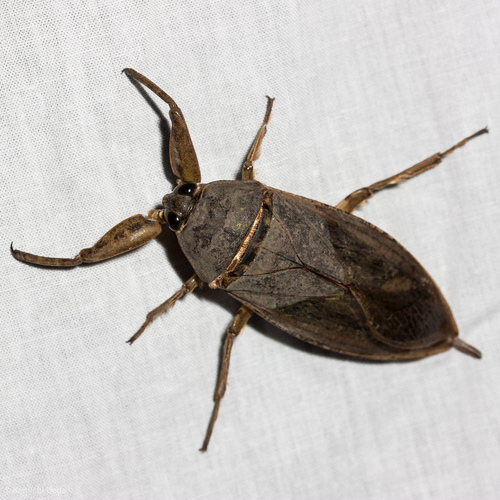
The American Giant Water Bug is a large aquatic predator about 5 to 6 cm long that lives in ponds, marshes and slow-moving water edges. It feeds on insects, small crustaceans, tadpoles, frogs, snails and tiny fish, catching prey with its front limbs and injecting digestive toxins. If disturbed it may bite painfully, though it usually tries to avoid humans.
Source: Wikipedia
How to recognize it
People call it a “toe biter” because it can give a painful bite when handled. It generally prefers to stay away from people rather than attack.
Source: Wikipedia
Does it bite or sting?
If handled or disturbed, they can bite painfully. They usually try to avoid humans rather than attack.
Source: Wikipedia
Where it lives
It is commonly found in ponds, marshes, and along the edges of lakes, slow-moving streams and creeks.
Source: Wikipedia
What it eats
Both adults and nymphs eat other insects, small crustaceans such as crabs or crayfish, tadpoles, frogs, snails and small fish. It grabs prey with its front fore-limbs and injects digestive toxins through a retractable proboscis.
Source: Wikipedia
Life cycle
Females lay eggs on vegetation at the water’s edge, sometimes guarding them. Nymphs hatch about two weeks later; females lay around 150 eggs total, but few survive because of cannibalism and predators, and adults overwinter buried in mud and leaf litter.
Source: Wikipedia
When you see it
They are attracted to electric lights and may fly toward them at night.
Source: Wikipedia
Lookalikes
They can be told apart from Benacus griseus by grooves on the fore femora that fit the tibiae, and they look very similar to L. uhleri.
Source: Wikipedia
Where it is found in the US
Recorded in 42 of 51 states and DC. Most records: Minnesota, Massachusetts, Michigan, California, New York, Vermont, Washington, Wisconsin.
Darker = more records. Counts are museum and citizen-science records, not population size.
Source: GBIF
Status: native in North America; native in United States; native in Canada. Source: iNaturalist
Months it is reported in the US
Source: GBIF
More photos
Questions people ask
Do American Giant Water Bugs bite?
Yes, they can deliver a painful bite if they are handled or disturbed.
Source: Wikipedia
What do they eat?
They prey on insects, small crustaceans, tadpoles, frogs, snails and tiny fish.
Source: Wikipedia
Are they attracted to lights?
Yes, they are often drawn to electric lights at night.
Source: Wikipedia
Sources
- Wikipedia: https://en.wikipedia.org/wiki/Lethocerus_americanus
Look it up elsewhere: GBIF · iNaturalist · BugGuide · ITIS · Wikipedia
Text written 2026-10-22 from the sources above and checked sentence by sentence against them. Data fetched 2026-10-22.