 Bug FAQ
Beaded Chestnut
Agrochola lychnidis · Order: Lepidoptera · Family: Noctuidae
Source: Wikipedia

Beaded Chestnut moths have a wingspan of about 30 to 35 mm and forewings that are bright rufous or reddish-ochreous with darker dusting and distinct black spots on the costa. Adults fly in September and October and are found in grasslands, pastures, forest edges, embankments, clear-cuttings and sometimes in gardens. They occur across Europe from Ireland to the Urals, as well as in western North Africa and Asia Minor.
Source: Wikipedia
How to recognize it
The forewing is bright rufous or reddish-ochreous, veins are paler, and it has double dark inner and outer lines with black spots on the costa; the hindwing is dark grey with a rufous fringe.
Source: Wikipedia
Size
The wingspan ranges from 30 to 35 mm.
Source: Wikipedia
Where it lives
It lives in grasslands, pastures, forest edges, embankments, clear-cuttings and occasionally in human settlements such as gardens.
Source: Wikipedia
Life cycle
Eggs are yellowish when laid and turn olive-brown; larvae are green to yellowish with grey freckling, three fine whitish dorsal lines and a broad white lateral stripe.
Source: Wikipedia
When you see it
Adults are on the wing in September and October.
Source: Wikipedia
Where it comes from
It is found throughout Europe from Ireland to the Urals, and also in western North Africa and Asia Minor.
Source: Wikipedia
Lookalikes
The species shows great colour variation, with brighter rufous forms (typical lychnidis) and duller brownish forms (pistacina), among many other named variants.
Source: Wikipedia
More photos


Questions people ask
When can I expect to see Beaded Chestnut moths?
The adults fly in September and October.
Source: Wikipedia
What do the caterpillars eat?
They feed on low plants when young and later on the leaves of various trees and shrubs such as Prunus and Salix.
Source: Wikipedia
Where does this moth live?
It inhabits grasslands, pastures, forest edges, embankments, clear-cuttings and sometimes gardens across Europe, western North Africa and Asia Minor.
Source: Wikipedia
Same family (Noctuidae)
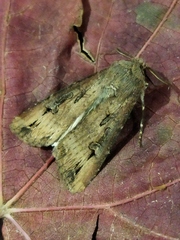 Ipsilon Dart MothAgrotis ipsilonDamages trees, gardens or crops
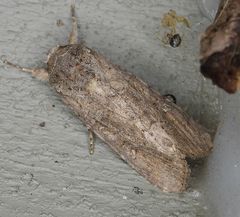 Fall Armyworm MothSpodoptera frugiperdaDamages trees, gardens or crops
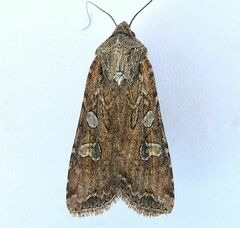 Army Cutworm MothEuxoa auxiliarisDamages trees, gardens or crops
 Large Yellow UnderwingNoctua pronubaDamages trees, gardens or crops
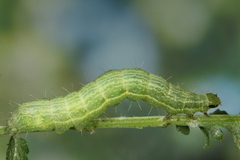 Silver ΥAutographa gamma
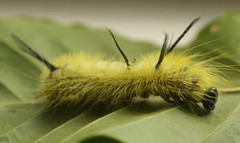 American DaggerAcronicta americanaCan irritate skin
Sources
- Wikipedia: https://en.wikipedia.org/wiki/Agrochola_lychnidis
Look it up elsewhere: GBIF · iNaturalist · BugGuide · Wikipedia
Text written 2026-10-23 from the sources above and checked sentence by sentence against them. Data fetched 2026-10-22.